
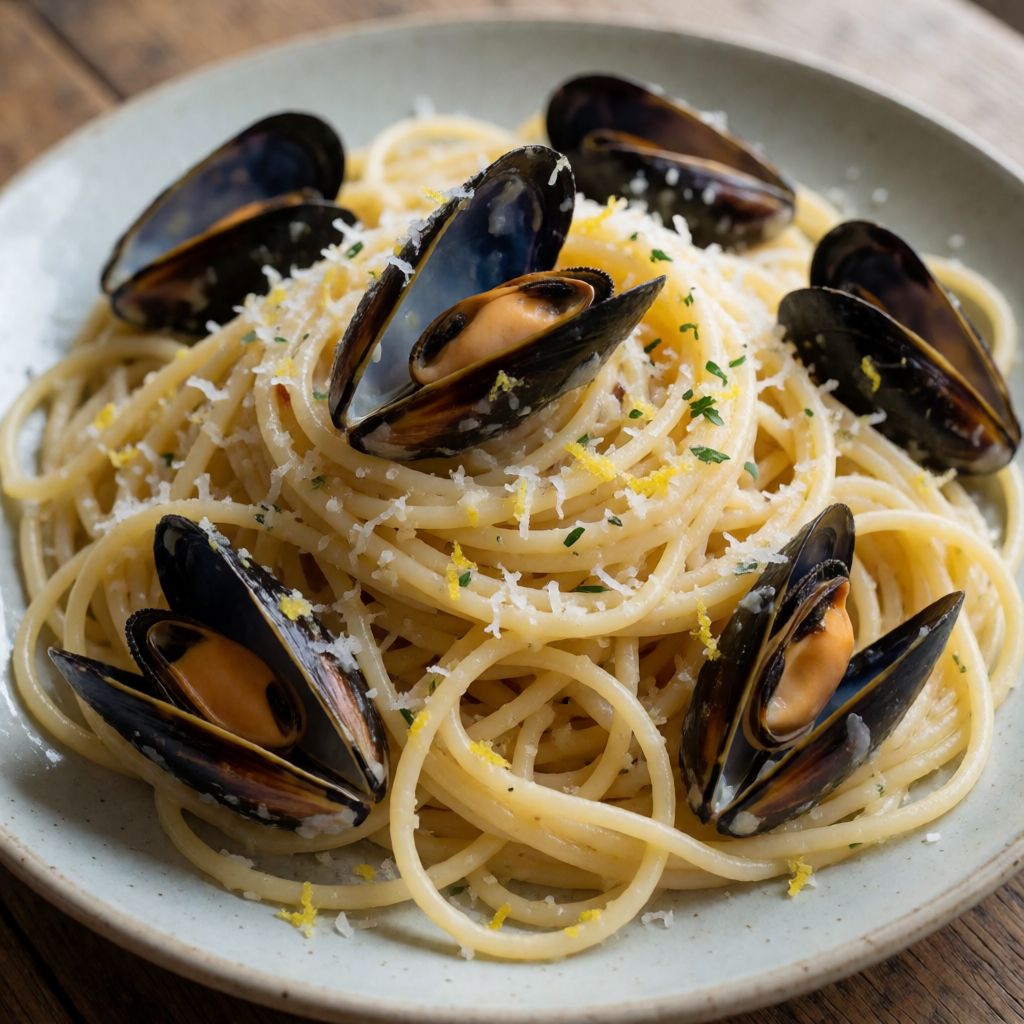
 AI photo
Square Spaghetti with Mussels, Pecorino and Lemon
A quick pasta of mussels steamed open in white wine, tossed with pecorino and a touch of lemon zest.
Labels are worked out automatically from the ingredients and can be wrong. Check the packaging if it matters to you.
Ingredients
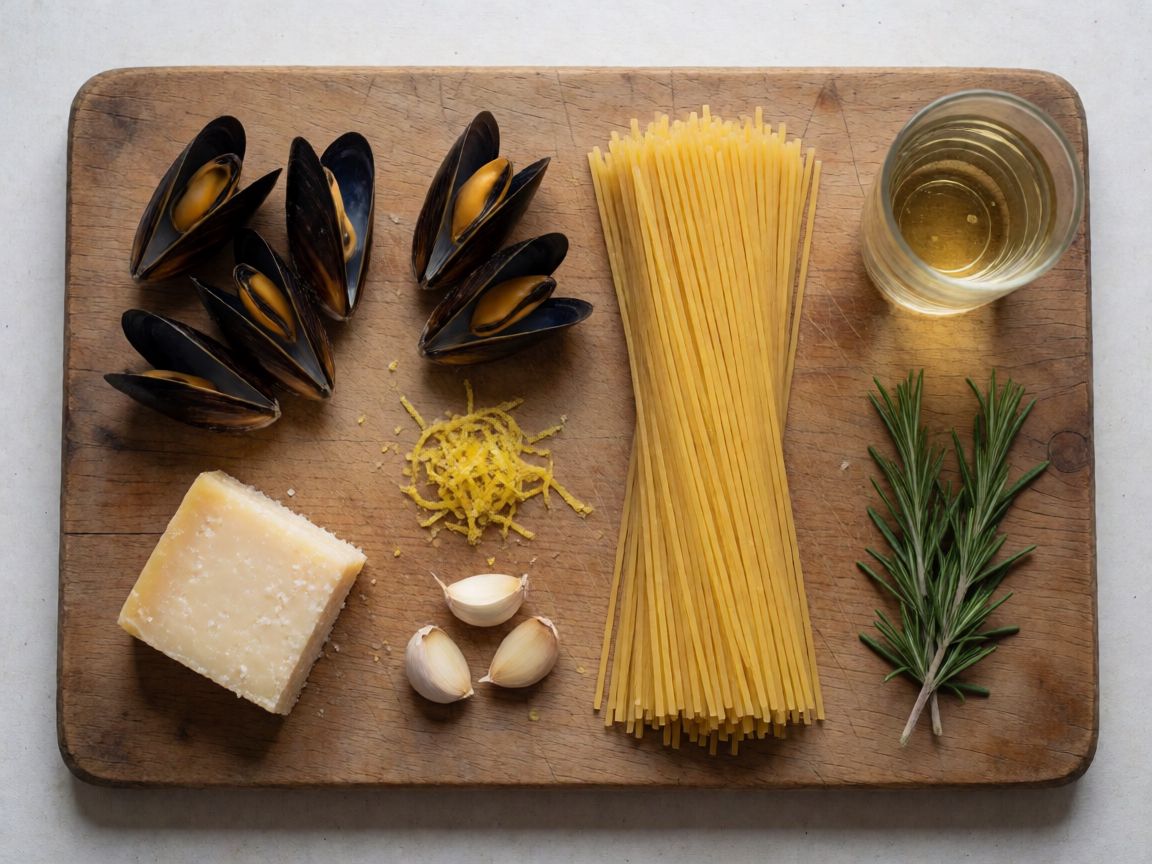
- 200 g Square spaghetti
- 300 g Mussels
- 125 ml White wine
- Pecorino Romano to taste
- 1 pcs Lemon zest
- 1 clove Garlic
- Rosemary to taste
- Salt to taste
- Black pepper to taste
- Vegetable oil for frying, to taste










Steps
Steam the mussels open, adding the white wine, a crushed garlic clove and a sprig of rosemary.
5 minOnce the mussels have opened, take the pan off the heat and leave them to cool.
Remove the mussels from their shells and strain the liquid left behind.
Cook the square spaghetti in lightly salted water.
When the pasta is half cooked, transfer it to a pan with the strained mussel liquid, a little oil and a spoonful of the pasta cooking water.
When the pasta is nearly done, add the shelled mussels and toss with grated Pecorino Romano and another spoonful of pasta cooking water.
Toss with the cheese over low heat.
Add a little lemon zest and mix everything together.
Serve the square spaghetti with a pinch of black pepper, a little more lemon zest and rosemary.
Square spaghetti, mussels, pecorino, lemon — this is the shellfish version of pasta al limone, where the "sauce" isn't a sauce at all, it's the liquid the mussels gave up when they opened, caught and thickened by cheese and starch instead of cream. What decides whether it works isn't the mussels, it's what you do with the water underneath them. Mussel liquor is salty and briny already — if you salt the pasta water the way you normally would, you'll stack salt on salt and the dish tips over into something you can't eat without wincing.
Square spaghetti — sometimes sold as spaghetti alla chitarra, from the wooden frame strung with wires it's cut on — isn't a gimmick. The square edges give it more surface and more grip than round spaghetti, so it holds onto a thin, cheese-and-starch sauce instead of sliding through it. If your shop only has round spaghetti or linguine, use it; you'll just need to toss harder and more often to get the same cling.
The whole dish turns on one move: finishing the pasta not in its own boiling water but in the mussel liquid, in a wide pan, with splashes of starchy pasta water added as needed. That water is doing two jobs — loosening the sauce so it coats rather than clumps, and feeding the pecorino enough moisture that it melts into silk instead of seizing into rubber. Pecorino is a hard, salty sheep's cheese; thrown onto a pan that's too hot, or without enough liquid around it, it splits and goes grainy — not burnt, just shocked. That's why step 7 says low heat and keep tossing, not "add cheese and stir."
Mussels: buy them alive, shells shut or snapping shut when tapped. Any that stay gaping, or feel suspiciously heavy (that's sand or water, not mussel), go in the bin before they go in the pan — this isn't fussiness, it's how you avoid one bad mussel ruining the pot, since shellfish spoil fast and a dead one doesn't announce itself by smell until it's too late. Scrub and debeard them under a cold tap; any that refuse to open after steaming get thrown away too, they were dead going in, not stubborn.
White wine here isn't for flavour alone — it's acid and steam together, and acid helps mussels release cleanly from their shells while the steam is what actually cooks them. You don't need anything expensive; dry and unsweet is the only real requirement, so a basic supermarket dry white does the job a grand cru would do at ten times the price.
Garlic and rosemary scent the steaming liquid, not the finished dish directly — crush the garlic rather than mince it, so it's easy to fish out, and the rosemary sprig comes out too once it's done its work; neither is meant to be chewed on at the table. If you don't like rosemary's resin edge, thyme does a similar job with less insistence.
Pecorino Romano is sheep's milk and genuinely salty — that saltiness is the reason you go light on salting the pasta water in step 4, and light again when the strained mussel liquor joins the pan, because the cheese and the shellfish brine are each bringing their own salt to a dish that has no sauce base to dilute it. If pecorino isn't to hand, a hard, salty aged cheese does the job — Parmesan is less salty and milder, so if you substitute it, salt a touch more deliberately rather than by habit. A cheese that melts smoothly, not one that goes oily under heat, matters more than the label.
Lemon zest — not juice — is added twice: once stirred through while the dish is still warming the cheese together, once scattered at the end. Zest carries the lemon's aromatic oils without the acid that juice would bring, and acid here would curdle or thin the cheese-and-starch emulsion you've just built. Use the zest off an unwaxed lemon if you can get one; waxed fruit means scrubbing it hard under hot water first, or you're grating wax into your dinner.
Vegetable oil in step 5 is there as a neutral carrier — any oil with no smell of its own does the same job, sunflower, grapeseed, a mild olive oil at a pinch, so long as it doesn't compete with the mussel liquor's own flavour. This isn't a dish that needs a "good" olive oil finishing it; that flavour would just be fighting the lemon and pecorino for attention.
On the hob you're using here: a kazan this is not, and it doesn't need to be — a wide, shallow pan gives the pasta more surface contact with the sauce than a deep saucepan would, which matters more for the final toss than any amount of heat. Keep the pasta water on a rolling boil for step 4, but once you move to finishing the dish, the sauce stage wants gentle, steady warmth — enough to melt cheese, not enough to split it. Patience is the real ingredient in that last toss: rushing it with high heat gets you grainy cheese fast, and you can't walk that back.