
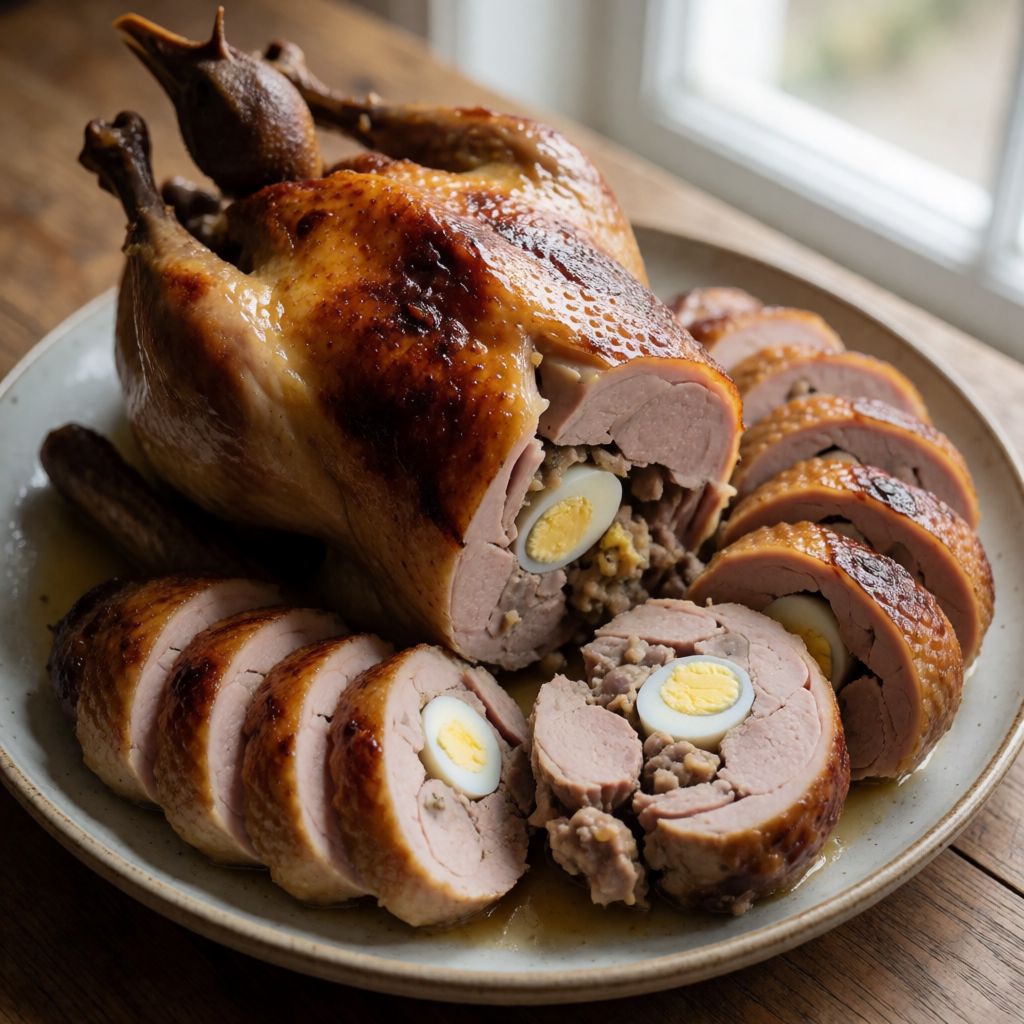
 AI photo
Stuffed Guinea Fowl
A whole guinea fowl stuffed with a rich meat and cheese filling, roasted until tender and served sliced with orange.
Labels are worked out automatically from the ingredients and can be wrong. Check the packaging if it matters to you.
Ingredients











Steps
Singe the guinea fowl to remove any remaining feathers.
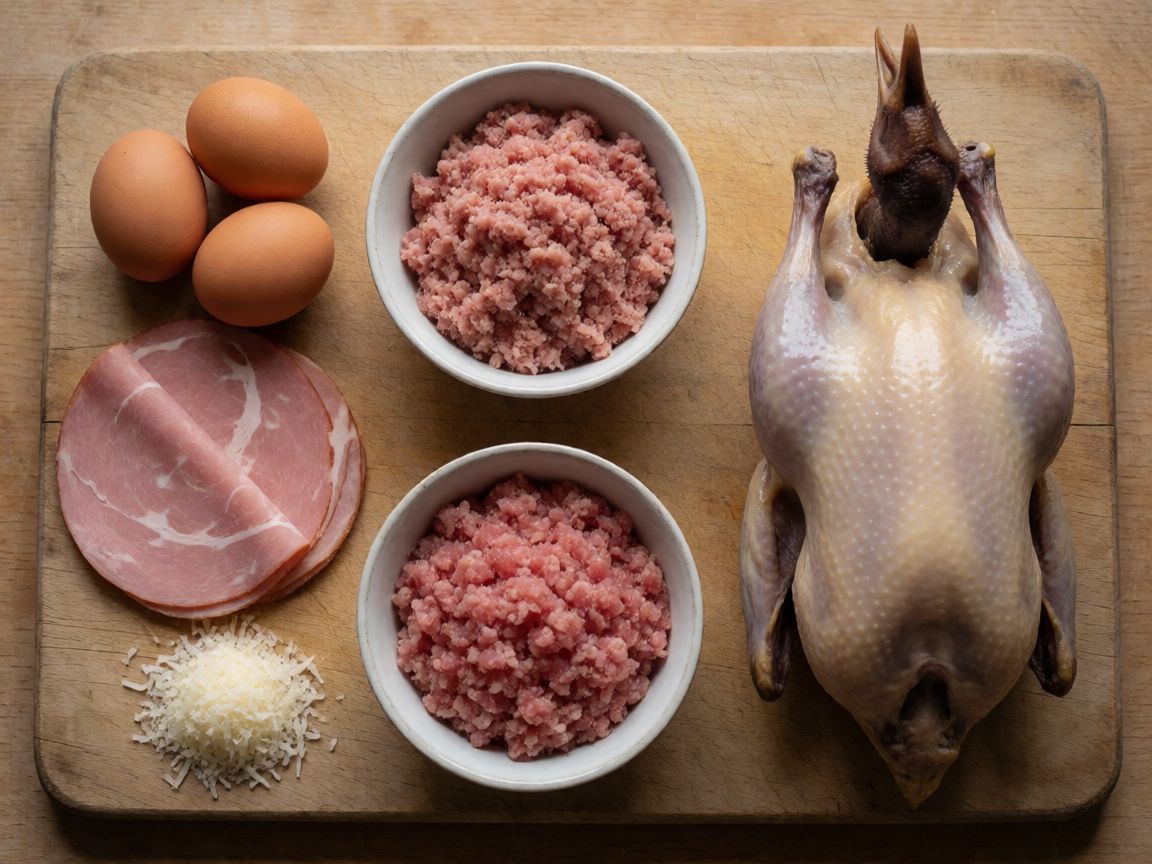
Finely chop the veal mince, pork mince, mortadella, ham and chives with a knife or in a blender.
Combine the chopped mixture with the egg, egg yolk, Parmesan, a pinch of nutmeg and a pinch of salt.
Fill the guinea fowl with the stuffing and sew it closed with kitchen string.
Lay the rosemary, sage, bay leaf and garlic cloves on the bottom of a roasting dish.
Rub the guinea fowl with salt and butter, then pour over the white wine.
Roast in the oven at 180°C for about 90 minutes.
90 minAbout halfway through roasting, turn the meat and, if needed, add a little more white wine.
Check the meat is cooked using a thermometer — the thickest part should reach 74°C.
Let the guinea fowl cool well, then slice, alternating with orange segments.
This isn't a Sunday roast, whatever the oven and the roasting dish tell you. You roast it hot, yes, but then you let it go cold, and you eat it sliced like a terrine, with orange. Treat it like Sunday lunch and carve it steaming and you'll lose the whole point: the stuffing inside is a pâté, not a side dish, and a pâté needs to set.
The guinea fowl itself is the frame, not the meal. It's leaner and tighter-fleshed than chicken — less water in the muscle, less fat under the skin — which is exactly why it's stuffed and basted so hard with butter and wine: a dry bird left to fend for itself over ninety minutes will give you cardboard breast and rubbery leg. The stuffing solves two problems at once — it keeps the cavity full of fat and moisture that bastes the meat from the inside, and it turns a smallish, pricey bird into something that properly feeds four.
Some say you can tell poultry is done when the juices run clear. No — not here, and not with any stuffed bird. The thermometer exists precisely because the center of this thing isn't bone and air, it's a dense plug of raw mince and cheese that insulates itself and lags behind the surface. Juices from the breast can run clear while the middle of the stuffing is still cool and unsafe. Seventy-four degrees in the thickest part, measured, is the only honest answer — and it's not paranoia, it's two separate pieces of raw meat (the bird, the mince) that both need to cross that line.
Why it has to cool before you cut it: hot, the egg-bound mince is set the way a just-cooked meatball is set — holds its shape if you're gentle, falls apart if you're not. Cold, the butter and the fat laced through the mortadella and the parmesan go hard again, and that solid fat is what locks the crumb so a slice comes away clean and thin. This is galantine logic, not fussiness — Italian kitchens have served stuffed birds cold for banquets for centuries for the plain reason that cold food travels, waits, and slices better than hot food ever will, and nobody has to carve in front of the guests at the moment of serving.
On the bird: 1.2 kg is a decent size for guinea fowl, but go by availability — if your butcher only has smaller ones, two birds of 600g feed the same table, just watch the roasting time shortens. No guinea fowl at all, a small chicken will do, but chicken holds more water in the flesh, so it'll throw more liquid into the pan and you may need a touch less wine and a longer rest to let things firm.
The mince pairing — veal and pork — is about fat balance. Veal alone is mild and lean, almost dry when cooked; pork brings the fat that carries flavour and keeps the whole stuffing from tasting chalky. No veal to hand, pork mince on its own works, just nudge the fat up a little, a spoon of its own fat or a little extra butter worked through.
Mortadella and ham aren't there for bulk, they're there because they're already cooked and already seasoned — they let you build savour into the stuffing without more raw meat that needs its own careful cooking. The criterion for mortadella is fat studded through a mild, finely ground cure — if you can't get it, a good cooked pork sausage meat with visible fat flecks and gentle spicing will stand in. For the ham, go for something actually cured, not the wet reformed slices — you want chew and real salt, not water.
Egg plus an extra yolk: the whole egg binds the mixture so it holds together at all; the extra yolk adds fat on top of that, which is what gives you a smoother, richer set once it's cold — less crumbly on the knife. Parmesan does two jobs, salt and umami while it cooks, and a firming one once it's cold, same mechanism as the fat: it solidifies and helps the slice hold its edge.
Nutmeg here is traditional in forcemeats right across Europe for a reason that's more practical than mystical — a pinch cuts the flatness of egg and cheese and fat together; more than a pinch turns medicinal, so treat it as seasoning, not as a flavour of its own. The rosemary, sage, bay and garlic under the bird aren't for the stuffing at all — they sit in the fat that renders down into the pan, and the white wine you pour over carries their flavour back up into the bird as it bastes, which is also why you top the wine up halfway through: a dry pan at that point means a scorched base and a bird basting in nothing.
Butter rather than a flavourless oil here earns its place — milk solids in butter brown and colour the skin in a way neutral oil won't, and colour on a bird this lean is most of what tells you it's actually roasting and not just steaming in its own wine. The orange at the end isn't decoration either — its acidity is doing the same job lemon does with oily fish: cutting through the fat of the mortadella, the cheese, the butter, so a rich cold slice doesn't sit heavy on the tongue. Any sharp, juicy citrus segment will do the same work if oranges aren't in season.
Patience is the real ingredient in the last step. Ninety minutes in the oven is the easy part — cooling it properly, giving it the hour or more it actually needs to firm before you take a knife to it, is where people lose their nerve and end up with a warm, sliding mess on the board instead of clean slices. Let it sit.