
 AI photo
Calabrian Susumelle
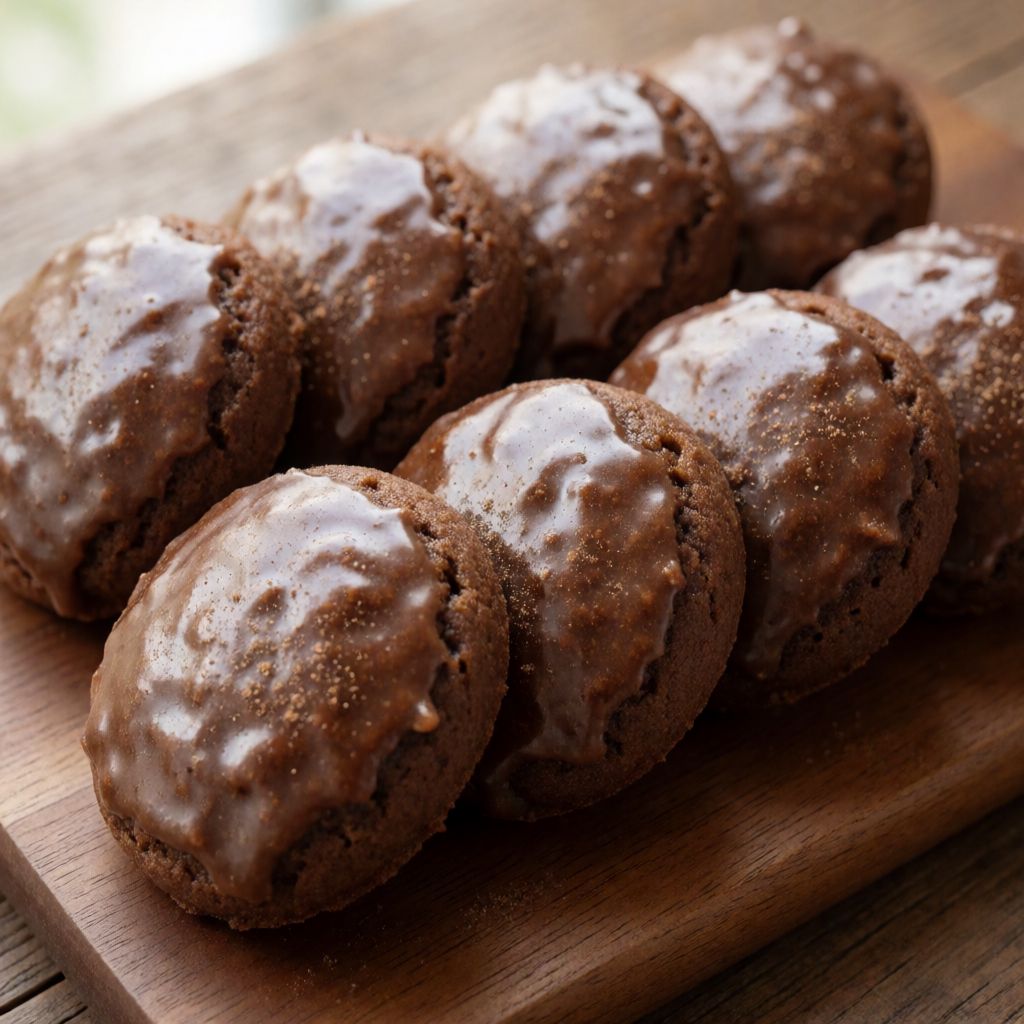
Soft Calabrian spiced honey biscuits, dipped in dark chocolate.
Labels are worked out automatically from the ingredients and can be wrong. Check the packaging if it matters to you.
Ingredients
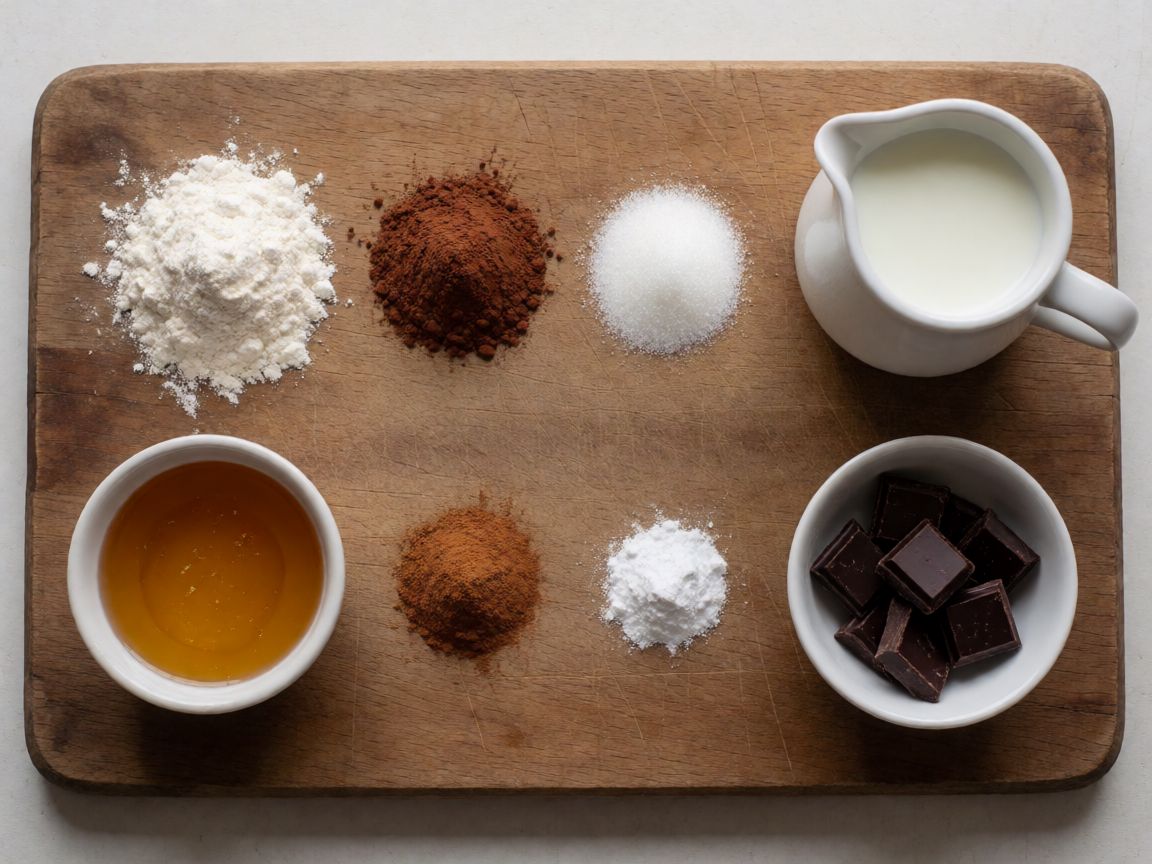
- 500 g Plain flour
- 15 g Cocoa powder
- 200 g Caster sugar
- 10 g Cinnamon
- 60 g Milk
- 200 g Wildflower honey
- 16 g Baking powder
- 50 g Water
- 200 g Dark chocolate









Steps
In a small saucepan combine the honey and water and heat gently until the honey has fully dissolved
Sift the flour, cocoa powder and baking powder into a bowl
Add the milk, sugar and cinnamon, then pour in the honey mixture
Knead the dough by hand until smooth and firm
Roll out the dough with a rolling pin to a thickness of 1 cm on a lightly floured surface
Cut out oval shapes to form the susumelle biscuits
Transfer the biscuits to a baking tray lined with parchment paper
Bake in an oven preheated to 190°C, on the middle shelf
15 minLet the biscuits cool completely on a wire rack
Break up the dark chocolate and melt it in a bain-marie
Dip the top of each biscuit into the melted chocolate
Place the glazed biscuits on a wire rack to set
60 min
Susumelle is Calabria's Christmas biscuit, and it exists because honey, before sugar got cheap, was the only sweetener a hill farmer had lying around in quantity. That's why honey, not sugar, runs the show here — sugar is just a top-up. The dough is really a spiced honey-bread dough, closer to German lebkuchen or English parkin than to a British biscuit, and it behaves the same way: dense, a bit chewy, built to improve after a day or two rather than taste its best straight from the oven.
What decides whether it works is the dough's firmness and the oven's heat doing one specific job: setting the outside while the inside stays soft. Honey caramelises and scorches well before 190°C does its real work on flour and baking powder, which is why the shaping step — rolling to about 1 cm — matters more than it looks. Too thin and the biscuit turns into a honey cracker, dry through and through, no chew left. Too thick and the middle stays raw-tasting while the edges darken, because heat has to travel through a kilo of dense dough with no steam to help it, unlike a bread crumb full of air pockets.
Some say honey biscuits need a slow cool oven, like meringue logic — no, because this dough has baking powder and needs a decent whack of heat to lift and set the crumb before the honey has a chance to burn on the surface. 190°C on the middle shelf, where heat is even and not aimed at the biscuit from one side, is the compromise: enough lift, not enough scorch.
Flour is just structure here — plain flour, no need for anything stronger, because you're not chasing gluten development for chew, you're binding a wet honey dough into something you can roll and cut. Bread flour would only make it tougher and harder to roll without any benefit.
Cocoa powder is there for colour and a bitter backbone, not for chocolate flavour as such — 15 g in 500 g flour is a whisper. Unsweetened cocoa is what you want; if you've only got drinking chocolate with sugar and milk powder already in it, cut back the caster sugar slightly, because that's where the extra sweetness is hiding.
Honey is the engine of the whole recipe, and wildflower honey is specified because it has a rounded, not-too-floral flavour that won't fight the cinnamon and cocoa. A single-flower honey like heather or manuka will push its own character through — fine if you like that, just know it'll taste different, not wrong. Warming it with the water before mixing isn't about "activating" anything mystical, it's simple physics: cold honey is thick and clumps, warm honey pours and blends evenly through flour, so you don't end up with pockets of raw honey taste in one biscuit and none in the next.
Cinnamon at 10 g across 500 g flour is a proper dose — this isn't a biscuit with a hint of spice, it's meant to taste of it, in the same family as the mixed spice you'd put in a British fruit cake, so if cinnamon alone feels flat to your palate, a pinch of clove or nutmeg from your baking cupboard sits well alongside it, which is historically what the Calabrian versions often do anyway.
Baking powder at 16 g is a lot for 500 g flour — nearly double what you'd use in a cake — because this dough is dense and honey-heavy, and it needs real lifting power to stop the biscuit baking into something leathery rather than tender. Don't be tempted to cut it back for a "lighter" result; less lift here just means more density, not more delicacy.
Dark chocolate for the glaze wants to be eating chocolate, not a chocolate cake covering with milk solids mixed in — any oil with no flavour of its own has no place here, you want pure chocolate, melted gently in a bain-marie because direct heat on a pan will seize it into a grainy mess before you've even dipped the first biscuit. If you don't own a proper bowl-over-pan setup, a heatproof bowl sitting in a wider pan with an inch of simmering water underneath does exactly the same job — the point is water vapour, not direct flame, touching the chocolate.