
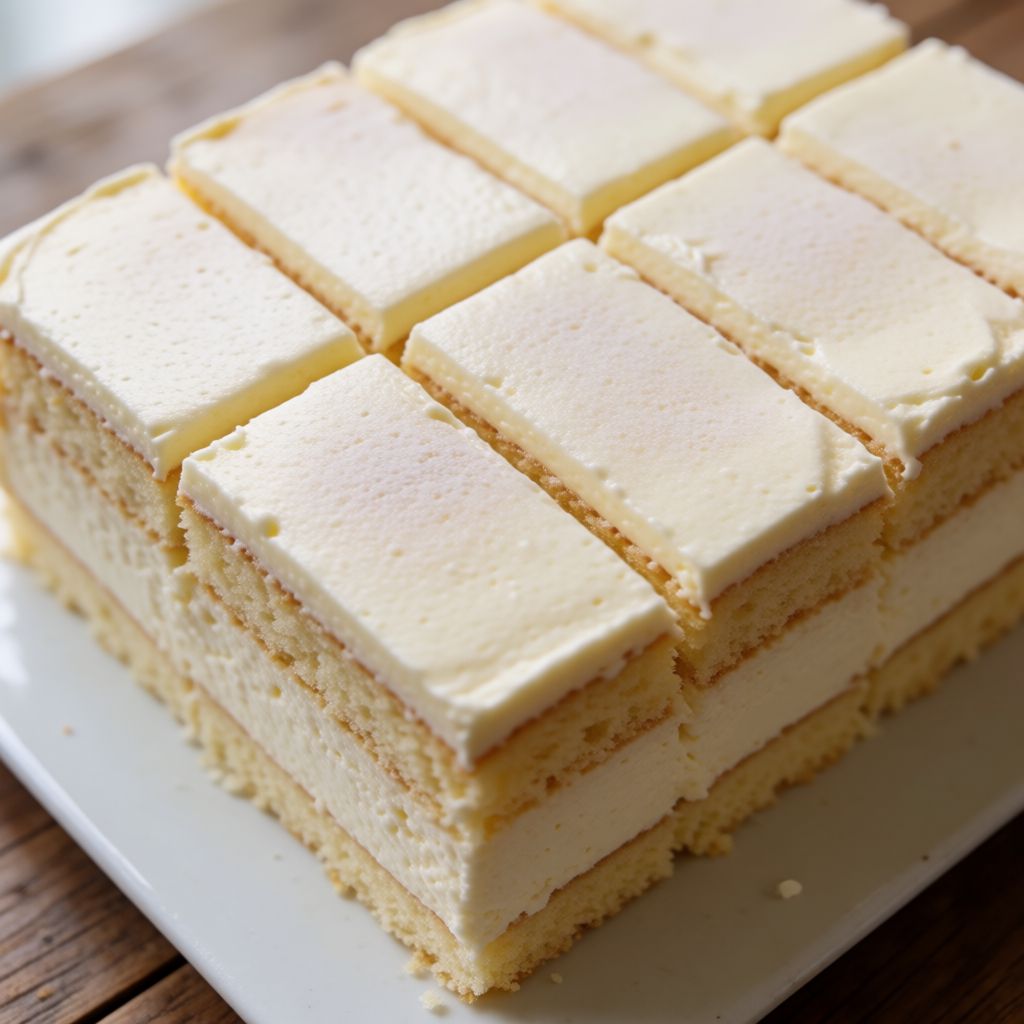
 AI photo
Mother-in-law Cake
A light, lemon-scented sponge cake traditionally served dusted with icing sugar.
Labels are worked out automatically from the ingredients and can be wrong. Check the packaging if it matters to you.
Ingredients
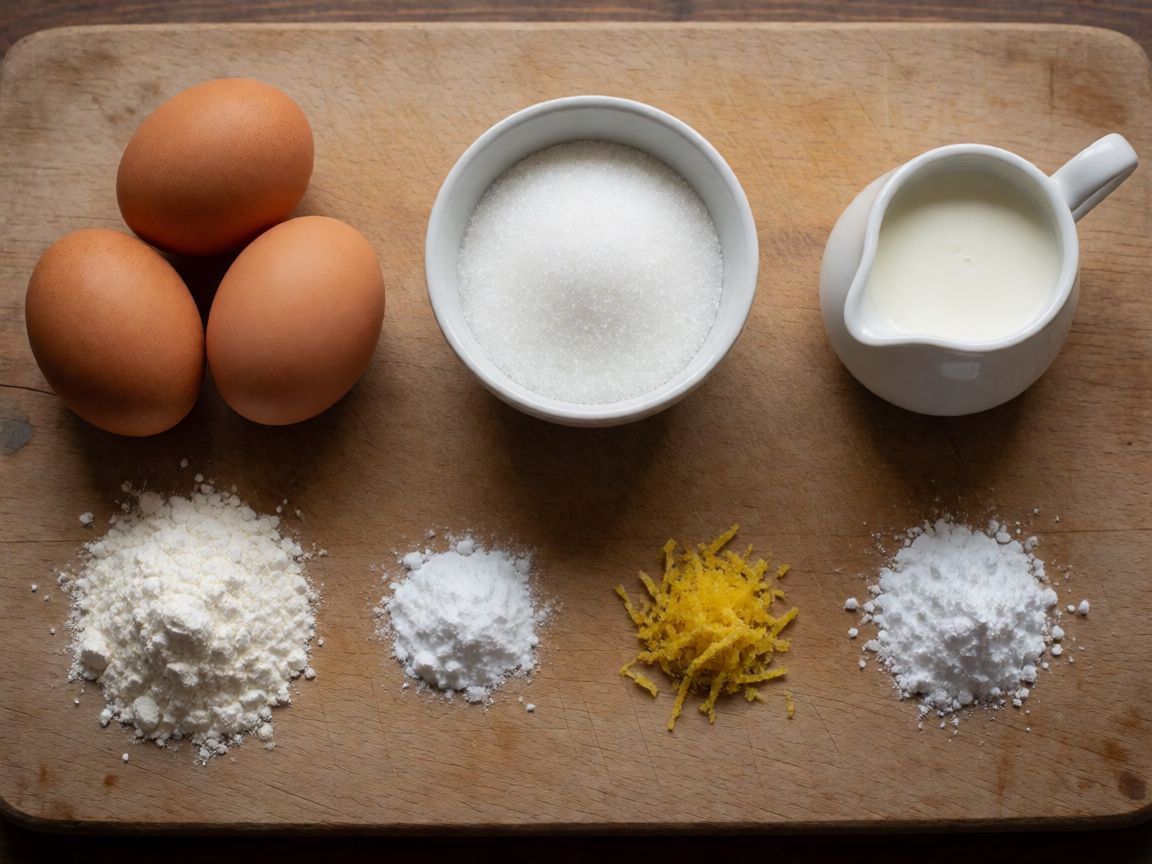
- 3 pcs Eggs
- 100 g Caster Sugar
- 200 ml Double Cream
- 130 g Plain Flour
- 50 g Potato Starch
- 15 g Baking Powder
- 1 pcs Lemon Zest from a well-washed lemon
- Icing Sugar to taste








Steps
Crack the eggs into a bowl and add the caster sugar. Beat with an electric mixer until the mixture becomes light and creamy.
Continue beating while slowly pouring in the double cream in a thin stream.
Sift the dry ingredients - flour, potato starch and baking powder - adding them in batches and folding them in gently.
Flavour the batter with the lemon zest and mix well.
Pour the batter into a buttered and floured 22 cm tin.
Bake in a preheated fan oven at 160°C for 35-40 minutes, or in a conventional oven at 170°C for 40-45 minutes.
40 minCheck for doneness with a toothpick - it should come out dry, with no batter sticking to it.
Let the cake cool completely, then transfer it to a serving plate.
Dust with icing sugar just before serving.
This is a quick family sponge, not a patisserie piece — the cake you make when someone's turning up and you've got twenty minutes of actual work in you, not two hours. The name gives the economics away: it's the cake for the mother-in-law who rings the bell while you're still in your dressing gown. No butter to soften, no yeast to wait for, no filling to assemble. Eggs, sugar, cream, flour, a tin. That's the whole argument.
What decides whether it rises or sits flat as a biscuit is the first step, not the baking powder. Beating the eggs and sugar isn't for show — it's whipping air into the mixture and trapping it in a web of egg protein. That trapped air is most of your lift. Baking powder just helps it hold once the heat sets the structure; it can't build volume out of nothing. Beat until the mixture goes pale and thick enough that when you lift the whisk, the batter falls back in a ribbon that sits on the surface for a second or two before sinking in. That's the cue, not a stopwatch.
The cream has to go in slowly, in a thin stream, while the mixer's still going. Pour it in all at once and the weight of the liquid collapses the air you just built — same reason you don't dump stock into a hot roux, you ease it in so nothing breaks. Fold the flour, starch and baking powder in gently and in batches for the same reason: one heavy-handed stir with all the dry ingredients at once knocks the air straight back out, and you'll get a dense, close crumb instead of a soft one.
Eggs are the engine here, so use them at room temperature if you can — cold eggs whip to a smaller, slacker foam, and on a domestic hand mixer without a huge motor you need every bit of lift you can get. Caster sugar matters more than it looks: it's finer than granulated, so it dissolves into the egg while you're still beating instead of sitting there as grit, which is exactly what you'd feel on your tongue later if you swapped it carelessly. If all you've got is granulated, give it a spin in a blender first — a few seconds, not a science project.
Double cream is doing a fat job, not a dairy job: it coats the air bubbles you whipped into the eggs and keeps them from collapsing while the batter sits and bakes. That's why the substitution rule isn't "any cream" — it's any cream with enough fat to do the coating, roughly double cream's territory, around 36% and up. Thinner cream, like single, won't hold the structure the same way and you'll feel it in a denser slice. In a pinch, full-fat crème fraîche works, though it brings a tang the lemon zest will have to share the stage with.
The flour-and-starch split is the real reason this cake is tender rather than chewy. Flour alone, beaten this hard, would build gluten and fight you — starch has none, so it dilutes the gluten-forming power of the flour and gives you a crumb that gives rather than snaps. Potato starch is traditional here for texture, but cornflour does the same job if that's what's in your cupboard; just don't skip it and use all flour, or you'll get something closer to a dense loaf than a cake.
Baking powder is not interchangeable with bicarbonate of soda in this recipe — baking powder already carries its own acid and fizzes on contact with liquid and heat, no extra acid needed. Soda needs something sour to react with, and there isn't enough lemon juice in a bit of zest to do that job. Use what the recipe says.
Lemon zest only works if you've actually washed the lemon — most of what you buy has a wax coating from transport, and that wax ends up on your grater and then in your batter if you skip the wash. Take only the yellow: the white pith underneath is bitter and will sit there sulking in an otherwise mild cake.
The tin — 22 cm, buttered and floured — feeds six reasonably, a bit less if anyone's having two slices with their tea, which, in this kitchen, someone always is. Buttering alone isn't enough: the flour dusted on top gives the batter something to slip against as it shrinks slightly on cooling, which is the actual reason cakes stick and tear at the edges, not bad luck. On the oven: a fan oven moves hot air past the cake constantly, which transfers heat faster, so it's run a touch cooler than a conventional oven for the same result — that's not two unrelated numbers, it's one mechanism written twice.