
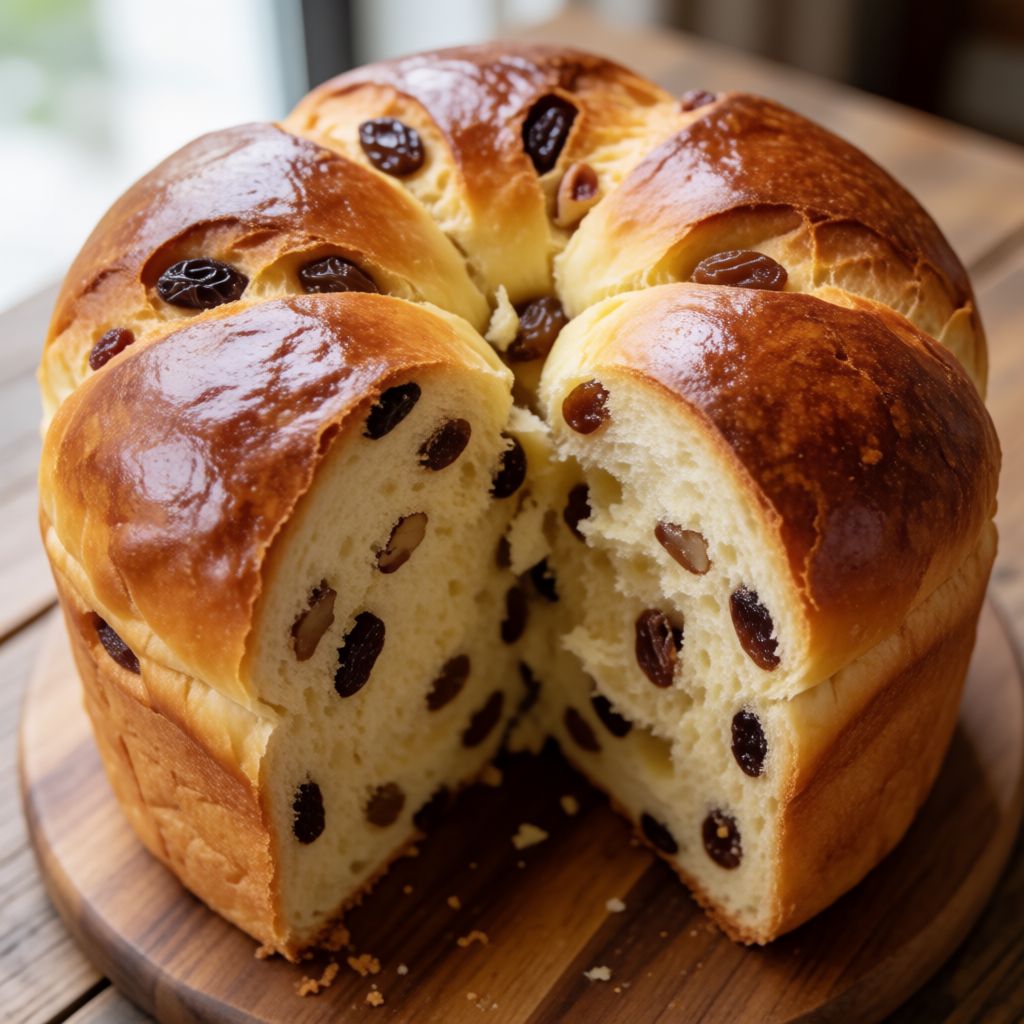
 AI photo
Sweet Nut and Raisin Bread for All Hallows
A sweet yeasted bread studded with walnuts, almonds, pine nuts and raisins, traditionally baked for All Saints' Day.
Labels are worked out automatically from the ingredients and can be wrong. Check the packaging if it matters to you.
Ingredients
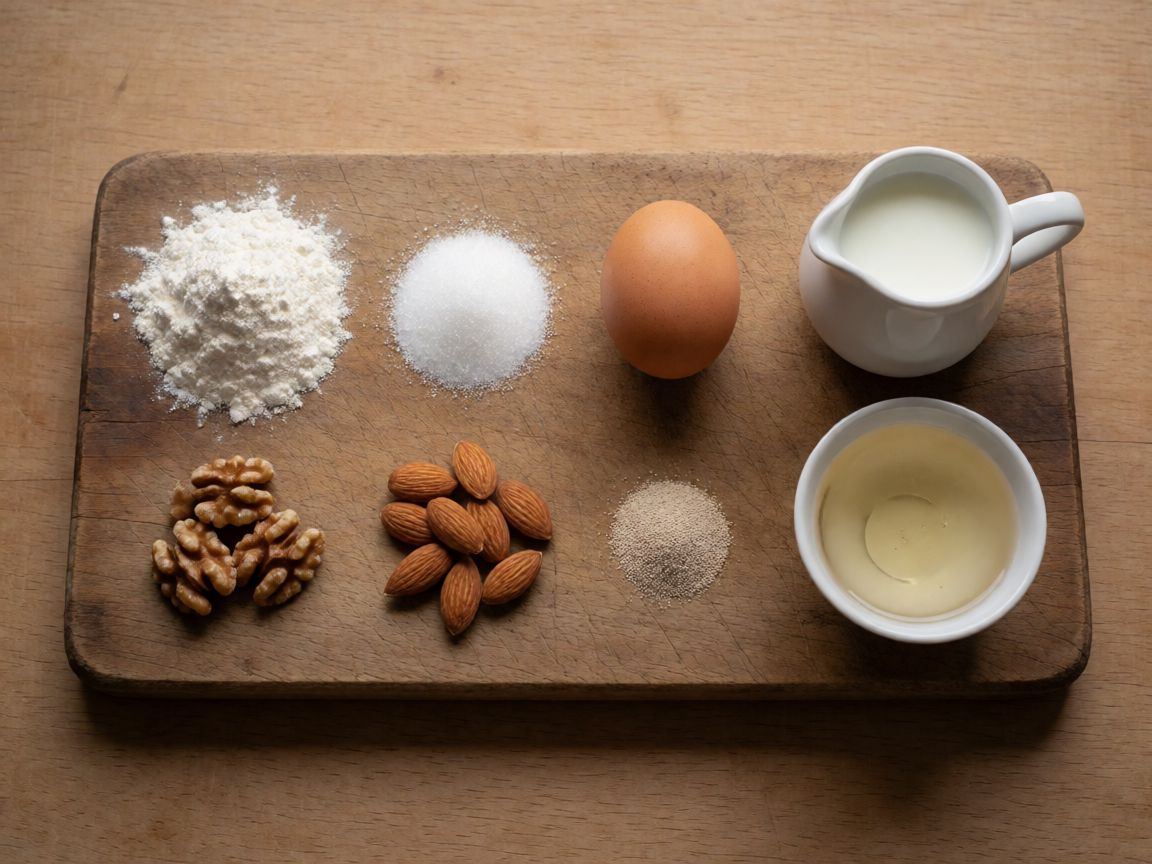
- 250 g Plain flour
- 60 g Caster sugar
- 50 ml Olive oil
- 1 pcs Eggs
- 12 g Yeast
- 70 ml Milk
- 20 ml White wine or red wine, or grape must
- 40 g Walnuts
- 30 g Almonds
- 30 g Raisins
- 10 g Pine nuts
- 1 pcs Egg yolk
- 20 g Caster sugar
- 20 ml Milk








Steps
In a large bowl, combine the flour, sugar, egg, olive oil, crumbled yeast and milk. Mix energetically into a smooth, soft ball of dough.
Shape into a ball and place in a lightly floured bowl. Cover and leave to rise.
150 minCarefully transfer the dough into a shallow 22 cm tin lined with parchment, stretching it out with your fingers to cover the surface.
Scatter the walnuts, almonds, raisins and pine nuts over the top, pressing them gently into the dough.
In a small bowl, whisk the egg yolk with the milk and sugar.
Brush the surface of the dough with the egg, milk and sugar mixture.
Bake in an oven preheated to 180°C for about 30 minutes.
30 minRemove from the oven, let cool, then slice and serve.
This is a flat, enriched bread — half way between a brioche and a fruit loaf — built for a specific date rather than a specific flavour. The wine in the dough gives it away: this is a harvest bread, the kind made when the grape must is still sitting in a jug from pressing, and the nuts on top are what was left in the larder before winter closed the kitchen down for the lean months. All Hallows sits right at that point on the calendar — the last sweet thing before Advent fasting in the old reckoning — so this loaf is less a dessert than a hinge between seasons.
What decides whether it works is the dough's hydration, not the oven. You've got only 70 ml milk and 50 ml oil and one egg against 250 g flour — that's a soft, slack dough by bread standards, closer to a thick batter you coax than a dough you knead on a worktop. Don't add flour to make it behave like a normal loaf; that's the mistake that turns this bread dry. It should cling to your fingers right up until the yeast has had its 150 minutes and the gluten has firmed up enough to hold a shape in the tin.
The nuts and raisins go on top, not folded through, and that's deliberate, not laziness. Pressed into a flat, spread-out disc, they toast in the oven's direct heat and the raisins catch a little at the edges — that caramelised edge is the whole point, the thing that separates this from a plain milk loaf. If you fold them into the dough instead, they just steam and go soft, no contrast, no bite.
The yeast: 12 g fresh (or crumbled block) yeast against 250 g flour is a generous amount for a short two-and-a-half hour rise, which tells you this dough is meant to move fast, not develop slowly overnight like a sourdough. If all you can get is dried yeast, halve the weight — dried yeast is roughly twice as active gram for gram, and too much of it gives you a bready, slightly bitter aftertaste rather than lift.
The wine or must: this is the ingredient that actually dates the recipe. Must — the unfermented pulp of just-pressed grapes — would have been sitting around households in wine-growing regions right after the autumn harvest, which is exactly when All Hallows falls. Using plain white or red wine instead is already a substitution our grandmothers made once the fresh must ran out; grape juice works too, for the same reason — all three bring sugar, a little acid to keep the crumb tender, and a faint fruitiness, not alcohol flavour, since 20 ml disappears into 250 g flour and a short bake besides.
The oil: olive oil here is doing the softening job that butter does in a brioche, but without butter's dairy fat sticking around to seize up when the loaf cools. Use any oil with no smell of its own if your olive oil is the strong, grassy kind — a mild sunflower or rapeseed oil won't fight with the wine and nuts. A fruity extra-virgin olive oil, on the other hand, will leave a bitter edge once baked, so save the good bottle for your salad, not this.
The nuts — walnuts, almonds, pine nuts — are a thrift mix as much as a flavour one: whatever hard nuts were left in the house by late autumn, before they went soft or rancid over winter, got used here. You don't need all three. If pine nuts are expensive or hard to find in a UK shop, flaked almonds alone will do; the point is textural contrast on top of a soft crumb, not a specific trio.
The egg yolk, milk and sugar glaze: this is a lighter version of an egg wash, and the extra sugar in it means it will catch and darken slightly in the oven — watch for that rather than trusting the clock. At 180°C, this isn't a temperature that chars the sugar in the glaze outright; it caramelises it gently. If your domestic oven runs hot at the back, as most do, turn the tin round halfway through rather than raising or lowering the heat — it's an easier fix than guessing a new number.
Doneness here isn't really about the 30 minutes stated — that's your floor, not your answer. Look instead at the glazed top: it should go from pale yellow to a deep amber-gold, and a skewer or knife tip into the centre should come out dry, not wet with batter. Patience matters twice in this recipe — once during the 150-minute rise, which you cannot rush without getting a dense, unrisen disc, and once again after baking, letting it cool before you cut it, because a warm crumb with that much egg and oil in it will tear rather than slice cleanly.