
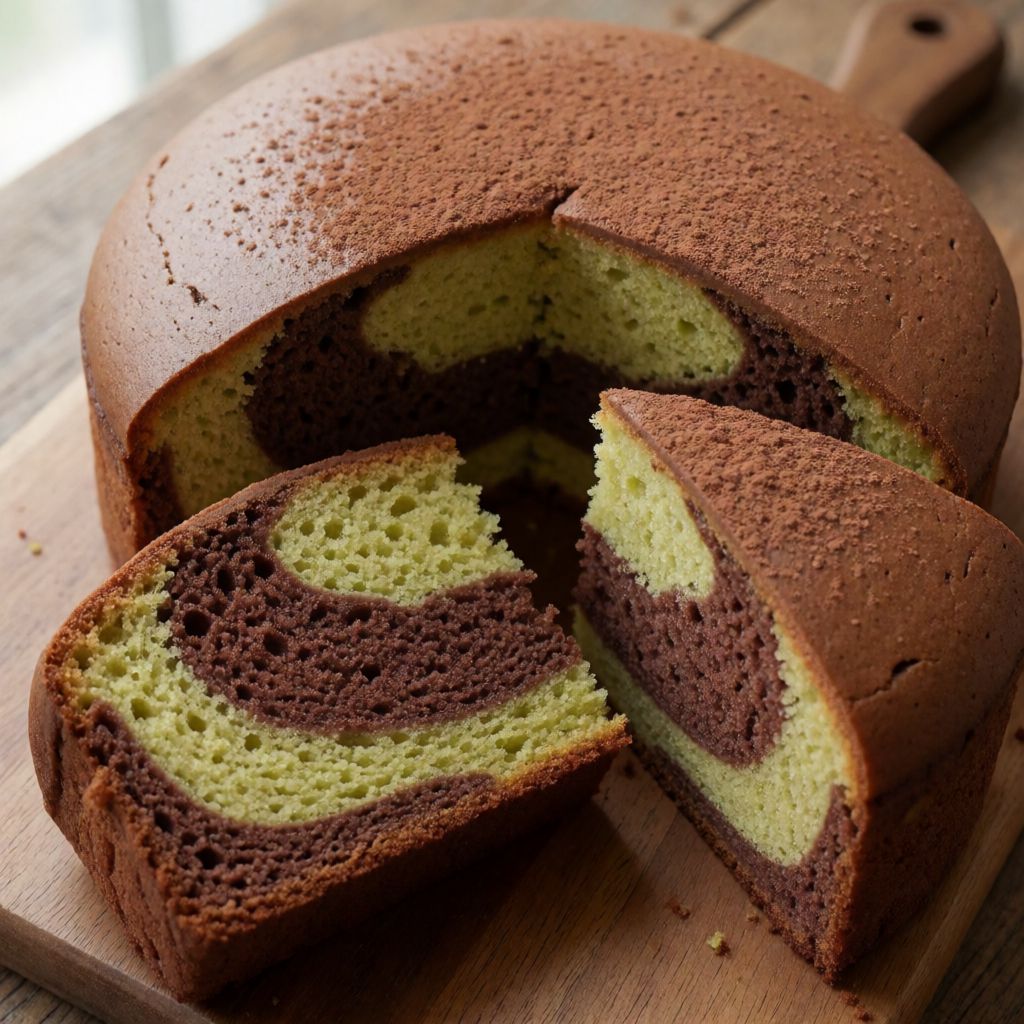
 AI photo
Pistachio and Chocolate Cake (No Butter)
A marbled sponge cake swirled with cocoa and pistachio paste, made without butter.
Labels are worked out automatically from the ingredients and can be wrong. Check the packaging if it matters to you.
Ingredients
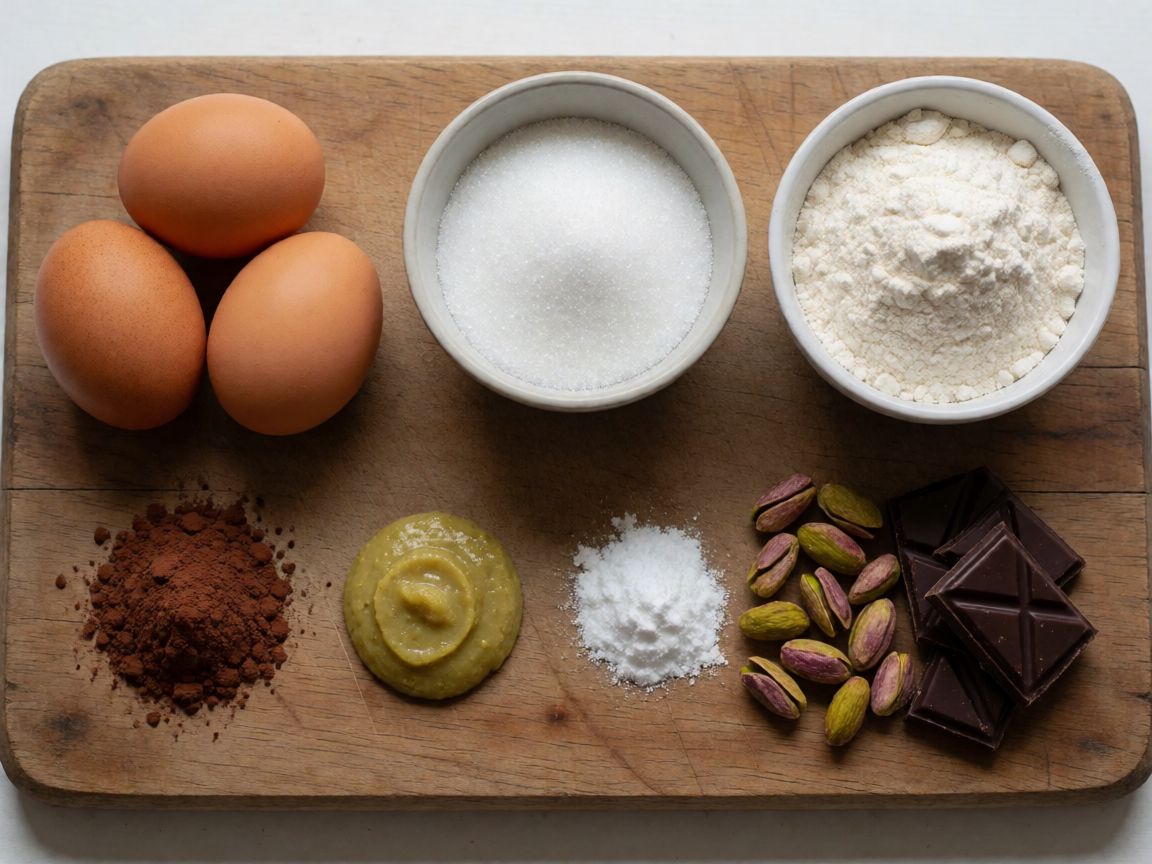
- 3 pcs Eggs
- 250 g Caster sugar
- 250 g Plain flour
- 30 g Cocoa powder
- 130 g Vegetable oil
- 130 ml Water
- 16 g Baking powder
- 30 g Pistachio paste
- Pistachios a handful, to decorate
- Dark chocolate sliced, to decorate








Steps
In a bowl, whisk the eggs and sugar with a mixer until light, fluffy and creamy.
Add the water and oil, and continue mixing.
Add the pre-sifted baking powder and flour, and mix until smooth.
Divide the batter in half: stir the cocoa powder into one half and the pistachio paste into the other, mixing each separately.
Grease and flour a 26 cm tin, then pour in both batters alternately.
For a marbled effect, gently swirl the batter in the tin with a fork.
Bake in a preheated oven at 180°C for about 45 minutes.
45 minRemove the cake from the oven and let it cool completely.
Transfer to a serving plate.
Decorate the cake with chopped pistachios and dark chocolate slices, then serve.
This is a marble cake, and the thing to understand about marble cake is that it's really two cakes pretending to be one — same base batter, split, flavoured two ways, then married in the tin before the oven sets them both at once. No butter here, which isn't a diet trick, it's a structure choice: oil stays liquid at room temperature, butter doesn't, and that's why this sponge stays soft and a bit dense the next day instead of going dry and crumbly the way a butter cake can when it's cold.
What decides whether it works is the egg-and-sugar stage, not the oven. You're not just combining them, you're beating air into the mixture until it goes pale and holds a ribbon off the whisk — that's your only leavening besides the baking powder, since there's no creamed butter trapping air of its own. Skip that and the crumb is flat and gummy no matter how long you bake it.
The marbling is honest decoration, not just prettiness: it tells you the two batters are different weights and textures (cocoa thins things slightly, pistachio paste thickens and oils them), so when you spoon them in alternately and drag a fork through once or twice, you get streaks, not stripes — swirl too much and you just get grey-brown cake with pistachio flecks lost in it.
Some say marble cake needs two separately baked layers glued with jam — no, because the whole point of marbling is that it happens raw, in one tin, in one bake. The "cake" part is one batter; the colour is the only thing that's two.
Eggs here are doing structural work, not just richness — three eggs, whipped properly, are your scaffolding. Room-temperature eggs whip to volume faster and more reliably than cold ones straight from the fridge; cold egg proteins are stiffer and trap air more slowly, so if yours have been sitting in a British fridge, give them ten minutes on the counter first. That bend in the whisk — a thick ribbon that sits on the surface for a second before sinking — is your cue that there's enough air in there, not a stopwatch.
Vegetable oil is chosen for what it doesn't bring: no flavour of its own, and it's liquid, so it coats the flour's gluten strands rather than melting and recrystallising like butter does on cooling. Any neutral oil works on that same logic — sunflower, rapeseed (common and cheap in the UK), even a light olive oil if that's what's in the cupboard, so long as it doesn't taste of itself. Don't reach for something strong like extra virgin olive or walnut oil; it'll fight the cocoa and pistachio instead of carrying them.
Flour and baking powder are the straightforward engineering: plain flour for a tender, not overly structured crumb, baking powder sifted in to break up any clumps that would sit in the batter as a bitter pocket later — that's the actual reason to sift, not tradition for its own sake. 16g is a fair amount for 250g flour; it's doing real lifting since there's no butter-air and only moderate egg-air to rely on.
Cocoa powder and pistachio paste are where the two halves earn their separate identities. Use plain unsweetened cocoa, not a drinking-chocolate mix with added sugar and milk powder — that would throw off both sweetness and the batter's liquid balance. Pistachio paste is the one ingredient Britain doesn't stock on every corner; if you can't find it, blitz blanched, skinned pistachios with a spoon of neutral oil to a paste yourself, or in a pinch use a smooth almond paste with a few drops of green colouring and accept it's a stand-in, not the real flavour.
The tin matters more than people admit: 26cm, greased and floured — the flour dusting is what stops the baked edge tearing when you turn it out, because butter or oil alone on the metal will still let a thin crumb skin bond to it. If you only own a loose-bottomed or springform tin, that's actually easier here than a solid one; just make sure the base seals so the thinner batter doesn't seep out while the two colours are being poured in alternately.
The long cool at the end isn't laziness in the instructions, it's patience as an ingredient: a cake this moist, cut while warm, will look wet and gummy in the middle even if it's fully cooked, because the crumb hasn't finished setting — starches carry on firming up as they drop in temperature, not just in the oven. Let it sit, fully cool, before you slice, and the texture you actually baked will show itself instead of a false, underdone one.