
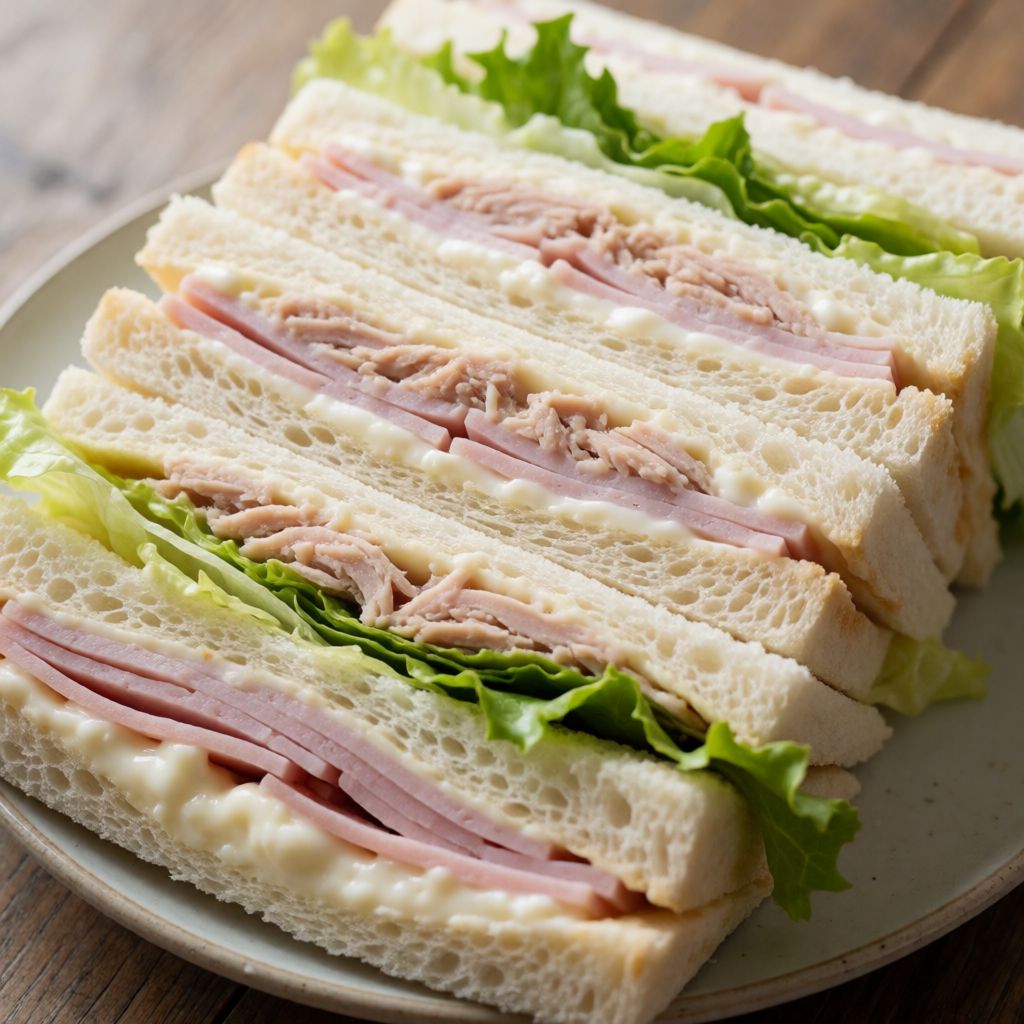
 AI photo
Tramezzini
Classic Italian tramezzini sandwiches with four tasty fillings: ham, tuna, vegetarian, and smoked salmon with avocado.
Labels are worked out automatically from the ingredients and can be wrong. Check the packaging if it matters to you.
Ingredients
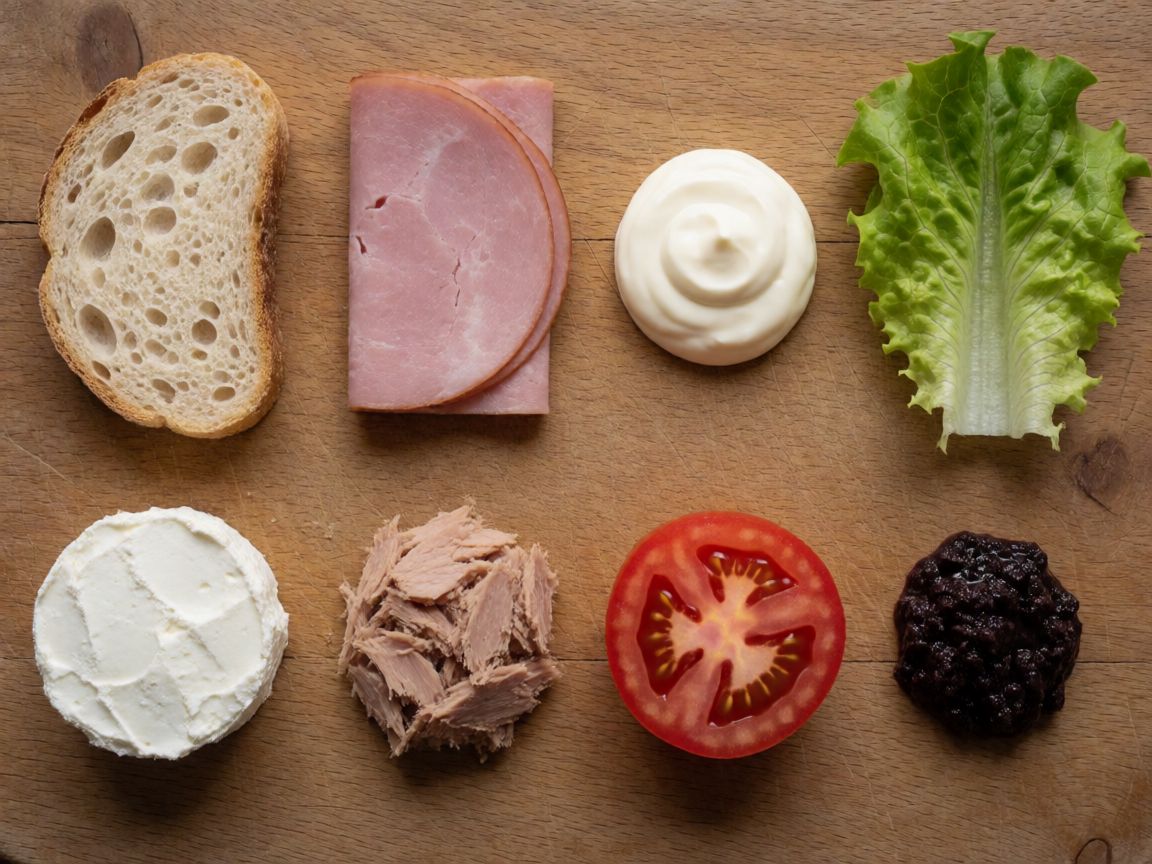
- 16 pcs Crustless white sandwich bread
- 100 g Ham
- 100 g Cream cheese
- 16-20 tbsp Mayonnaise
- Lettuce to taste
- 150 g Tuna in oil
- 2 pcs Tomato
- Green olive paste to taste
- 100 g Emmental
- 100 g Smoked salmon
- 1 pcs Avocado
- Olive oil to taste, for frying










Steps
Cut the crustless white sandwich bread into triangles, about 8 per set of slices, keeping them roughly the same size.
5 minTo make the ham tramezzini: spread a layer of mayonnaise on a slice of bread, add lettuce leaves, ham and cream cheese, top with another spoonful of mayonnaise and cover with a second bread triangle.
5 minTo make the tuna tramezzini: spread a layer of mayonnaise on the base slices, add lettuce leaves, tomato slices, tuna in oil and green olive paste, top with 2 tbsp of mayonnaise and cover with the remaining bread slices.
5 minTo make the vegetarian tramezzini: cut the bread into rectangles, spread a layer of mayonnaise on the bases, add lettuce leaves, tomato slices, Emmental and a few spoonfuls of mayonnaise, then cover with the other bread slices.
5 minTo make the smoked salmon and avocado tramezzini: spread a layer of mayonnaise on the bases, add pieces of smoked salmon, lettuce leaves, avocado slices and a few spoonfuls of mayonnaise, then cover with the remaining bread slices.
5 min
A tramezzino is bar food, not a sandwich you sit down to eat. Soft white bread, crusts off, cut into a triangle you can hold between two fingers while you drink your coffee standing at a counter — that's the shape dictating everything else here. Four fillings, same logic underneath: a wet, savoury centre held between two layers of mayonnaise that never touch the bread directly with their own moisture.
What decides whether this works isn't the ham or the tuna — it's whether the bread is still bread by the time someone eats it. Crustless white loaf, soft enough to give under your thumb without tearing, goes soggy the moment tomato juice or tuna oil sits straight against the crumb. The mayonnaise on both inner faces isn't there for taste, mainly — it's a fat seal, the same job butter does under jam on a scone. Skip it and you don't get a worse sandwich, you get wet paper with filling in it.
Some say tramezzini are an old Venetian thing, handed down for centuries like a lagoon secret. No — they're a 1920s Turin café invention, built around soft American-style white bread that had just become fashionable, sold cheap and fast to office workers who had twenty minutes for lunch, not two hours. Venice took the idea and ran a glass case of them, Harry's Bar made it smart, but the dish is pure urban economics: small, pre-made, no cooking, no waiting, sold by the piece. That's also why there's no heat anywhere in this recipe — nothing here is meant to be cooked, only assembled and chilled.
Start with the bread, because it carries all the risk. You want a soft, closed-crumb white sandwich loaf, the kind that's already slightly compressed in the bag — not a crusty bloomer, not anything artisan and open-holed. A loose, airy crumb has gaps that let mayonnaise and tuna oil through fast; a tight one resists a little longer. If the bread is bone-fresh and springy it'll tear when you press two filled triangles together; a day old and slightly firmer is actually easier to work with, as long as it still bends instead of cracking. Crust goes because it chews and compresses differently from the inside — leave it on and every bite has one hard edge fighting a soft middle.
Mayonnaise is the structural ingredient, not a condiment, which is why the quantity looks absurd on paper — sixteen to twenty tablespoons for sixteen pieces of bread, because every single inner face gets coated, top and bottom. Any thick, neutral emulsion does the job; a stiff aioli works, a good shop mayonnaise works, a very runny one doesn't, because it needs to sit as a layer, not soak in. If you're making your own, keep it firm enough to hold a ridge from the spoon.
Ham and cream cheese together are the plainest filling and the test case: the cream cheese does what the mayonnaise does on the other side — seals — so this one is naturally the least likely to weep. Tuna in oil, not water: the oil carries flavour into the olive paste and tomato instead of leaving the filling dry, so if you've only got tuna in water, drain it hard and work in a spoon of olive oil before you use it, or you'll taste cardboard. Olive paste itself is just salt and bitterness in concentrated form — a little goes further than it looks, and a rough chopped olive in oil is a fair stand-in if paste isn't in your cupboard.
Tomato is the one ingredient that actively works against you: slice it, lay the slices on a paper napkin for a minute, pat them, and only then put them in — that's your lid and your drying rack in one, since you won't have a proper press in a flat kitchen, and it stops the slice bleeding water straight into the crumb underneath it the moment it's sandwiched. Emmental is there for a mild, waxy, cool bite with no smell of its own to fight the tomato — any firm, mild cheese that slices thin without crumbling will do, a mild Cheddar from any UK shop included, though it'll taste a touch sharper than the original. Smoked salmon and avocado is the one filling where ripeness, not freshness, is the test: the avocado should yield gently under a thumb press, not resist like a stone and not collapse like a bruise — rock-hard won't slice clean, overripe will smear instead of lying in a layer.
Patience here isn't about long cooking, since there is none — it's about the ten minutes you give the finished stack before you cut it. Wrap the sandwiches in a damp cloth or just cling film and let them sit, weighted lightly with a plate, before the knife goes in. That short rest lets the mayonnaise layer bond the two slices of bread into something that cuts clean, instead of a soft filling sliding out sideways under the blade — skip it and your triangles look amateurish no matter how careful the filling was. One odd note on the ingredient list: it calls for olive oil for frying, but nothing in this dish gets fried — nothing here goes anywhere near heat, so leave it on the shelf for something else.