
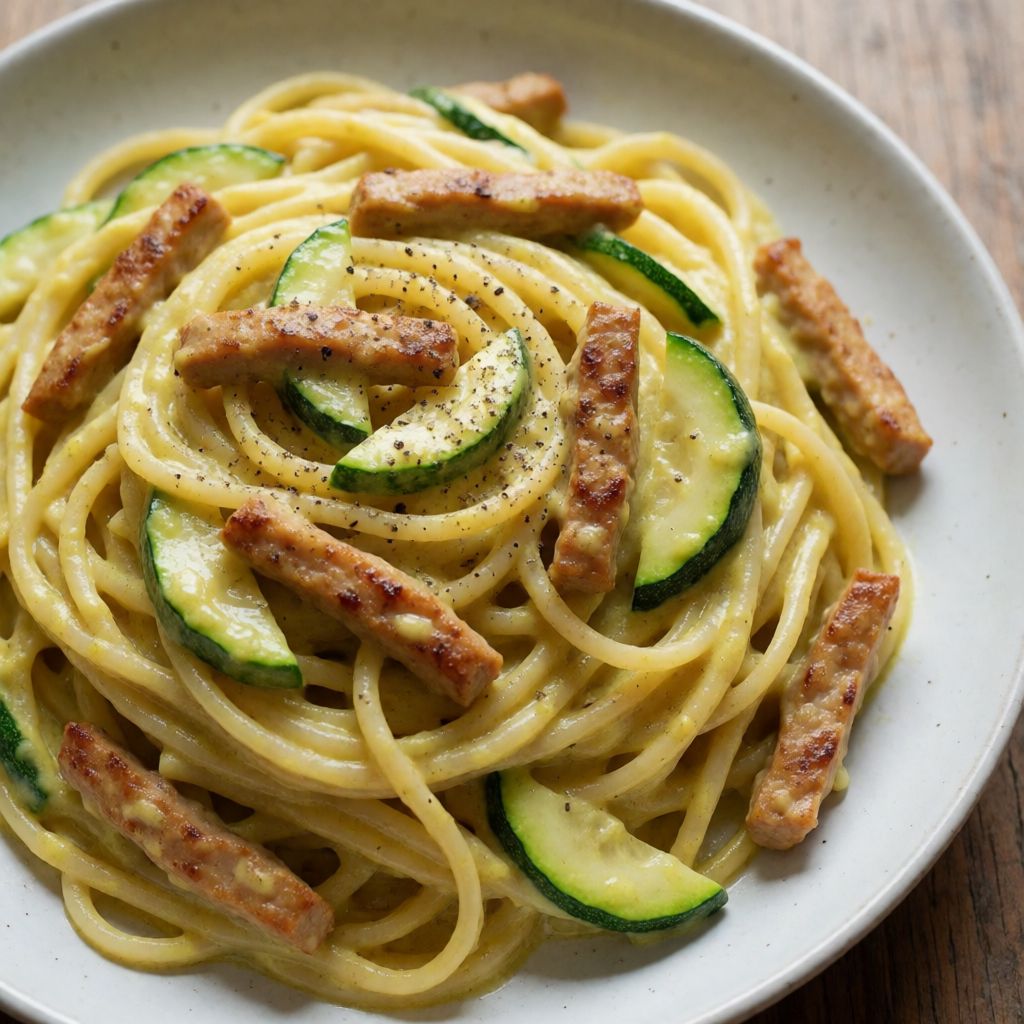
 AI photo
Vegan Carbonara
A vegan take on carbonara, using smoked seitan and courgette in place of bacon and egg.
Labels are worked out automatically from the ingredients and can be wrong. Check the packaging if it matters to you.
Ingredients
- 320 g Pasta
- 150 g Smoked seitan
- 150 ml Plant-based cream
- 0.5 tsp Turmeric
- 3 pcs Courgette
- 1 clove Garlic
- Salt to taste
- Black pepper to taste
- Olive oil to taste









Steps
Wash the courgettes, trim the ends and cut into cubes. Cut the smoked seitan into small pieces.
Heat the olive oil in a frying pan and fry a clove of garlic in its skin.
Add the courgettes and seitan, and cook, stirring, until softened.
10 minBring a pan of water to the boil, salt it and add the pasta. Cook according to the instructions on the packet.
Mix the plant-based cream with the turmeric and a little of the pasta cooking water.
Drain the pasta and tip it into the frying pan. Pour in the flavoured cream and stir to combine.
Call it carbonara and an Italian grandmother somewhere sighs, but the name travels better than the dish does. Real carbonara was never about cream — it's egg yolk and pecorino, loosened by the hot pasta itself, with cured pork fat doing the savoury work. This version keeps only the idea: a sauce that clings instead of pools, built from fat, starch and salt, not poured over like a gravy. What decides whether it works isn't the ingredient list, it's whether that cream actually grips the noodle or just sits wet on top of it.
The seitan is standing in for guanciale. That means its job isn't just 'cook until hot' — it needs a few real minutes in the oil, enough for the edges to catch a bit of colour, because that light scorching is where the smoky, salty depth comes from. Treat it gently like a delicate garnish and you'll get grey, flabby cubes with nothing to say.
Courgette here is bulk, not tradition — there's no courgette in any carbonara history. It's added because it cooks in the same pan, in the same time, and takes on the garlic oil well. Doneness is a bend, not a collapse: press a cube and it should give, not turn to paste. Cook it until it's soft the way a ripe peach is soft, not the way porridge is soft.
Pasta: shape is not sacred here, long or short will do, what matters is that starchy water you save before draining — without it, nothing in step 5 behaves. If your packet instructions say a range, pull it a touch before the top of that range; it finishes a little more in the pan off the boil.
Smoked seitan: wheat gluten that's already been smoked, which is the whole reason it's chosen over plain seitan or tofu — carbonara's savour always came from something cured and smoked, and plain protein won't fake that. If you can't find it, smoked tofu gets you partway, or mushrooms fried hard and dry until they're almost leathery will give you a different but real umami hit. Don't substitute fresh unsmoked seitan and expect the same dish — you'll have texture with no flavour behind it.
Plant-based cream: look for one that's unsweetened and has enough fat in it to hold together near heat — thin, watery 'barista' creams marketed for coffee tend to split the moment they see a hot pan. Oat-based creams are generally the most forgiving; coconut works but brings its own flavour along, which fights the garlic and pepper rather than supporting them. The criterion is simple: a cream with no sweetness and no loud flavour of its own, so examples are oat, soya, or a thick cashew cream you'd make yourself.
Turmeric: this isn't for taste, half a teaspoon is a tiny dose on purpose — it's there to borrow the colour that egg yolk would have given the sauce. Go heavier and you'll taste it, a dusty, slightly bitter note that has nothing to do with carbonara and everything to do with curry. A pinch is a disguise, not a seasoning.
Garlic, cooked in its skin: the skin is a buffer. Peeled garlic on a hot pan browns fast and turns bitter the moment you look away; left in its jacket, the clove releases its oil slowly and evenly, and you fish it out before it can go acrid. This is the same logic as toasting a spice whole rather than ground — slower contact, less chance of burning the thing you actually wanted.
Olive oil: any oil with no strong smell of its own would carry the garlic and vegetables fine — sunflower or rapeseed, say — but olive oil here isn't wrong, it gives the base dish a backbone that a completely neutral oil wouldn't, since there's no butter or animal fat doing that job elsewhere. Salt goes in with the pasta water, generously, because that's the only seasoning the noodle itself will ever get. Pepper should go on at the end, coarsely cracked rather than fine — carbonara in any form leans on pepper to cut through the cream, and fine pepper just dissolves into it instead of biting.
And the one ingredient not written on the list: patience, in exactly two places. Give the seitan and courgette their real few minutes rather than rushing them off the heat the second they look cooked, and don't dump boiling-hot pasta into a cold sauce and expect it to come together in a second — stir it properly, off the worst of the heat if your hob runs fierce, the same unhurried attention you'd give milk going into tea so it doesn't scald or split.