
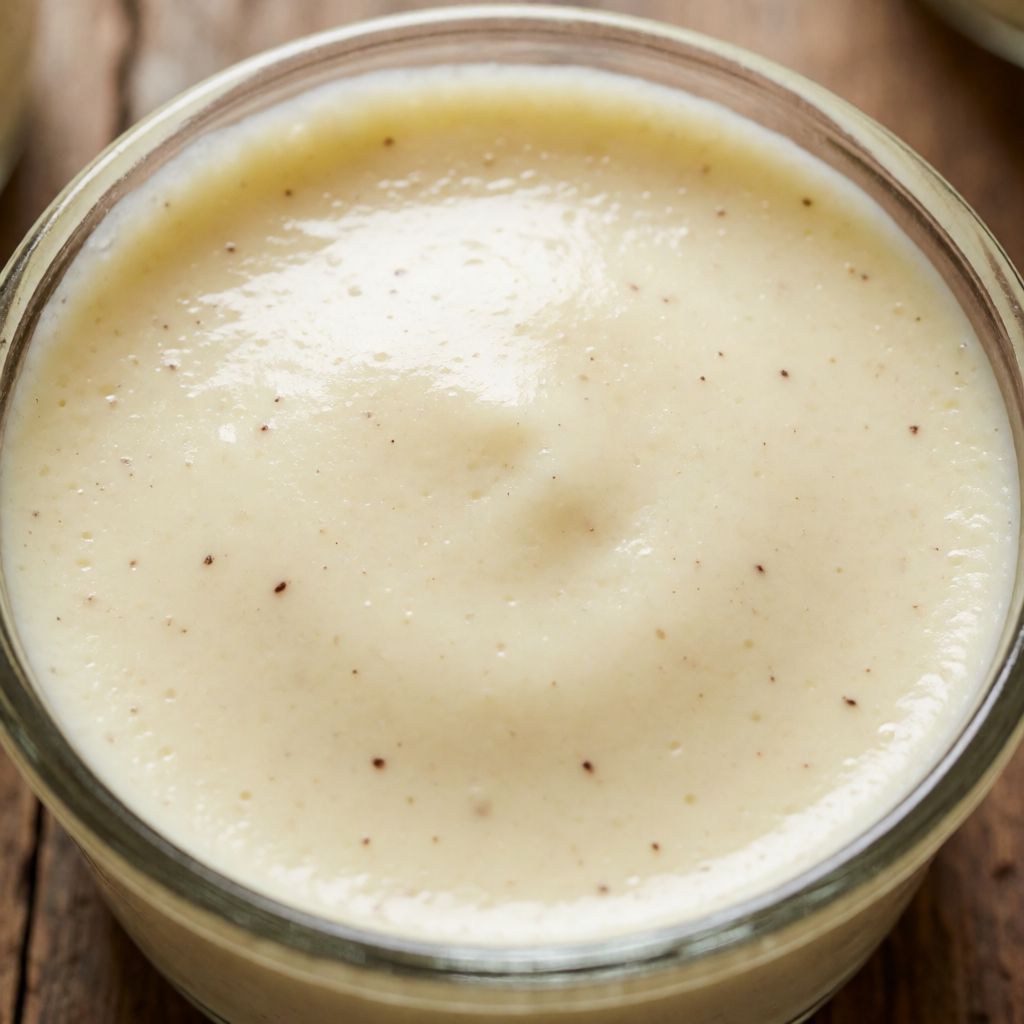
 AI photo
Vegan Custard
A creamy vegan custard made with soya milk, thickened with cornflour and agar-agar, and flavoured with vanilla, lemon zest and turmeric.
Labels are worked out automatically from the ingredients and can be wrong. Check the packaging if it matters to you.
Ingredients
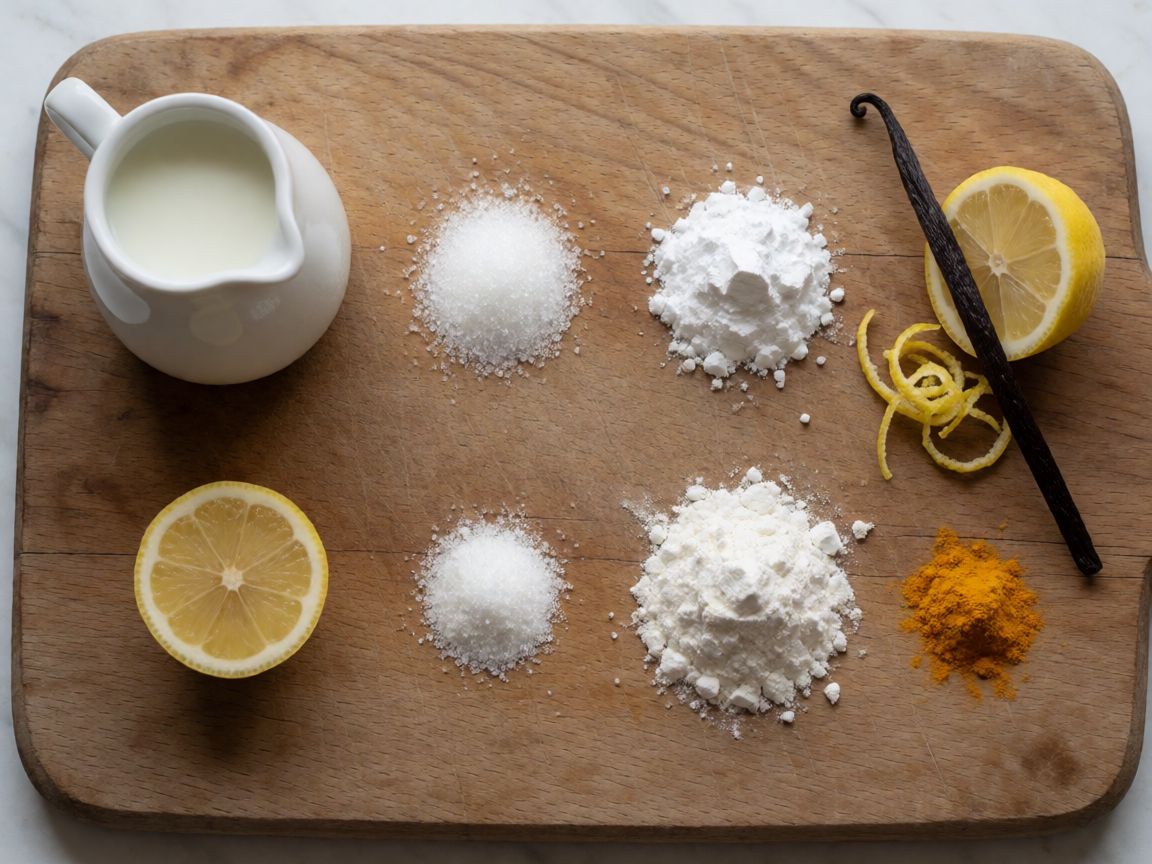
- 300 ml Soya Milk or rice milk
- 90 g Sugar
- 10 g Cornflour
- 20 g Rice Flour
- 1 tsp Agar-agar
- 0.5 pcs Vanilla Pod
- 0.5 pcs Lemon Zest
- 1 pinch Turmeric







Steps
Pour the soya milk into a small saucepan and bring to the boil. Add half the vanilla pod.
3 minSift the cornflour and rice flour into another saucepan. Add the sugar and the sifted agar-agar. Mix all the dry ingredients together.
2 minPour the hot milk into the dry ingredients in a thin stream, stirring constantly to avoid lumps.
2 minPut the pan over a low heat and bring the custard to the boil, keeping the heat low.
5 minGrate the zest from half a lemon and add it to the custard. Keep stirring.
1 minAdd a pinch of turmeric and stir until the custard reaches the desired thickness.
1 minTransfer the finished custard to a bowl and cover with cling film.
1 min
Forget the idea that custard needs egg yolks — some say it does, but most British custard never had any. Alfred Bird invented powdered custard in 1837 because his wife couldn't eat eggs, and that yellow powder from a tin became the default "custard" for a hundred years before anyone in this country worried about vegans. So this recipe isn't an exotic workaround — it's closer to what people actually grew up eating than the egg-and-cream version most recipe books insist on.
Without eggs, something else has to do the thickening, and that's the whole mechanism here: starch and seaweed. Cornflour and rice flour swell and burst open when they hit near-boiling liquid, trapping water and turning the mix from a thin milk into a body with weight. Agar-agar does something similar but by a different route — it's a gel that sets hard and doesn't re-melt at room temperature the way gelatine does, so once it's cooled it stays set, even on a warm day, even left out on the side after Sunday lunch.
Soya milk is doing a job here beyond just "milk substitute" — it has enough protein and a little fat, so it carries the vanilla and holds body the way dairy milk does. Rice milk, named as the alternative, is thinner and more watery by nature; it'll work, but the custard may come out looser, so you're leaning more on the starch and agar to make up the difference. The test for any substitute isn't "is it plant milk" — it's whether it tastes of something and has enough substance that the custard doesn't taste like flavoured water. Oat milk would sit between the two; a very thin "milk alternative" that's mostly water and flavouring will let you down.
The two starches are doing different things, not duplicating each other. Cornflour is pure starch, and on its own it thickens fast and goes glassy, almost glossy — fine for a sauce, a bit wrong for a custard, which should look soft and matte, not like window glaze. Rice flour is starchier but blunter, giving a chalkier, more opaque body closer to what egg yolks would have given. Together they split the difference: clarity tempered by body. Leave out the rice flour and use only cornflour and you'll still get thickness, just a shinier, more gluey one.
Agar-agar is a seaweed extract, used in East Asian kitchens for setting jellies long before the word "vegan" existed — it's not a trend ingredient, it's just a different route to gelling than the collagen in gelatine, and it happens to be useless to animals, which is why it suits this dish. It needs the same thing starch needs: real heat, held at the boil, not just warmed through, or you'll find bits of unmelted agar sitting stubbornly in the custard like tiny bits of grit. If you had none, gelatine would do the setting job but it isn't vegan and it melts again in a warm kitchen, which agar won't — so the substitution only works if you're not fussed about that point.
The vanilla pod goes in early, into the hot milk, because its flavour compounds need heat and a little fat to come out of the pod and into the liquid — infusing it cold would leave most of that flavour locked inside the husk. The lemon zest, by contrast, goes in near the end, off the heat or close to it, because citrus oil is volatile — boil it along with everything else from the start and you cook off the bright top note, leaving only a dull bitterness from the pith if you grated too deep.
The turmeric is a single pinch doing one job: colour, not flavour. There are no yolks here to give the custard its usual pale yellow, so turmeric borrows that colour cheaply — go overboard and you'll taste it, slightly earthy, slightly bitter, and see little orange flecks instead of an even wash. A pinch means a pinch; it's cosmetic, not a spice note.
On an ordinary hob, without a heavy kazan-style pan to spread the heat evenly, the real risk is catching at the bottom while you're distracted stirring the top — a thin pan heats unevenly, and starch sitting still at the base will scorch before the rest of the pan even looks hot. Keep the heat low enough that you could hold a flat palm an inch above the pan's rim without flinching, and keep the spoon moving across the whole bottom, not just stirring the surface. This isn't a dish you rush: the patience is in that constant low stir while it comes up to the boil, not in any clever trick — rush it and you'll be fishing lumps out of a supposedly smooth custard for four.