
 AI photo
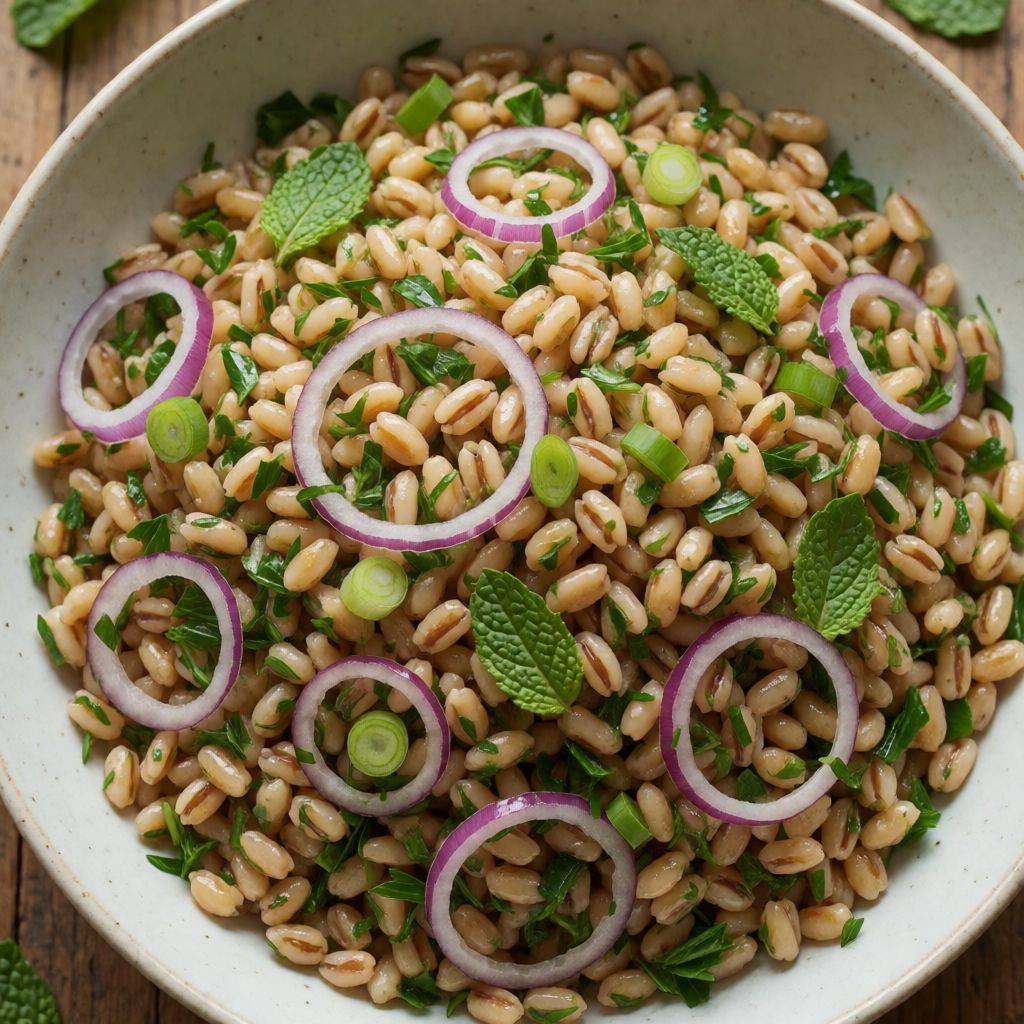
Wheat Berry Salad with Pomegranate
A fresh wheat berry salad with herbs, apple, lemon and a creamy tahini dressing.
Labels are worked out automatically from the ingredients and can be wrong. Check the packaging if it matters to you.
Ingredients
- 200 g Wheat berries
- 100 ml Parsley finely chopped
- 100 ml Mint finely chopped, fresh
- 2 pcs Spring onion thinly sliced
- 2 pcs Apple diced
- 1 pcs Red onion finely chopped
- 0.5 pcs Lemon zest, finely grated
- Salt
- Black pepper fresh
- 1 tbsp Tahini
- 1 clove Garlic crushed
- 0.5 pcs Lemon juice
- 0.5 pcs Cumin ground
- 3 tbsp Water
- 3 tbsp Olive oil
- Salt
- Black pepper fresh













Steps
Cook the wheat berries according to the pack instructions, then drain and cool slightly in a colander.
50 minTahini dressing: put the tahini, garlic, lemon juice and cumin in a bowl, add salt and black pepper and mix.
2 minGradually add the water until the dressing becomes smooth and creamy in texture.
2 minMix the tahini dressing with the warm wheat berries and the remaining ingredients. Season to taste with salt and black pepper.
5 min
This is a grain salad built on one trick: you mix the dressing into the wheat berries while they're still warm, not after they've cooled. Warm grain is slightly porous — it drinks. Cold grain has closed up and just wears the dressing on its surface, so every bite after the first tastes of nothing. That one timing decision is most of what makes this dish work or fall flat.
Wheat berries themselves are the whole grain — the bran and germ still on — which is why they take the better part of an hour to cook and why they keep their shape and a proper chew even once dressed. Some say you can swap in bulgur or couscous for speed. You can, but you'll get a different dish: those are cracked or steamed already, soft all the way through, and they'll slump into the dressing rather than hold against it. Here the bite matters — it's what carries the soft apple, the sharp onion and the bright herbs without turning to mush.
The tahini dressing is loosened with water, not more oil or lemon, and that's deliberate. Tahini straight from the jar is thick paste; whisked with garlic, lemon and cumin it tightens further before it loosens — that seizing-then-smoothing is normal, not a mistake, and water is what coaxes it back to pourable. Too little water and it clings in gluey patches; too much and it slides off the grain instead of coating it.
Everything else — the raw red onion, the mint and parsley, the apple, the lemon zest — is there to keep the dish from being heavy. A pile of boiled grain and sesame paste needs that acidity and crunch, or it sits like stodge.
On the wheat berries: buy the whole, unprocessed kind — sometimes labelled "wheat grain" — not pearled or "quick-cook" versions, which have had the bran rubbed off and lose the chew that's the point here. Follow the pack time as your floor, not your answer: taste one. It should give under the tooth with real resistance, not the crack of a raw grain and not the gluey give of overcooked rice. If you've no wheat berries, spelt or farro behave the same way — whole, slow, chewy — and take a similar approach; pearl barley is the nearest thing most UK shops will have on an ordinary shelf, and it's a fair stand-in, just milder.
Tahini is sesame paste, nothing more mysterious than that — check the jar hasn't separated into a layer of oil floating on sludge, or if it has, stir it hard before you measure. If you can't get it, a thick, fairly neutral nut butter loosened the same way with water will approximate the creaminess, though you lose the faint bitterness that tahini brings and that balances the sweetness of the apple.
The garlic goes in raw and crushed, not cooked — there's no pan involved in this dressing, so its sharpness stays sharp. If raw garlic fights you, halve the amount rather than cooking it; cooking it here isn't really an option without building a separate step.
Cumin: buy it ground if you're not going to toast and grind whole seeds yourself, and buy it in small amounts — it loses its edge sitting in a cupboard far faster than people expect, going from fragrant to merely dusty within months. If yours smells of nothing when you open the jar, it'll add nothing to the dressing either; replace it.
Lemon does two jobs here and they're not interchangeable: the zest, grated fine with nothing of the bitter white pith in it, goes into the salad for scent; the juice goes into the dressing for acid. Keep them separate in your head even though they end up in the same bowl, because zest with no juice is perfume with no punch, and juice with no zest is flat.
Apple should be a firm, crisp variety — something that holds a dice rather than going mealy. A pear works on the same logic if that's what's in the fruit bowl.
The oil in the dressing wants no flavour of its own competing with the olive oil you've chosen, or just use a mild olive oil throughout and let it be the only oil flavour in the bowl — don't double up with something assertive like a strong rapeseed oil pressed hard, or the tahini and cumin get muddied.
On patience: the grain cooking is unattended time, so it costs you nothing but a lid and a timer, but don't skip the warm-mixing step by getting impatient and tipping cold grain in to save five minutes — that's the one shortcut that actually loses you something.