
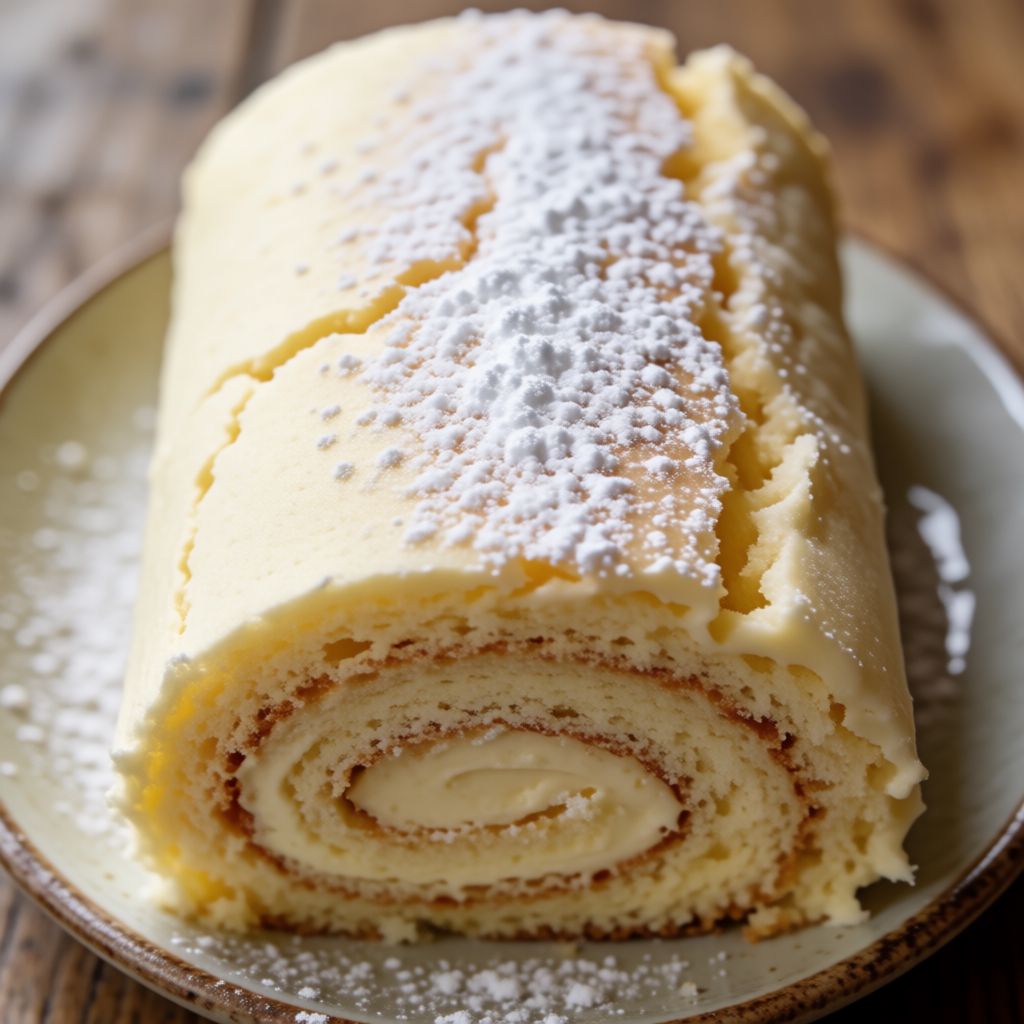
 AI photo
White Chocolate Roulade
A light sponge roulade filled with a smooth white chocolate and cream cheese filling.
Labels are worked out automatically from the ingredients and can be wrong. Check the packaging if it matters to you.
Ingredients
- 100 g Plain flour
- 130 g Caster sugar
- 4 pcs Eggs
- Salt to taste
- 0.5 pcs Baking powder
- 1 pcs Lemon zest
- 200 g Cream cheese for spreading
- 200 g White chocolate
- 50 g Icing sugar
- 250 ml Double cream for whipping










Steps
Separate the yolks from the whites. Whisk the yolks with the sugar for at least 5 minutes until a pale, fluffy mixture forms, then whisk the whites to a stiff foam.
5 minSift the flour with the baking powder and gradually fold it into the whisked yolks, mixing gently with a spatula from the bottom up.
Add the lemon zest and salt. Gently fold in the whisked egg whites, mixing from the bottom up.
Line a rectangular tin with baking paper, pour in the batter and level it out. Bake at 180°C for 10-12 minutes.
11 minLet the sponge cool, then turn it out onto a damp tea towel, cover with a second damp towel and leave to cool completely.
Melt the white chocolate over a water bath, combine with the cream cheese and beat with a mixer until smooth.
Whip the double cream with the icing sugar and gently fold it into the chocolate-cheese mixture.
Transfer the cooled sponge onto cling film, pour over the cream and spread it evenly over the surface.
Using the cling film, roll up the roulade and chill in the refrigerator for at least 2 hours.
120 minBefore serving, dust with icing sugar or coat with white chocolate.
What was changed
Replaced Cream cheese with a more familiar cream cheese and Double cream with double cream, which is used in the local kitchen.
A roulade is a flat sponge rolled around cream while it's still flexible — the whole dish is a gamble against the moment the sponge stops bending and starts cracking. What decides whether this one works isn't the chocolate or the cream, it's what happens to the sponge in the first ten minutes after it leaves the oven.
This is a genoise-style sponge: no butter, no oil, just yolks, sugar and air doing the lifting. Whisking yolks with sugar for a full five minutes isn't fussiness — it's dissolving the sugar crystals into the fat and building a stable foam that can hold flour without collapsing. Rush it and you get a flat, dense sheet that tears the second you try to roll it, because there's no structure left to bend.
The damp-towel trick at step 5 is the actual hinge of the recipe. Some say you roll the sponge warm, straight from the tin — no, because warm sponge is still setting its structure, and rolling it now locks in a tight curl that splits open later as it cools and contracts. The damp towel keeps the surface humid while it cools flat, so the crumb stays pliable instead of drying into a biscuit. You're not cooling the cake, you're keeping it rollable.
The filling is simple but has its own failure point: melted white chocolate is warm and runny, cream cheese is cool and stiff — beat them together while there's still heat in the chocolate or you get streaks and a grainy set. Fold in whipped cream only once that mixture is smooth and roughly room temperature, or the cream collapses and you lose the lightness that's supposed to contrast with the dense sponge.
Flour and baking powder here are just scaffolding, not the leavening engine — the eggs do that work. Half a packet of baking powder sounds vague, but it's deliberate: too much and the sponge puffs then deflates unevenly once it cools flat, giving you weak spots that tear when you roll. Sift it with the flour so there are no little bitter pockets of raw powder sitting in the crumb.
Caster sugar matters more than people think. It's fine enough to dissolve into the yolks during that five-minute whisk; granulated sugar won't fully break down in the time you're whisking by hand or even with a hand mixer, and you'll feel it as grit in the baked sponge. If you only have granulated, blitz it ten seconds in a processor first — that's the whole trick, no need to buy caster specially.
Lemon zest is there to cut the richness of a filling that's essentially sweetened fat on fat — white chocolate, cream cheese, double cream. Without some acid or sharpness, the whole roll tastes flat after two bites. If you've no lemon, a few drops of lemon juice in the batter does the same job, or orange zest if that's what's in the fruit bowl.
White chocolate is really just cocoa butter, sugar and milk solids — no cocoa mass — which is why it melts at a lower, gentler point than dark chocolate and scorches faster. Melt it over a water bath, not direct heat: the double boiler keeps it below the point where the sugar seizes and turns grainy. Any chocolate labelled "white" with cocoa butter as the main fat works; cheap bars padded out with vegetable fat will set softer and never firm up properly in the fridge.
Cream cheese needs to be full-fat and the block kind, not the spreadable light tubs sold for toast — those carry extra water that will loosen your filling and make it slump out the sides when you slice. Double cream, similarly, is chosen because its higher fat content (around 48%) whips to stiff peaks and holds them once folded into the chocolate mix; whipping cream alone is leaner and can weep in the fridge over the two-hour chill.
The two-hour chill isn't a suggestion, it's the step that actually sets the dessert. Patience is the real ingredient here — cut it early and you get a roulade that looks right but slides apart on the plate, filling spilling out the ends, because the cream hasn't had time to firm against the cold. On a British Sunday, that's the slot where the roast is resting and the kettle's going on for tea anyway — let the roulade sit in the fridge while you deal with everything else, and it'll be ready exactly when you are.