
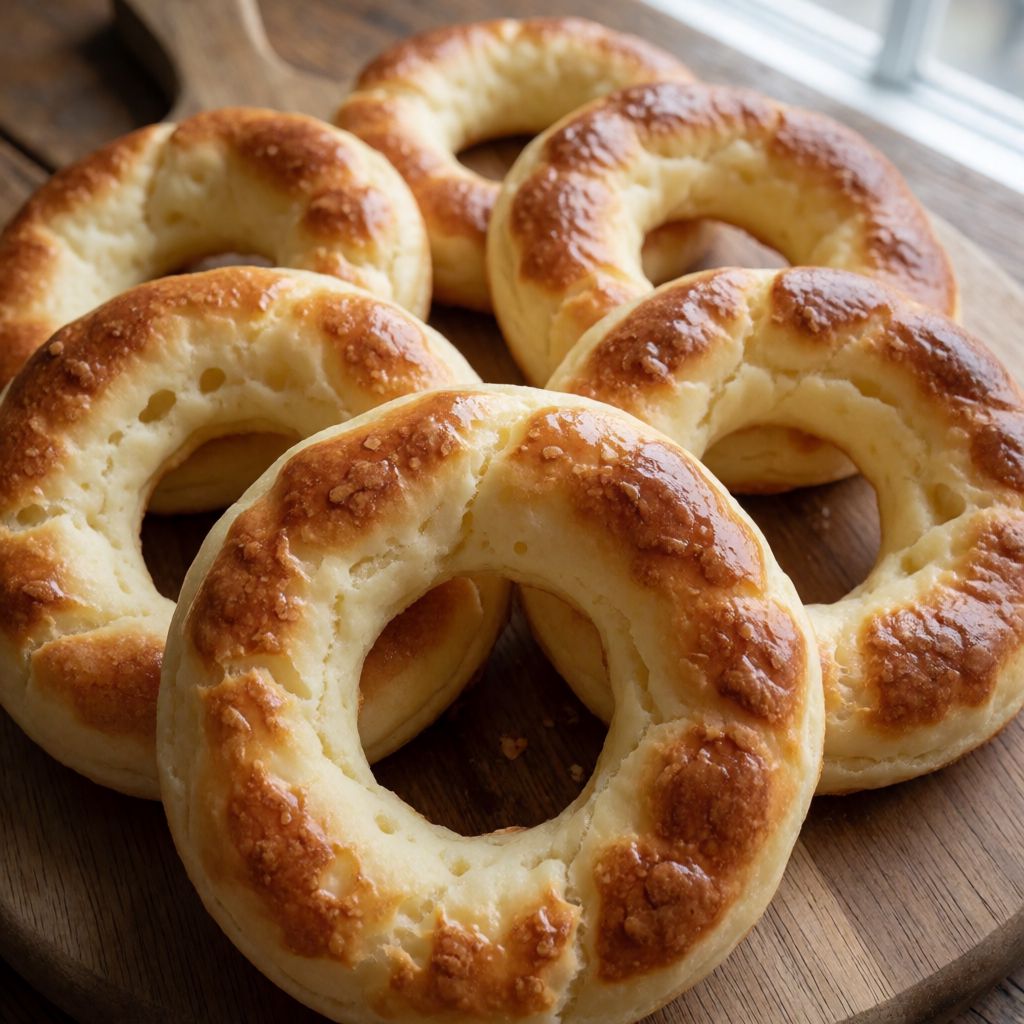
 AI photo
Oven-Baked Yoghurt Rings
Soft homemade yoghurt rings, baked in the oven until golden.
Labels are worked out automatically from the ingredients and can be wrong. Check the packaging if it matters to you.
Ingredients
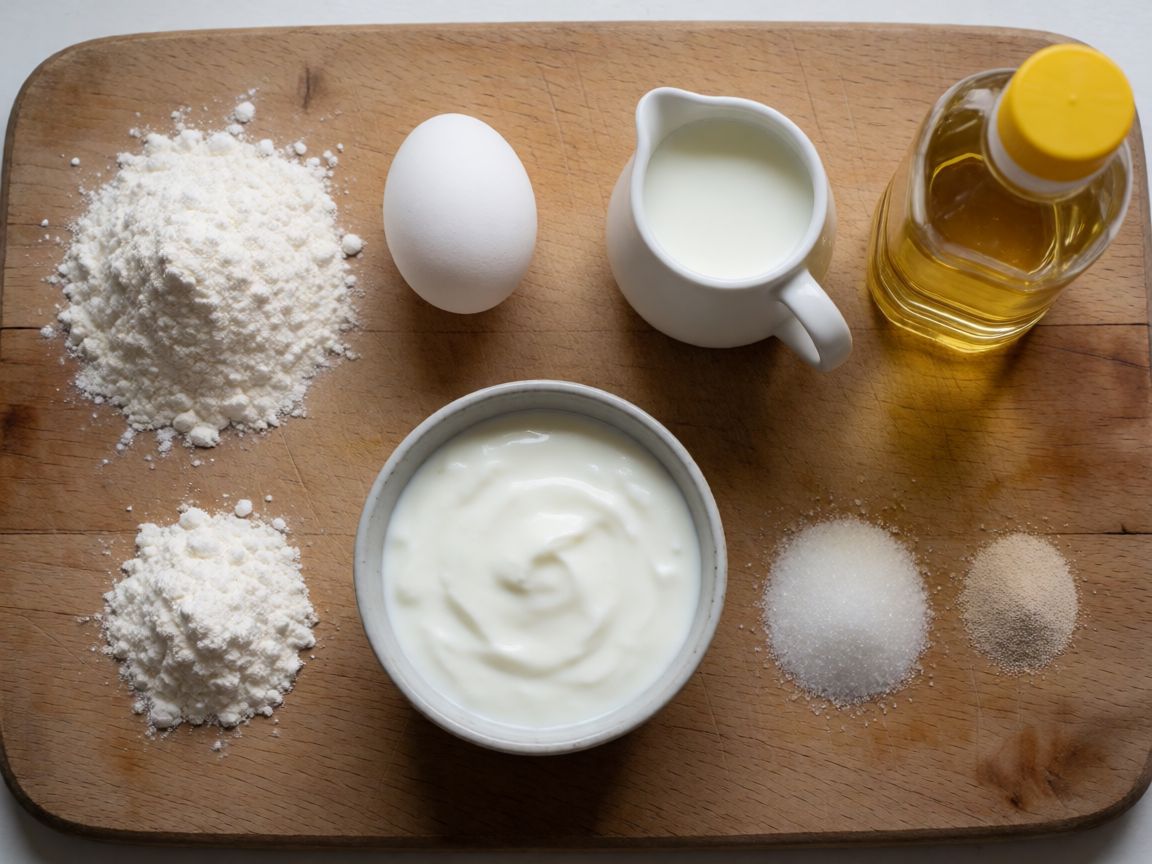
- 130 g Plain flour
- 125 g Strong white flour
- 1 pcs Eggs
- 100 ml Yoghurt
- 30 ml Milk
- 40 ml Peanut oil
- 40-50 g Caster sugar
- 5 g Dried yeast
- 1 tsp Vanilla extract or lemon zest
- 0.5 tsp Salt
- 1 pinch Icing sugar for dusting






Steps
In a small saucepan, warm 30 ml of milk and dissolve the dried yeast in it.
In the mixer bowl, combine the plain flour, strong white flour, caster sugar, peanut oil, yeast mixture, yoghurt and vanilla extract.
Add the beaten egg and mix everything together.
Using an electric mixer, knead the dough on the lowest speed for at least 2-3 minutes.
3 minShape the dough into a ball, adding more flour if needed.
Leave the dough to rise for about 2 hours in a warm place.
120 minRoll out the dough on a lightly floured surface into a sheet at least 2 cm thick.
Cut out rings using cutters 2-3 cm (for the hole) and 7-8 cm (for the ring) in diameter.
Place the rings on a baking tray lined with parchment and leave to rise for 30-40 minutes.
35 minBrush the rings with a pastry brush dipped in beaten egg yolk mixed with milk.
Preheat the oven to 180°C and bake the rings for at least 10 minutes until golden.
10 minRemove the rings, dust with icing sugar and serve.
These are small, pale rings — somewhere between a bread roll and a biscuit, held together by yoghurt instead of butter. Mixing two flours is the whole trick: plain flour gives softness, strong white flour gives the gluten structure that lets the ring hold its shape in the oven instead of slumping into a blob. Drop either one and you get either a flat puck or something tough enough to survive a Sunday roast's gravy boat falling on it.
What decides whether these work isn't the baking — ten minutes at 180°C is forgiving, almost impossible to ruin on a domestic hob's oven. What decides it is the two hours of rising, done properly, and the thickness of the dough before you cut. Roll it thinner than 2 cm and the yeast has nothing to push against; the ring bakes flat and dense, because there isn't enough structure trapped inside to expand upward rather than sideways.
Some say yeast dough needs a long, slow proof to taste good. No — the two hours here isn't for flavour, it's for volume. This is a quick-yeast, same-day dough, sugar and yoghurt feeding the yeast fast. You're not making sourdough's complexity; you're making something you can eat with your tea the same afternoon you start it. Patience here is short and specific: two hours first, then another half hour after cutting, because cold doesn't make this dough rise faster, it makes it rise properly.
Start with the flours, because that's where most of the character lives. Plain flour (around 9-10% protein) is soft — low gluten, which is why cakes use it and bread generally doesn't. Strong white flour (12%+ protein) is the opposite: more gluten means more stretch, more chew, more structure to hold gas bubbles from the yeast. Together they split the difference — a dough soft enough to eat in two bites, strong enough to rise into a proper ring rather than spreading flat on the tray. If you only have one flour in the cupboard, lean toward strong white and soften it: mix four parts strong flour to one part cornflour, roughly, to cut the gluten down.
The yoghurt is doing two jobs, not one. Its acidity gently relaxes the gluten you've just built with the strong flour — keeping the crumb tender rather than chewy — and it adds moisture without adding the fat a Victoria sponge would need. Any plain, unsweetened yoghurt works; thick Greek-style yoghurt will need a splash more milk to loosen it, because this dough needs to come together soft, not stiff.
Peanut oil is here for one reason: it has almost no smell of its own and doesn't compete with the vanilla or lemon zest. Use any neutral oil — sunflower, light rapeseed, even a flavourless vegetable oil from the Sunday-roast cupboard. Don't reach for olive oil here; its taste will sit over the top of everything else like it's trying to make a point.
The egg does double duty across the recipe — whole egg goes into the dough for richness and a touch of structure, and the yolk, brushed on with a little milk before baking, is what gives you the colour. Egg yolk alone browns faster and deeper than egg white; mixing it with milk thins it so it brushes on evenly instead of pooling in the hole of the ring and burning there first.
Dried yeast at 5g for this amount of flour is a small amount, which is exactly why the warm milk matters — not hot, just warm enough that you'd happily wash your hands in it. Hotter than that and you kill the yeast before it's done anything; the "warm milk" instruction isn't fussiness, it's the difference between dough that rises and dough that sits there looking confused for two hours.
On the icing sugar at the end: it's not decoration you can skip without consequence, but it's also not doing anything structural — dust it on while the rings are still slightly warm so a few grains melt in rather than sitting on top like snow that never settles. If you don't have icing sugar, a light brush of honey does something similar, though it changes the flavour rather than just the look.