
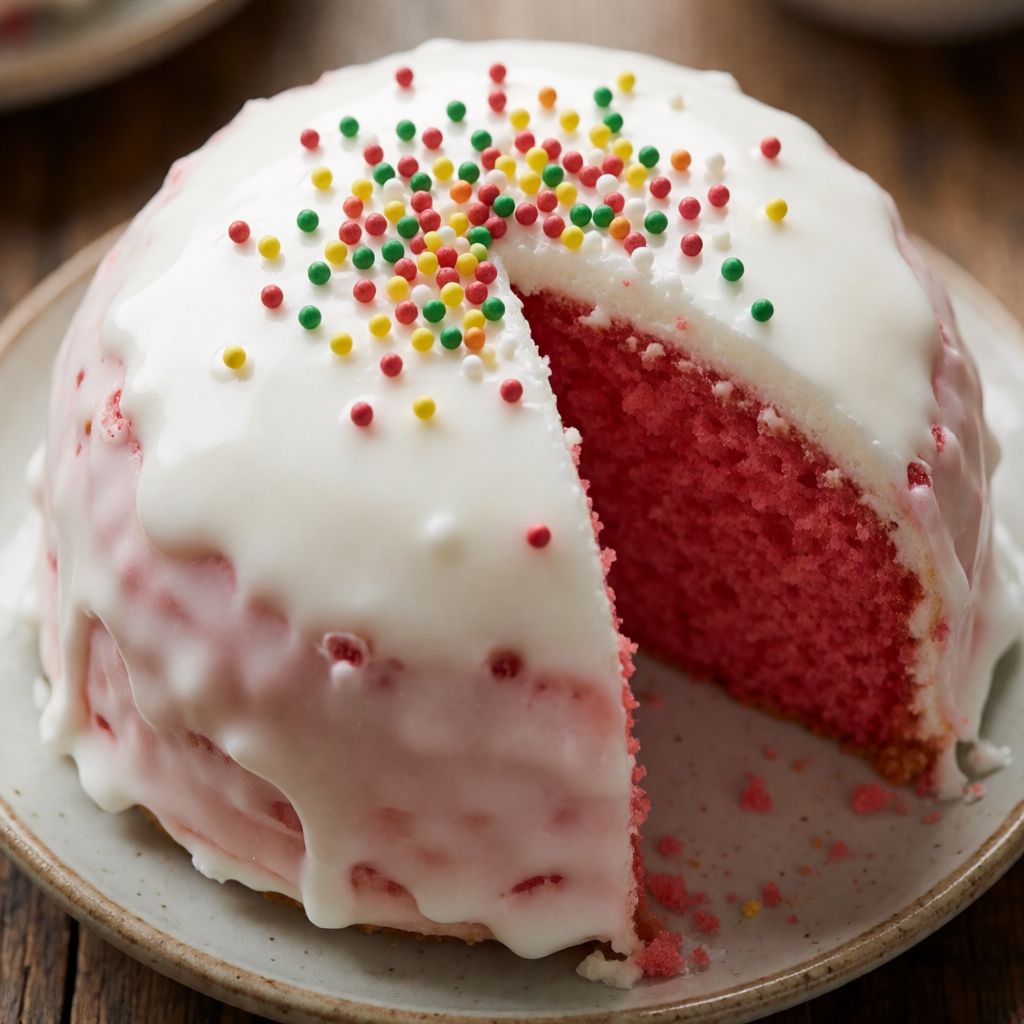
 AI photo
Ciaramicola with Alchermes
A traditional Italian-style sponge cake flavoured with alchermes liqueur and lemon zest, topped with a crisp meringue.
Labels are worked out automatically from the ingredients and can be wrong. Check the packaging if it matters to you.
Ingredients
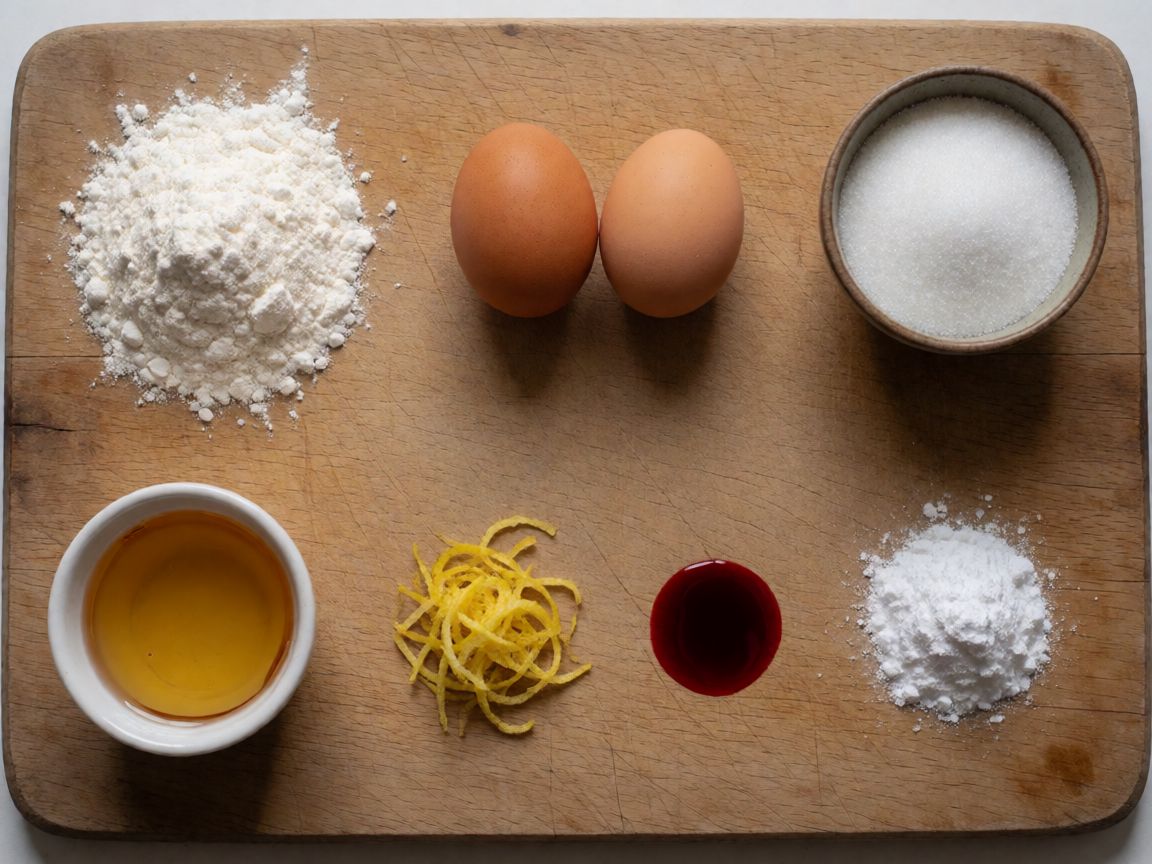
- 350 g Plain flour
- 3 pcs Eggs
- 200 g Caster sugar
- 90 g Lard melted
- 100 ml Alchermes liqueur
- 1 pcs Lemon zest
- Red food colouring a few drops, optional
- 1 pcs Baking powder
- 3 pcs Egg whites
- 180 g Caster sugar
- Sugar sprinkles to taste









Steps
Whisk the eggs with the sugar and lemon zest for at least 10 minutes.
10 minAdd the melted lard in a thin stream, whisking all the while.
Pour in the alchermes liqueur and, if you like, a few drops of red food colouring.
Keep whisking as you fold in the sifted flour and baking powder, and mix until smooth.
Pour the batter into a 22-24 cm cake tin, greased and dusted with flour, and level the surface.
Bake at 170°C in a conventional (non-fan) oven for about 40 minutes.
40 minMeanwhile, whisk the egg whites with the sugar to a thick, glossy meringue.
Take the cake out of the oven and, if possible, out of the tin.
Spread the meringue over the top, shaping it into peaks.
Decorate with sugar sprinkles and return to a conventional oven at 100°C for 15 minutes, to let the meringue dry out.
15 minTake out of the oven, leave to cool and serve.
Ciaramicola is Perugia's Easter cake, and it gives itself away before you cut it: red inside, white meringue crown on top, coloured sprinkles scattered like confetti. The red used to be blood symbolism — this is a cake tied to Holy Week processions, and the colour was never meant to be subtle. The white meringue dome represents the headscarf local women wore; the sprinkles are the flowers on it. Nice story, but what actually decides whether this cake works has nothing to do with folklore and everything to do with eggs and air.
The whole structure of the sponge rests on step one: eggs whisked with sugar for a genuinely long stretch, not a token minute with a fork. This isn't ritual, it's physics — you're beating air into the egg proteins until they can hold a ribbon shape when you lift the whisk. That trapped air is your only real leavening alongside the baking powder; lose it by rushing, or by dumping in melted lard too fast and deflating the foam, and you get a flat, dense disc instead of a cake that rises and stays tender. So the lard goes in as a thin stream, whisking continuously — not to look impressive, but to let the fat emulsify into the foam gradually instead of collapsing it.
On ingredients, start with the flour and lard. Plain flour, not strong bread flour — you want tenderness, not chew, and gluten development here is not your friend. Lard is traditional because it was what Umbrian households had: pigs were kept, fat was rendered, and a neutral, high-melting animal fat gives a sponge a close, slightly dense crumb that butter would make lighter and oil would make greasier. If lard isn't to hand or you'd rather not, use a flavourless oil before you reach for butter — the criterion is a fat with no smell of its own, so the lemon and alchermes stay in charge of the flavour, not the fat fighting for attention.
The eggs are doing two separate jobs and that's why the recipe splits them: three whole eggs build the structure and richness of the sponge, three whites later become the meringue. Don't be tempted to use up spare egg yolks from the whites elsewhere — you need genuinely fresh whites that whip clean, because any trace of yolk fat in the whites is the real reason meringues sometimes refuse to stiffen; it's not the whisk, it's contamination.
Baking powder here is a backup, not the main lift — the long whisking of the eggs has already built most of your air. That's worth remembering if your cake comes out heavier than you hoped: it usually means step one was rushed, not that you needed more powder.
Lemon zest only, no juice — the zest's job is aromatic oil, a top note against the alchermes' spice, and juice would just add unwanted liquid and acidity that can interfere with how the eggs foam. Use a fine grater and only the coloured skin; the white pith underneath is bitter and brings nothing.
On the finished shape: in an ordinary flat kitchen, "take the cake out of the tin, if possible" is doing real work as a phrase. A springform tin with a loose base makes this trivial; a solid one-piece tin means you're turning out a warm, fragile cake onto a plate and hoping — grease and flour the tin properly beforehand, because that's the actual insurance against tearing, not luck. If it won't come out cleanly, meringue it in the tin anyway; the look suffers slightly, the taste doesn't.
Patience sits in two places here, and skipping either is where this cake usually goes wrong: the ten-plus minutes of whisking at the start, and the low, slow second bake at the end that lets the meringue dry rather than just brown. Rush the first and the cake falls flat. Rush the second — crank the heat to speed it up — and you get a meringue that's gone from glossy white to pale gold with a sticky, unset inside, which defeats the point of a crown that's supposed to stay crisp and white. This is a cake that rewards waiting twice, once with a whisk in hand and once with the oven door shut.
As for serving: this isn't a cake that needs a sauce or cream alongside, and four is a modest cutting of a cake this size — expect generous wedges, and it keeps well enough overnight under a cover for tea the next day too.