
 AI photo
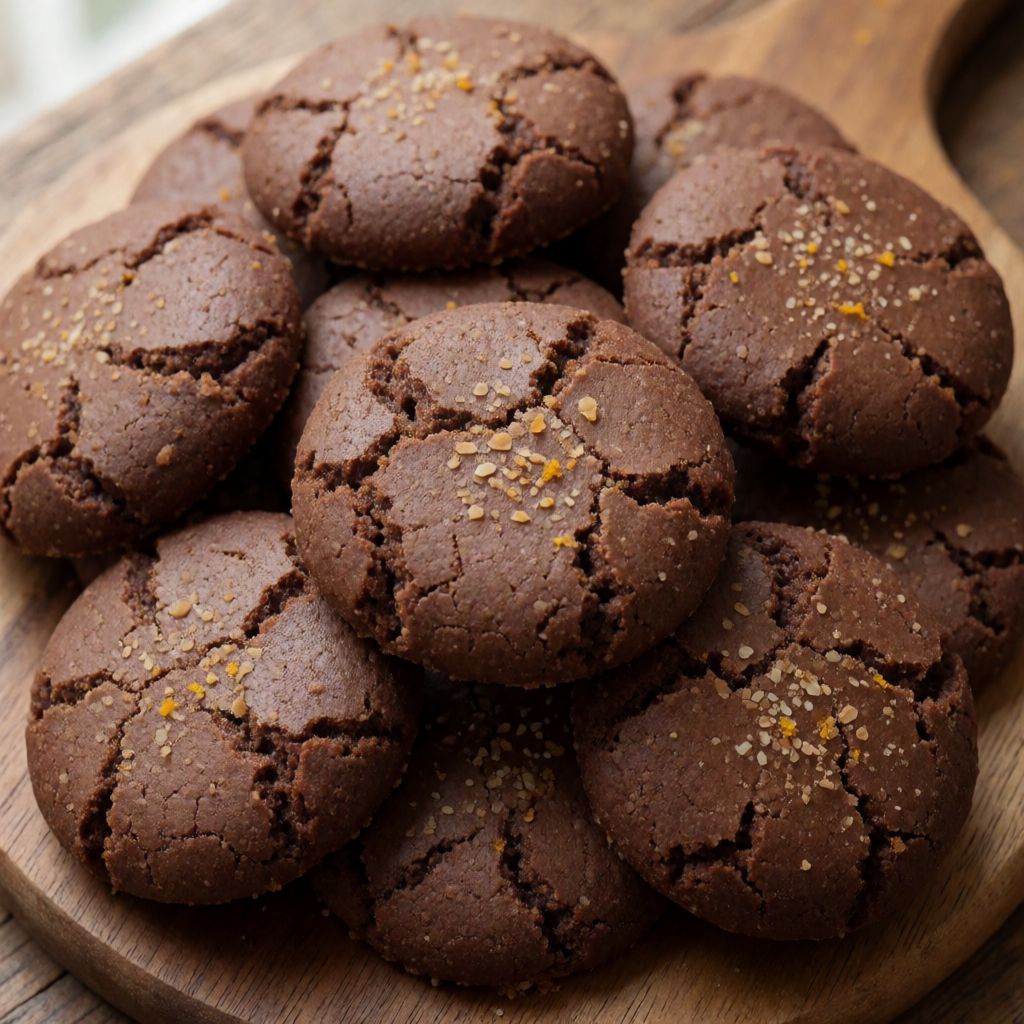
Almond Cocoa Biscuits with Citrus Zest
Crunchy almond and cocoa biscuits scented with lemon and orange zest, baked until just firm.
Labels are worked out automatically from the ingredients and can be wrong. Check the packaging if it matters to you.
Ingredients
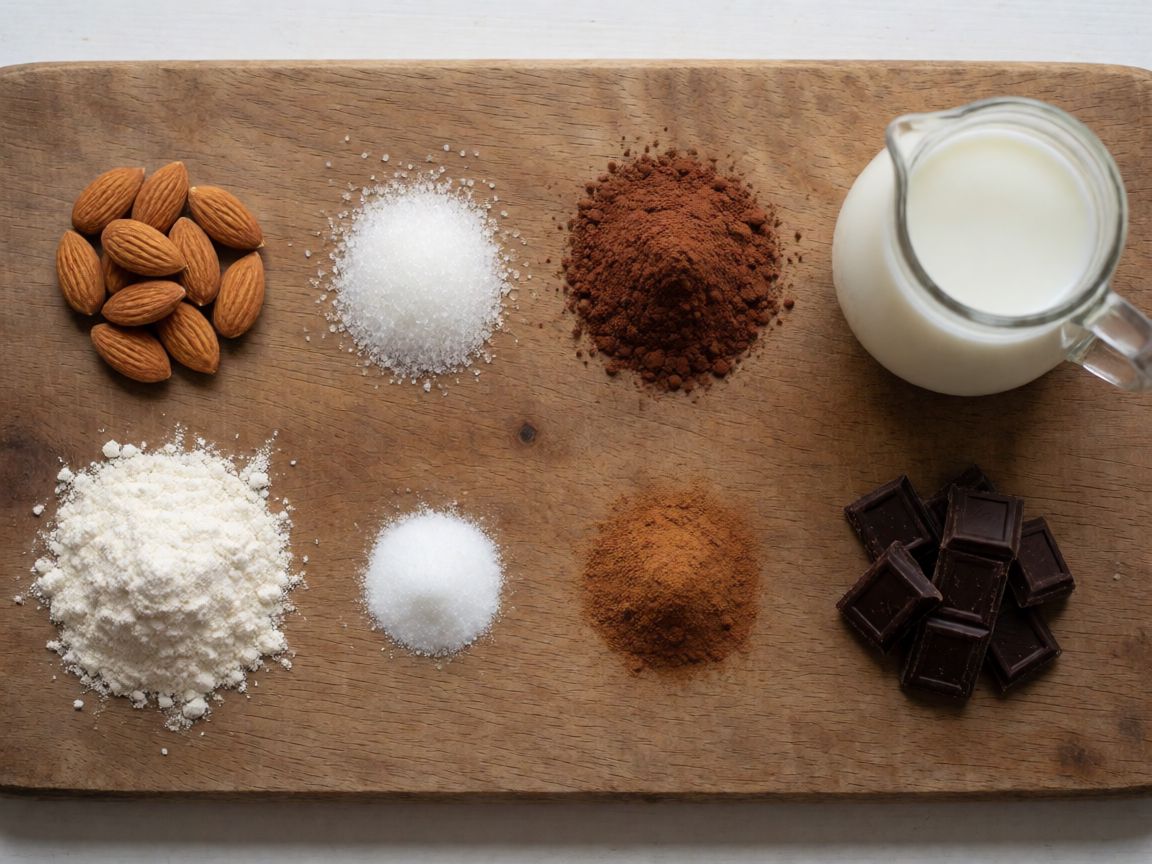
- 125 g Almonds
- 100 g Sugar
- 12 g Cocoa powder
- 125 g Plain flour
- 0.5 tsp Bicarbonate of soda
- 1 tsp Cinnamon
- 25 ml Milk
- 40 ml Water
- 40 g Dark chocolate
- 1 pcs Lemon zest from an unwaxed fruit
- 1 pcs Orange zest from an unwaxed fruit










Steps
Toast the almonds on a baking tray lined with parchment in an oven preheated to 180°C.
6 minStir the almonds from time to time while toasting.
Transfer the almonds to a blender and chop them coarsely.
In a bowl, mix the dry ingredients: sugar, flour, cocoa powder, bicarbonate of soda and cinnamon.
Add the lemon and orange zest (wash the citrus fruit thoroughly beforehand).
Add the chopped almonds and mix.
Pour in the milk, water and melted dark chocolate, and mix well.
Stir with a spoon, then knead by hand until a soft dough forms.
On a floured surface, shape into logs 2-3 cm wide, flatten slightly with your fingers and cut diagonally.
Bake the biscuits on a tray in an oven preheated to 180°C.
14 min
This is cantuccini's cocoa-and-citrus cousin — a biscotti, really, baked twice in effect: once as a log, then sliced and dried out. What decides whether it works isn't the oven, it's the dough. Too wet and your logs spread into a flat slab that never gets that snap. Too dry and you can't shape it at all. You're aiming for dough that holds a shape under your palm but doesn't crack when you bend the log — soft, not sticky, not stiff.
Some say biscotti need two separate bakes in two sessions, cooling fully in between. No — because what you're actually doing is baking the log once until it's set enough to hold its shape when sliced, then letting the open cut faces dry and colour on the second pass. This recipe compresses that into one 180°C bake and relies on the thinness of your slices to do the rest of the drying as they cool. That's why diagonal cuts matter more than you'd think: a thin wedge has more exposed surface to firm up than a straight-cut round, and firming up — not browning — is the whole point.
The almonds get toasted first for a reason that has nothing to do with flavour-building drama and everything to do with moisture. Raw almonds carry water; toasted ones don't, and that water would otherwise leach into your dough and soften the crumb from the inside, giving you biscuits that go chewy instead of brittle. Six minutes in a hot oven, stirred so they don't scorch on one side against the tray, is enough — you're watching for pale gold and the smell of warm nuts, not timing a stopwatch.
Flour and bicarbonate of soda are doing structural work, not rising work — there's no yeast here, no long proof. The soda reacts with a little acidity (the citrus, a touch from the cocoa) to lift the dough just enough that it doesn't bake into a brick. Half a teaspoon is correctly stingy: biscotti aren't meant to puff, they're meant to hold a shape you can cut through cleanly, and too much soda gives you air pockets that collapse the slice when the knife goes in.
The sugar at 100g against 125g of almonds and 125g of flour is a working ratio, not a sweet-tooth one — it's there to crisp, since sugar drives off moisture as it caramelises at the edges during that second stage of baking. If you want these less sweet, you can pull back 10-15g without upsetting the dough; much more than that and you lose the crackle on the cut faces.
Milk and water together (25ml and 40ml) are the only real liquid in this dough, and they're deliberately modest — this isn't a cake batter, it's a dough you knead by hand once it's come together with a spoon. If it feels too dry to bring together, add water in teaspoons, not splashes; too generous a hand here is the single most common reason biscotti dough won't hold its log shape on the tray.
Melted dark chocolate does double duty: it's flavour, but it's also fat and moisture that binds the dry ingredients without you needing butter or egg. Use chocolate with no bitter chalkiness — 60-70% cocoa solids is the safe middle. If you only have cocoa-heavy baking chocolate that seizes when melted, a short burst in the microwave at low power, stirred every 10 seconds, avoids the grainy split that a hot pan can cause.
On almonds: whole, skin-on or blanched both work, since you're chopping them coarsely in a blender anyway rather than relying on flaked almonds for texture. If almonds aren't to hand or budget, hazelnuts toast the same way and take the cocoa just as well — walnuts work too, though they bring a slight bitterness that plays differently against the citrus.
For the zest, "unwaxed" is the instruction doing real work, not decoration — supermarket citrus is often coated to survive transport, and that coating ends up grated straight into your dough along with the flavour you wanted. Scrub the fruit under hot water with a bit of washing-up liquid if you're not buying specifically unwaxed, and dry it before you zest. If citrus zest isn't available fresh, a small pinch of dried orange peel rehydrated in the milk comes closer than skipping it altogether — citrus is half the character of this biscuit, cutting through the cocoa so it doesn't sit heavy.
One honest note on the British kitchen: a domestic oven runs less even than the one these biscotti were likely tested in, so rotate the tray halfway through the second bake if your oven browns one side faster — you'll know from the smell turning slightly bitter on that side before it looks wrong. And give the sliced biscotti a few minutes properly cooling on a wire rack rather than the tray; that's not a step written down, but it's the difference between crisp and merely warm-soft. Patience here is in the cooling, not just the baking.