
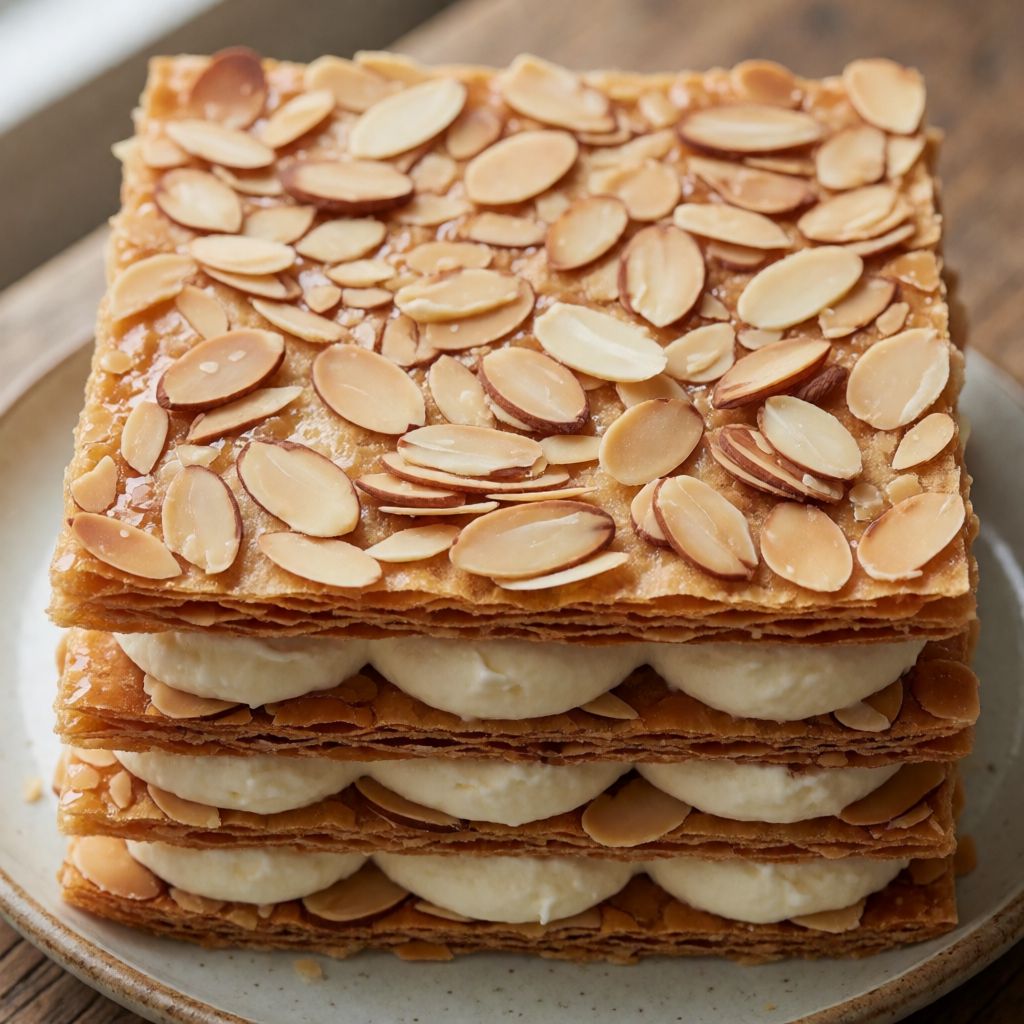
 AI photo
Almond Wafer Millefeuille with Ricotta
A delicate dessert of thin almond wafers layered with ricotta cream, mango and ginger, finished with mint and cocoa powder.
Labels are worked out automatically from the ingredients and can be wrong. Check the packaging if it matters to you.
Ingredients
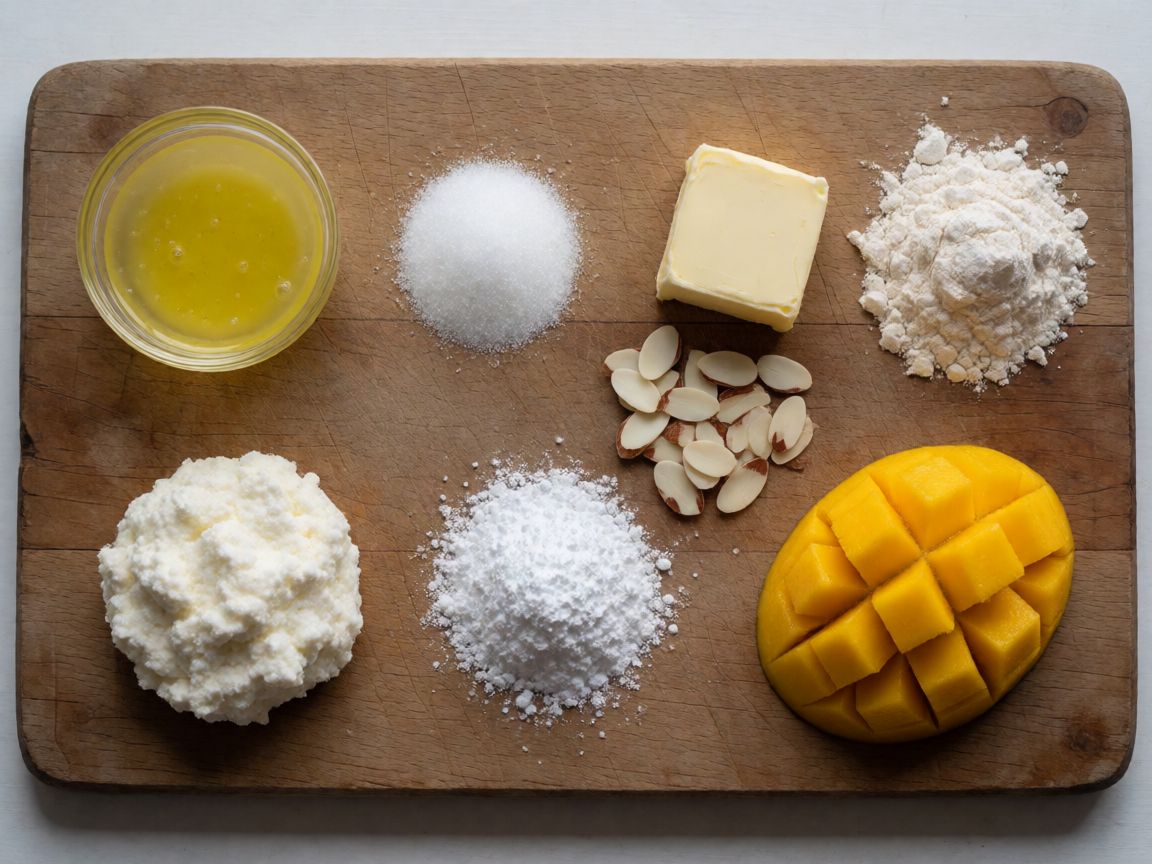
- 2 pcs egg whites
- 100 g sugar
- 35 g butter
- 30 g flour
- 35 g almond flakes
- 150 g sheep's milk ricotta
- 35 g icing sugar
- 1 pcs mango
- 1 pcs ginger grated
- 1 bunch mint
- 1 tbsp cocoa powder










Steps
Whisk the egg whites with the sugar.
Add the melted butter.
Sift in the flour and gently fold it into the mixture, continuing to whisk until smooth.
Line a small heatproof ramekin with cling film.
On a baking tray lined with baking paper, spoon small mounds of the batter spaced apart, then flatten them into thin discs.
Sprinkle the discs with almond flakes and bake at 160°C for about 7 minutes.
7 minFinely chop a few mint leaves.
Mix the chopped mint with the sheep's milk ricotta, add the icing sugar and stir until smooth.
Peel the mango, cut into cubes and place in a pan with a little sugar.
Add butter and a little grated ginger, cook for a few minutes, stirring.
Transfer the ricotta and mint cream to a piping bag, carefully lift the wafers from the baking paper.
Begin assembling the dessert, alternating wafers with cream, then add the mango cubes.
Decorate the dessert with cocoa powder and mint leaves.
A millefeuille with no puff pastry in sight. This is a tuile construction — thin almond-flecked discs of baked meringue batter, stacked with a cooled sheep's milk ricotta cream, and warmed mango in between. The "mille feuille" — a thousand leaves — here means three or four crisp wafers doing the work that dozens of pastry layers usually do. What decides the dish is one thing: whether the wafer is a wafer or a biscuit. You want glass, not shortbread.
That snap comes from thinness and from sugar behaving as a structural ingredient, not a sweetener. The egg white and sugar whipped together, loosened with melted butter and barely-there flour, is a batter built to spread almost to nothing on the tray and then set hard and brittle in a short, hot bake. Spread it thick and you get a soft almond biscuit that bends — pleasant, but not this dish. Spread it thin and the sugar caramelises faster than the centre can stay doughy, and you get the crack you're after.
Some say a wafer this thin is fragile and not worth the bother for a home cook. No — fragile is the point, and the cling-film-lined ramekin in step 4 is there precisely to manage that fragility: you drape a warm wafer over a curved mould for seconds, before it sets flat and snaps rather than bends. Skip that and you get flat discs, which still works — a stacked version rather than a curved one — but know that the shaping step exists to fight the cooling clock, not for decoration.
Egg whites and sugar: whisk these first, before anything else touches the bowl, because egg white only holds air in a bowl free of fat — a single streak of yolk or butter and it won't whip to volume. The sugar isn't just sweetness; it stabilises the foam and, under heat, is what turns the wafer brittle rather than merely dry. Caster sugar dissolves fastest in egg white; granulated works but needs more whisking patience to disappear.
Butter: melted, not softened, and folded in after the whites are whipped — not before. Its job is to carry flavour and help the disc crisp at the edges without turning tough. Any unsalted butter will do; if you're using salted (common in a UK fridge), just don't add extra salt elsewhere — there's little enough in this recipe that it won't matter much, but it's worth knowing why.
Flour: barely a spoonful, and sifted, because its only task here is to give the whites something to cling to as they bake — structure, not bulk. Too much flour and your wafer stops being a wafer and becomes a thin cake. If you're gluten-free, a fine rice flour in the same quantity behaves close enough; the dish doesn't depend on gluten's elasticity the way bread does.
Almond flakes: scattered on top before baking, not folded in. This matters — folded in, they'd sink and clump; scattered, they toast in the same seven minutes as the disc sets, giving you a nutty crust rather than a nutty crumb. No almonds in the cupboard, no disaster — a few sesame seeds or crushed pistachios will toast the same way and give you a different but honest crunch.
Sheep's milk ricotta: thicker and more savoury-sharp than cow's milk ricotta, which is why it's named specifically rather than just "ricotta." If your shop only stocks cow's milk ricotta, drain it in a sieve for twenty minutes first — ordinary UK ricotta tends to carry more whey, and a looser cream won't hold its shape once piped between wafers that are, themselves, flat and offer no wall to lean against.
Mango and ginger: cooked briefly with butter and a little sugar, not to turn it to jam, but to soften the fruit's structure just enough that a spoonful sits rather than rolls off the plate, and to let the ginger's heat bloom in warm fat rather than sit raw and sharp. Grate the ginger rather than chop it — chopped pieces turn fibrous and catch in the teeth; grated, it melts into the butter.
On the heat: 160°C is hot enough to set the egg-sugar structure and toast the almonds before the sugar scorches, but your domestic oven and a commercial one rarely agree on what 160°C actually means at the tray surface — ovens run hotter or cooler by 10–15 degrees depending on age and calibration. Watch the disc, not the clock: pale gold at the edges and lightly dry on top means it's close; a a few minutes beyond that is where "about 7 minutes" lives, as a floor, not a ceiling. Pull them a shade too early and they'll finish setting as they cool on the tray — carry-over crispness is real, just like carry-over cooking in meat.
Patience is the ingredient nobody lists. You need the wafers fully cool and set before you dare stack them, or the cream's warmth (and your own impatience) will soften what should crack. Bake, cool, assemble — in that order, with no shortcuts, because a cling-film-lined mould and a well-set disc can't rescue a wafer you've rushed off the tray while it still has give in it.