
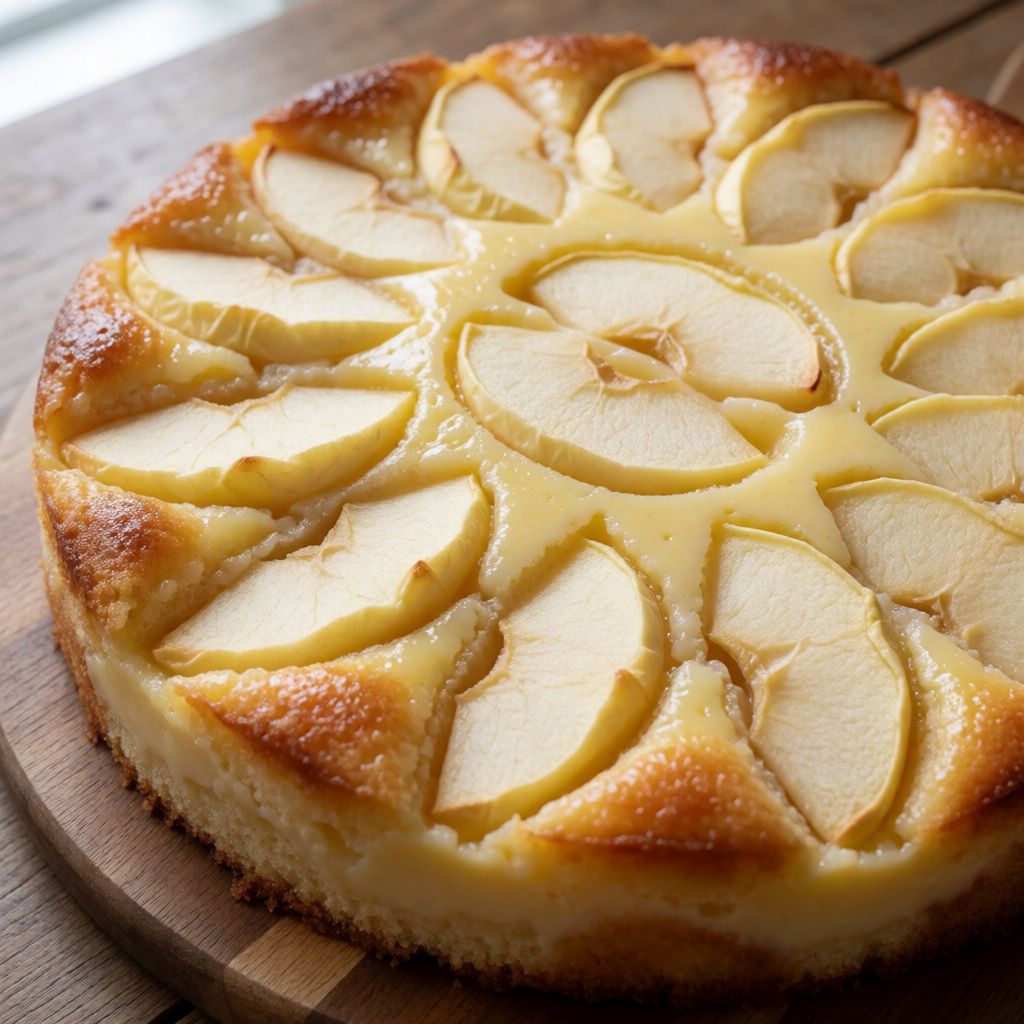
 AI photo
Apple Custard Cake
A soft apple cake layered with vanilla custard cream, baked until golden.
Labels are worked out automatically from the ingredients and can be wrong. Check the packaging if it matters to you.
Ingredients
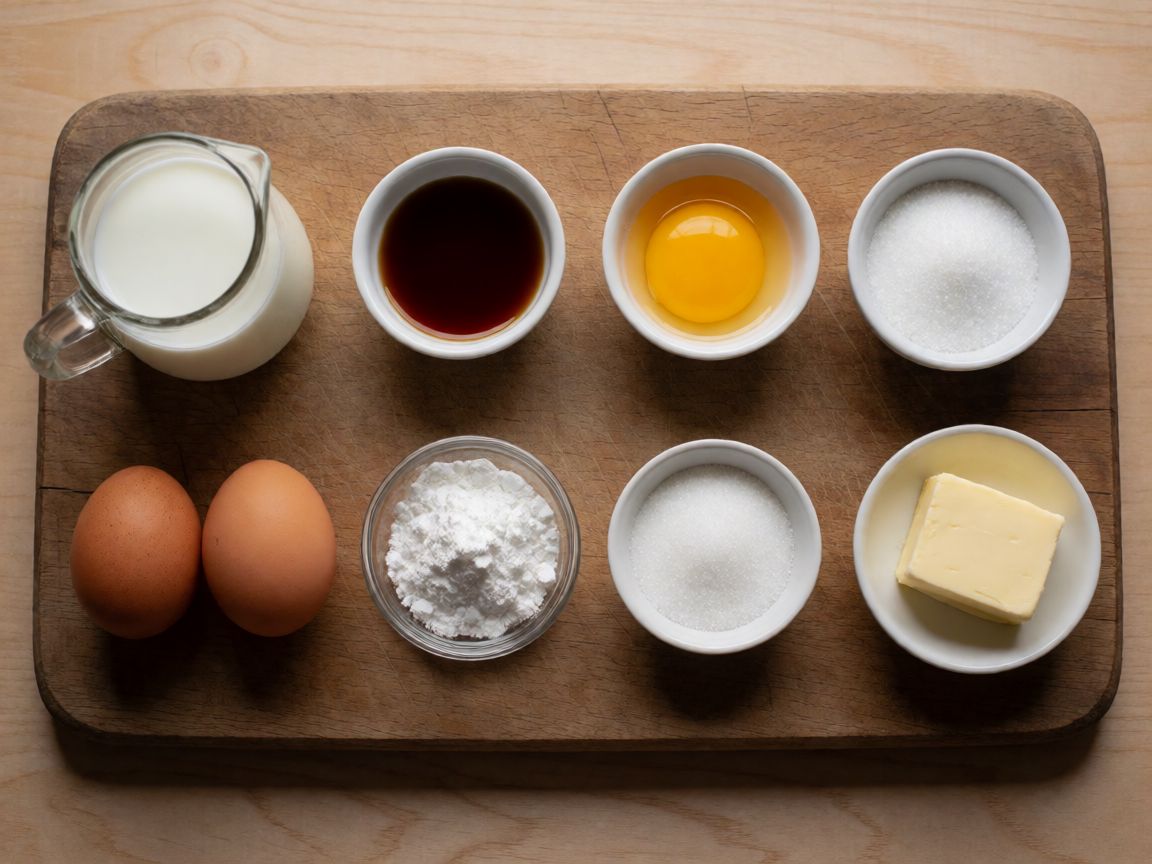
- 250 ml Milk
- 1 tsp Vanilla extract
- 2 pcs Egg yolks
- 60 g Caster sugar for the custard
- 20 g Cornflour
- 3 pcs Eggs for the sponge
- 150 g Caster sugar for the sponge
- 120 g Butter melted
- 220 g Plain flour sifted
- 80 g Potato starch
- 130 ml Milk
- 1 tsp Cinnamon
- 1 pinch Salt
- 16 g Baking powder
- 4 pcs Apples about 550 g











Steps
Bring the milk to the boil, flavouring it with the vanilla extract.
Whisk the egg yolks with the sugar, then stir in the cornflour.
Pour the mixture into the boiled milk and stir over a low heat until thickened.
Remove from the heat and leave to cool.
Break the eggs into a bowl and add the sugar.
Whisk the mixture and gradually add the melted butter, flour, potato starch, milk and baking powder.
Flavour with cinnamon and add a pinch of salt.
Cut 2-3 apples into cubes and fold them into the batter.
Pour the batter into a 24 cm tin greased with butter and dusted with flour.
Spread the custard cream over the top using a piping bag or a spoon.
Cover the surface with the remaining apples, sliced.
Bake in a preheated fan oven at 170°C for 55-60 minutes.
58 min
What you've got here is really two desserts stacked on top of each other and baked as one: a cinnamon apple sponge underneath, and a proper pastry-cream custard sitting on top of it like a blanket, with more apple laid over that. It's not a cake with custard poured over as decoration — the custard is a structural layer, and whether this works depends entirely on whether that layer sets into something sliceable or collapses into a wet patch in the middle of your sponge.
The thing that decides success here is the custard stage, steps 1 to 4, done well before the sponge batter is even a thought. You're making a crème pâtissière — thickened with egg yolk and cornflour both, which is the belt-and-braces approach bakers use when they need a custard that will survive a second cooking. Egg yolk alone thickens by coagulating somewhere around 80°C, and past that it curdles into scrambled egg — fine for the stovetop, risky once this goes into an oven for an hour. The cornflour is what saves you: starch granules swell and set at a lower, more forgiving temperature and hold that structure even when the custard gets reheated inside the cake. Without it, you'd be gambling on timing your bake to the exact second the eggs set before they split.
On the sponge: three whole eggs whisked with sugar first, step 5, is there to beat air and dissolve the sugar into the egg before fat goes anywhere near it — add melted butter too early and it coats the egg proteins, and you get a flatter, denser crumb because the air you want to trap can't form properly. Cooled melted butter, by the way, not hot — hot butter will start cooking the egg on contact, same curdling risk as with the custard, just at a smaller scale and less visible.
The flour-and-starch combination (220 g plain flour, 80 g potato starch) is doing the same job here that cornflour did in the custard, just for a different texture: potato starch has no gluten, so swapping some of the plain flour out for it softens the crumb — you get a lighter sponge than flour alone would give, closer to what a Victoria sponge chases with cornflour. If you don't have potato starch, cornflour again works as the substitute — anything that's pure starch with no protein of its own will do that softening job; what you're choosing against is more plain flour, which would toughen the crumb through extra gluten development.
16 g of baking powder for roughly 220 g flour is a lot by British baking standards — that's because this batter's being asked to lift a heavy, wet load: raw apple cubes folded through it, plus a cream layer and more apple sitting on top, weighing the whole thing down while it tries to rise. Skimp on the raising agent and you get a gluey, undercooked band right under the custard, because the structure never gets strong enough to hold its own weight against that topping.
On the apples — 550 g split two ways, cubed through the batter and sliced over the custard — any firm, not-too-sweet eating apple holds its shape here; what you're avoiding is anything that collapses to mush in the oven, because the cubed ones inside the batter need to still have some bite left after 55-60 minutes, and the sliced ones on top need to hold a visible shape rather than melting into the custard. Bramley, in a British kitchen, is the wrong choice here for exactly that reason — it's bred to break down, brilliant for a crumble, wrong for this.
Milk twice in the recipe — 250 ml for the custard, 130 ml in the batter — is just full-fat doing two different jobs: richness and heat-carrying in the custard, moisture and tenderness in the crumb. Any milk with reasonable fat works; skimmed will give you a thinner custard and a slightly drier sponge, not a disaster, just a flatter result.
A fan oven at 170°C and nearly an hour is a long, gentle bake, and that's deliberate — you've got a wet custard layer and raw apple to cook through without the outside of the sponge catching first. Your 24 cm tin in a domestic kitchen will do this fine, but know your oven: fan ovens vary enough in real heat that the 55-60 minutes is a floor, not a target — check with a skewer through the sponge section away from the custard, and look for the top apples starting to turn soft and golden rather than pale and raw-looking. Give it that hour if it asks, and let it sit a few minutes out of the tin before you cut it — the custard layer needs that stand to firm up enough to slice cleanly rather than run.