
 AI photo
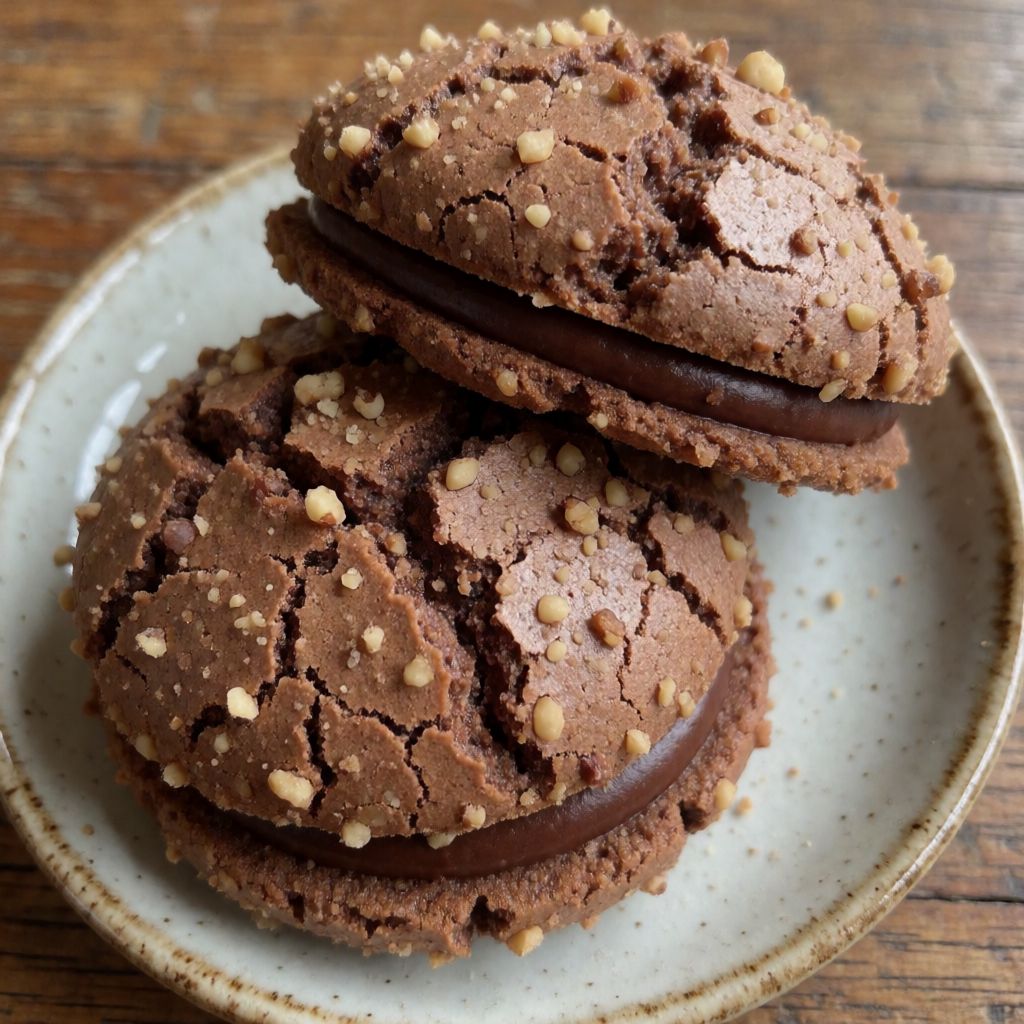
Baci di Alassio
A classic Italian hazelnut and chocolate biscuit sandwich from Alassio, with a rich dark chocolate filling.
Labels are worked out automatically from the ingredients and can be wrong. Check the packaging if it matters to you.
Ingredients
- 500 g Hazelnuts
- 250 g Sugar
- 40 g Cocoa powder
- 3 pcs Egg whites
- 1 pinch Salt
- 30 g Honey
- 100 g Double cream
- 150 g Dark chocolate





Steps
Spread the hazelnuts on a tray and toast in the oven at 180°C
5 minLet the hazelnuts cool
In a food processor, grind the hazelnuts with the cocoa powder and sugar into fine crumbs
Whisk the egg whites with a pinch of salt into a stiff foam
Combine the egg whites with the hazelnut-cocoa mixture, mixing in the honey, until you get a thick paste
Transfer the mixture to a piping bag and pipe small mounds onto baking parchment
Bake the biscuits at 200°C
Heat the cream until almost boiling
Pour the cream over the broken dark chocolate in a bowl
Let the chocolate melt
10 minWhisk the chocolate cream with a mixer until smooth
Spread the cream onto one biscuit and sandwich with another
Place the finished biscuits in the fridge to let the cream set
Baci di Alassio are two hazelnut-cocoa meringue domes glued together with ganache — Liguria's answer to the macaron, except honest about what it is: a biscuit built almost entirely from nuts, with just enough egg white to hold it in a shape. The town of Alassio has sold these since the 1920s under its own name, and the "kiss" in the title is the sandwich itself, two halves closing on the filling.
What decides whether they work is the toasting of the hazelnuts and the grinding that follows. Toast them until the skin cracks and the smell turns from raw-nut to roasted-nut — that's the cue, not a stopwatch, because ovens lie about their own temperature by ten or twenty degrees either way and a nut that looks pale can already taste bitter underneath. Grind them with the sugar and cocoa, not alone: the sugar keeps the oil in the nuts from turning the mixture into paste before you want it to, because hazelnuts are mostly fat and fat plus a spinning blade equals butter if you're not careful.
The second decision point is the egg white. It isn't there to make the biscuit rise — there's no flour, no raising agent, nothing to lift. It's there to coat each ground-nut particle in a thin dry film so the biscuit holds a dome shape in the oven instead of spreading into a puddle. Stiff peaks mean the foam can carry the weight of 500g of nuts without collapsing when you fold it in; a loose foam and your piped mounds flatten before the heat sets them.
Hazelnuts are the entire structure here, so buy whole, skin-on nuts if you can and toast them yourself — pre-roasted bags from the baking aisle have usually been sitting on a shelf long enough for the oil to go slightly stale, and in a dessert with no flour to hide behind, stale oil is the first thing you taste. If you only have pre-roasted, skip the oven step but still smell them before you commit 500g to the processor. No hazelnuts at all, and you've made a different biscuit — almonds will hold the same way, though you lose the specific bitterness that cocoa needs hazelnut to balance against.
The sugar does two jobs, not one: sweetness, obviously, but also — ground together with the nuts — it acts as an abrasive that keeps the blade cutting rather than crushing, so you get crumbs instead of butter. Cocoa powder should be the unsweetened, dark kind (what's sold here as "cocoa powder" rather than drinking chocolate, which already has sugar and milk solids in it and will throw your ratios off).
Egg whites: three, whisked with a pinch of salt. The salt isn't for flavour at this quantity — it's there because a trace of acid or mineral disrupts the proteins just enough to let them unfold and re-link into a stable foam faster, which matters when you're whisking by hand or with a weak domestic mixer. If your whisk arm or your motor is tired, a few drops of lemon juice does the same job and is more reliable than salt, if you want to be honest about it.
The honey folded in with the whites is a humectant — it holds moisture inside the biscuit so the centre stays soft rather than drying out completely during baking, which is the difference between a biscuit with a give to it and a rock. Any runny honey works; don't use set honey straight from the jar, warm it slightly first so it folds in rather than sitting in lumps.
For the filling, you want cream that's heavy enough to carry chocolate — double cream, nothing lighter, because the fat is what keeps the ganache smooth and glossy rather than splitting into grease and cocoa solids when it cools. Heat it "almost boiling," meaning small bubbles forming at the edge of the pan, not a rolling boil — boil it hard and you drive off water you need for the texture. Pour it over broken dark chocolate (70% or thereabouts; much higher and the ganache sets too hard to spread; much lower and it stays too soft to hold the biscuits apart in the fridge) and leave it alone for those ten minutes before you touch it — this is the patience part of the recipe, because stirring too early breaks the emulsion and you get a grainy, separated mess instead of a shine. Whisking comes after it's rested, not instead of resting.
One real limitation of a domestic kitchen worth naming: a kazan-style wood oven gives even, radiant heat from all sides, which is how these were traditionally baked in small Ligurian ovens meant for bread. Your UK fan oven blows hot air unevenly and runs hotter near the back — rotate the tray halfway if you're piping more than one batch, or you'll get one tray of good domes and one tray of flat discs from the same mixture.
This recipe serves four generously as an after-dinner sweet with tea — which, if you take yours with milk the way most people here do, actually suits these rather well: the bitterness in the cocoa and dark chocolate wants something to cut against, and milky tea does that better than it has any right to.