
 AI photo
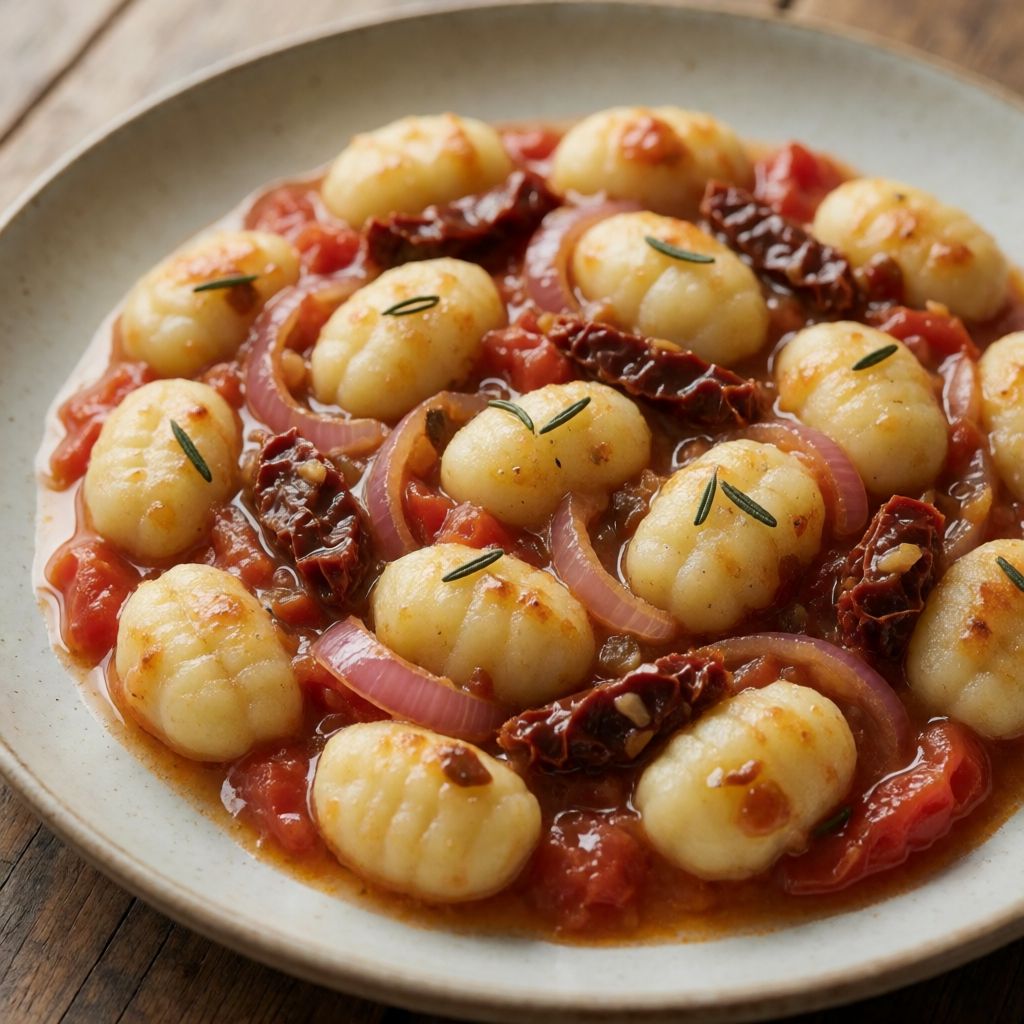
Baked Gnocchi with Tomatoes
A simple bake of gnocchi with fresh and sun-dried tomatoes, finished with burrata, basil and rocket.
Labels are worked out automatically from the ingredients and can be wrong. Check the packaging if it matters to you.
Ingredients
- 800 g Gnocchi fresh, from the fridge
- 1 pcs Red onion cut into wedges
- 500 g Tomatoes
- 30 g Sun-dried tomatoes finely chopped
- 2 clove Garlic finely grated
- 0.5 tsp Dried rosemary
- 1 tsp Dried thyme
- 40 g Pine nuts
- 50 g Mature cheddar grated
- 3 tbsp Olive oil
- Salt
- Black pepper freshly ground
- 150 g Burrata
- 1 bunch Basil fresh
- 75 g Rocket









Steps
Put the gnocchi, red onion and tomatoes into a greased ovenproof dish.
Mix the sun-dried tomatoes, garlic, rosemary and thyme with the olive oil, salt and freshly ground black pepper.
Pour this fragrant oil over the dish and mix all the ingredients together well.
Sprinkle with pine nuts and grated mature cheddar.
Bake in a preheated fan oven at 175°C for about 30 minutes.
30 minTop the hot dish with rocket, basil and burrata and serve at once, while still hot.
What was changed
The generic hard cheese was swapped for Mature cheddar, a hard cheese British shoppers stock.
This is a dish that borrows gnocchi's name but not its usual job. Normally gnocchi gets dropped into boiling water for two minutes, fished out, sauced, eaten. Here you skip the pot entirely and bake it raw straight from the fridge, sitting in tomatoes and oil, so the starch on the outside of each dumpling does the work that boiling water would otherwise do — it swells, softens, goes slightly sticky and catches everything around it. No water, no straining, one dish, less washing up. That's the whole appeal, and it's a reasonable one on a Tuesday.
What decides whether it works is the tomatoes. Fresh ones go in whole-ish, cut, and they have nothing to do in that oven for half an hour except collapse and give up their water — that water becomes the sauce. The sun-dried tomatoes do a different job: they're already concentrated, already lost their water years ago in someone else's sun, so they bring salt and sweetness without diluting anything. Together you get body and brightness. Leave either out and the dish tastes like gnocchi that got lost near some cheese.
Some say you can't bake fresh gnocchi without boiling it first, that it'll turn to glue or stay raw in the middle. No — because fresh gnocchi, the kind from the fridge rather than the dried shelf-stable kind, is mostly potato and a little flour, already cooked once in its making. It doesn't need rehydrating from nothing; it needs enough ambient liquid to finish softening, and the tomatoes supply exactly that. The failure this step actually guards against isn't rawness, it's the opposite — gnocchi baked dry, with no tomato juice pooling underneath, turns leathery because there's nothing for the starch to swell into. Keep it swimming, even slightly, in that tomato liquid and it stays tender.
The red onion cut into wedges rather than sliced thin is a deliberate bit of patience: thin slices would catch the oven's heat on every surface and turn to ash before the tomatoes are done, while wedges hold their shape, go sweet at the edges and keep a bit of bite in the middle. If you only have a brown or white onion, use it — the sweetness differs slightly, red onion being milder and quicker to caramelise, but nothing about the dish collapses without it.
The flavoured oil — sun-dried tomato, garlic, rosemary, thyme, olive oil — is where the seasoning actually lives, because once everything's in the oven you can't come back and adjust a dish that's already baking. Grate the garlic rather than chop it so it disperses into the oil instead of sitting in bitter raw lumps that never cook through in thirty minutes at this temperature. Rosemary and thyme dried rather than fresh here isn't a compromise, it's correct: dried herbs are more concentrated and survive the oven's dry heat without scorching the way a fresh sprig's leaves would. Use any oil that doesn't fight the tomato and herb flavours — olive oil is traditional because in the Mediterranean it was the oil that was there, pressed locally and cheap, not because sunflower oil would ruin anything. It would just taste of nothing, which is actually fine too if that's what's in your cupboard.
Pine nuts toast in the dry heat around the dish's edges and go from pale to honey-brown — that's your cue, not a timer, because pine nuts go from perfect to burnt in the time it takes to answer the phone. If you don't have them, flaked almonds do the same job of a crunchy, slightly bitter counterpoint to the soft gnocchi; walnuts work too, though they're more assertive. Mature cheddar is an odd choice for an Italian-leaning dish and it's there because it's what's in a British fridge — it melts to a sharp, slightly greasy crust rather than the stretchy pull of mozzarella, and that's not a flaw, that's the dish declaring where it's actually being cooked. A mild cheddar will just go gluey and bland; you want the bite.
Burrata, basil and rocket go on last and uncooked for the same reason you don't put ice in a hot drink and expect it to stay ice — heat and cold need to meet right at the table, not in the oven. Burrata baked would just become an expensive, leaking blob of warm milk; raw and placed on the hot gnocchi, it softens at the edges in seconds while the middle stays cool and runs out when you cut into it. That's the whole point of burrata over mozzarella: it's built to be the last thing added, not the first thing cooked. Rocket wilts within a minute against that heat, which is exactly as much wilting as you want — any longer and it's just spinach with attitude.