
 AI photo
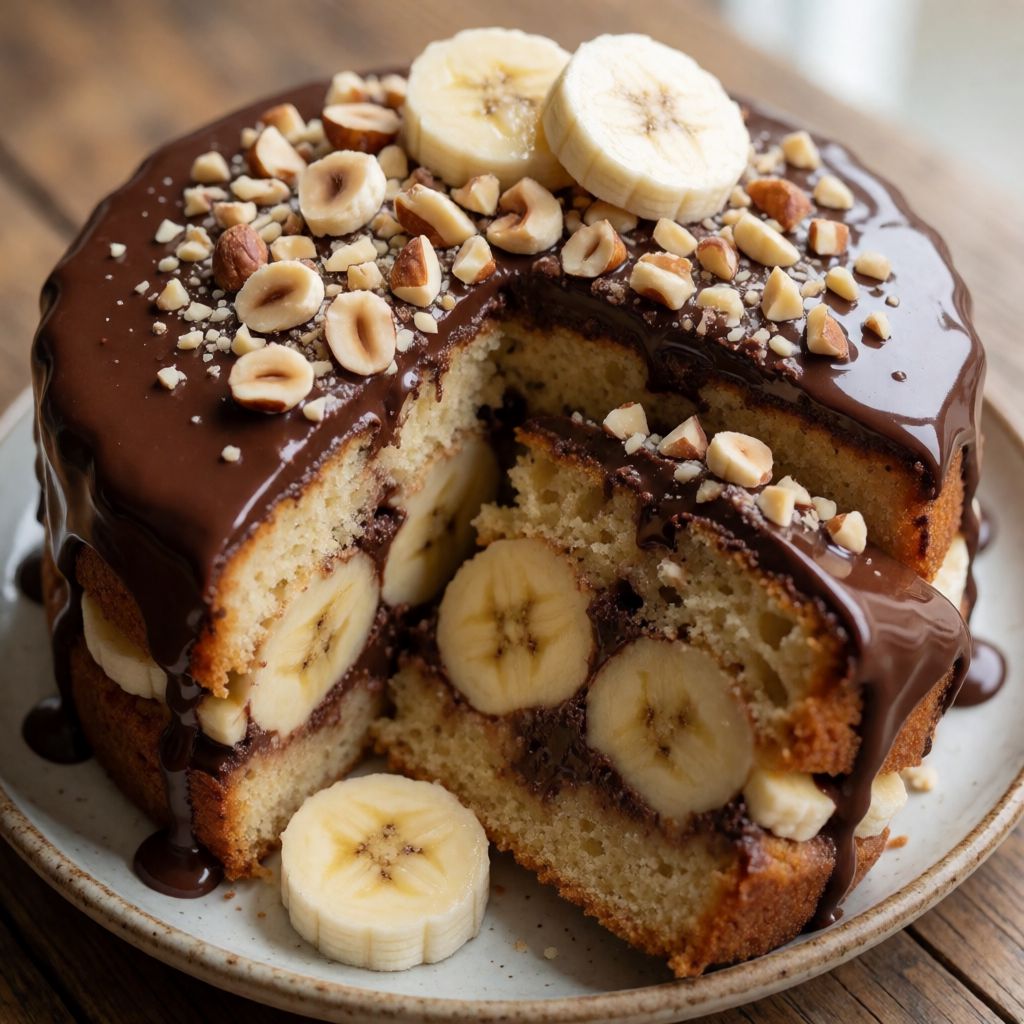
Sponge Cake with Banana and Chocolate
A light hazelnut sponge layered with vanilla custard cream, banana slices, dark chocolate and Daim bits.
Labels are worked out automatically from the ingredients and can be wrong. Check the packaging if it matters to you.
Ingredients
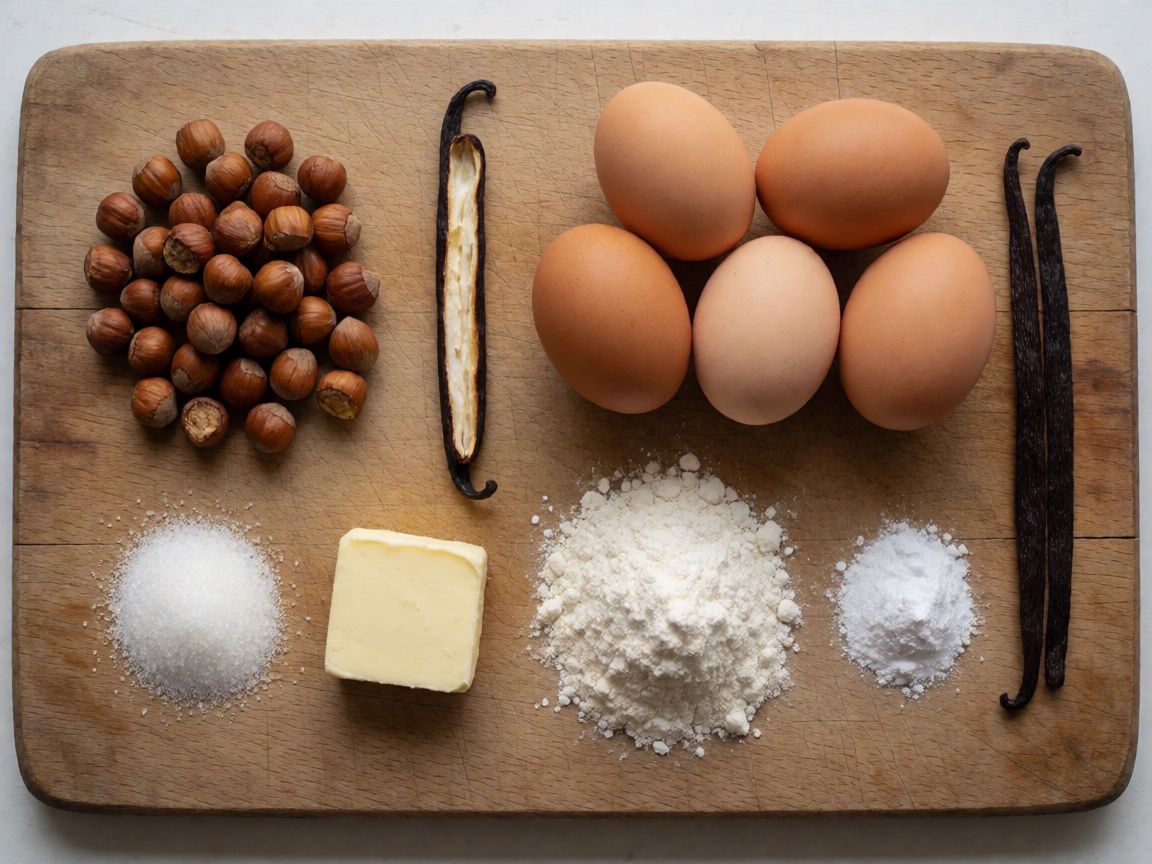
- 75 g Hazelnuts
- 5 pcs Eggs
- ½ pcs Vanilla pod
- 125 g Caster sugar
- 70 g Butter
- 100 g Plain flour
- 1 pinch Salt
- 1½ tsp Baking powder
- 1 pcs Vanilla pod
- 6 pcs Egg yolks
- 120 g Caster sugar
- 30 g Cornflour
- 500 ml Milk
- 200 ml Double cream
- 3 pcs Banana sliced
- 150 g Dark chocolate roughly chopped
- 100 g Daim bar roughly chopped
- 300 ml Double cream













Steps
Preheat the oven to 150°C (fan) and roast the hazelnuts for 15 minutes, until the skins are brittle and start to crack.
15 minWrap the hazelnuts in a clean cloth and rub to remove the skins. Put the nuts in a food processor and grind to a fine flour.
5 minSeparate the eggs — whites in one bowl, yolks in another. Whisk the whites to a stiff, glossy foam that holds peaks.
4 minSplit the vanilla pod lengthways, scrape out the seeds with a knife and mix them with the sugar. Whisk the vanilla sugar and yolks to a pale, airy mixture.
3 minAdd the hazelnut flour and butter to the yolk mixture and fold in quickly to combine.
1 minMix the flour, salt and baking powder, sift into the batter and fold in quickly.
1 minGently fold a few spoonfuls of the whisked egg whites into the batter, then very carefully fold in the rest of the airy whites.
2 minSpread the batter into a greased tin about 20 cm across and level with a spatula.
Bake the sponge in an oven preheated to 165°C (fan) for 45–50 minutes.
48 minLet the sponge cool completely in the tin, then remove it and slice into 3 layers.
Split the vanilla pod lengthways and carefully scrape out the seeds with a knife. Mix the vanilla seeds with the sugar.
1 minStir the vanilla sugar, yolks and cornflour together well in a saucepan.
8 minPour in the milk and heat slowly, stirring constantly, until the custard comes to the boil and thickens to a thick vanilla consistency.
Pour the custard into a bowl, cover the surface with cling film and chill until completely cold.
90 minWhip the cold double cream to a soft peak and carefully fold it into the chilled vanilla custard.
2 minPlace the first sponge layer on a serving plate and spread a generous layer of the custard cream over it.
2 minArrange banana slices over the cream and sprinkle with dark chocolate and Daim.
2 minRepeat with the remaining layers. Save a little for decoration and keep one layer of cream for the top.
3 minSpread the cream over the top of the cake and sprinkle with the remaining chocolate and Daim.
2 minWhip the double cream for decoration, fill a piping bag fitted with a star nozzle and pipe around the sides of the cake.
3 min
This is a three-layer construction — a nut sponge, a cream that's really a cooked custard lightened with whipped double cream, and fresh banana sandwiched between them with broken chocolate and Daim for crunch. What decides whether it holds together, slices cleanly, and doesn't go soggy by the time you cut it, is two separate acts of patience: letting the sponge cool properly before you cut into three, and getting the custard stone cold before you fold in the cream.
The sponge itself is unusual — there's barely any flour in it, 100g against 75g of ground hazelnuts and five whole eggs. That's not a health gesture, it's structure. Hazelnut flour has no gluten, so it can't toughen the crumb the way wheat flour does when overworked; the lift here comes almost entirely from whisked egg whites folded in at the end. Some say a sponge rises because of baking powder — no, the powder is backup. The real lift is air beaten into whites and yolks and then protected, not knocked out, as you fold. That's why every fold in this recipe is marked "fold in quickly" rather than "stir": every extra second of mixing is air leaving the bowl.
Hazelnuts: toast them until the skins crack and go brittle, not until the nuts darken — that crack is your doneness cue, and it's also what makes the skins rub off in a cloth instead of clinging. Skip toasting and you grind oily, flavourless paste instead of flour; the heat is what wakes up the nut oils and makes them taste like something. If you can't get hazelnuts, almonds do the same structural job — any mild nut ground fine enough to behave like flour works, but swap flavour expectations along with it.
Eggs, split into whites and yolks at two different stages of the recipe, are doing two different jobs. In the sponge, the whites are your raising agent; in the custard, the yolks are your thickener, working alongside cornflour. Don't let any yolk into the whites you're about to whisk for the sponge — a trace of fat is enough to stop whites reaching a stiff peak, because fat coats the protein strands that need to link up and trap air. This isn't superstition, it's chemistry you can watch fail in real time if you try it.
Vanilla pod, split and scraped twice in this recipe — once for the sponge, once for the custard — is there for a perfume you genuinely can't get from extract without also getting its alcohol flavour riding along. If you only have vanilla extract or paste, use it, but use it in the custard rather than the sponge: the custard's long, slow cook over heat has time to mellow extract's rawer edge, the quick-baked sponge doesn't.
Butter in the sponge is softening, not raising — fat tenderises the crumb so the cake doesn't eat dry against a wet custard filling. Any flavourless cooking fat substitutes in a pinch, though butter is cheap enough here that there's little reason to.
Cornflour alongside egg yolk in the custard is belt-and-braces thickening — yolk alone gives you a custard that can split if it overheats even slightly; cornflour's starch sets reliably at a lower, more forgiving temperature and buys you room for error on a home hob, where heat control is rougher than in a professional kitchen. Some say custard should be egg yolk only, that cornflour is "cheating" — no, it's insurance, and on a domestic stove, worth having.
Dark chocolate and Daim roughly chopped rather than melted are your textural contrast — without some hard crunch against banana and soft cream, every mouthful is the same softness, and that gets tiring fast. If Daim isn't to hand, any chocolate-coated caramel or toffee bar chopped small does the same job; the criterion is crunch plus sweetness, not the brand.
A note on timing for a British Sunday: this isn't a quick-bake-and-serve cake. Between hazelnut roasting, sponge cooling completely in the tin (don't rush this — cut a warm sponge and it tears instead of slicing clean), and ninety minutes of custard chilling, you're looking at the better part of an afternoon before assembly even starts. Treat it the way you'd treat a roast resting — the waiting is doing real work, not wasting your time.