
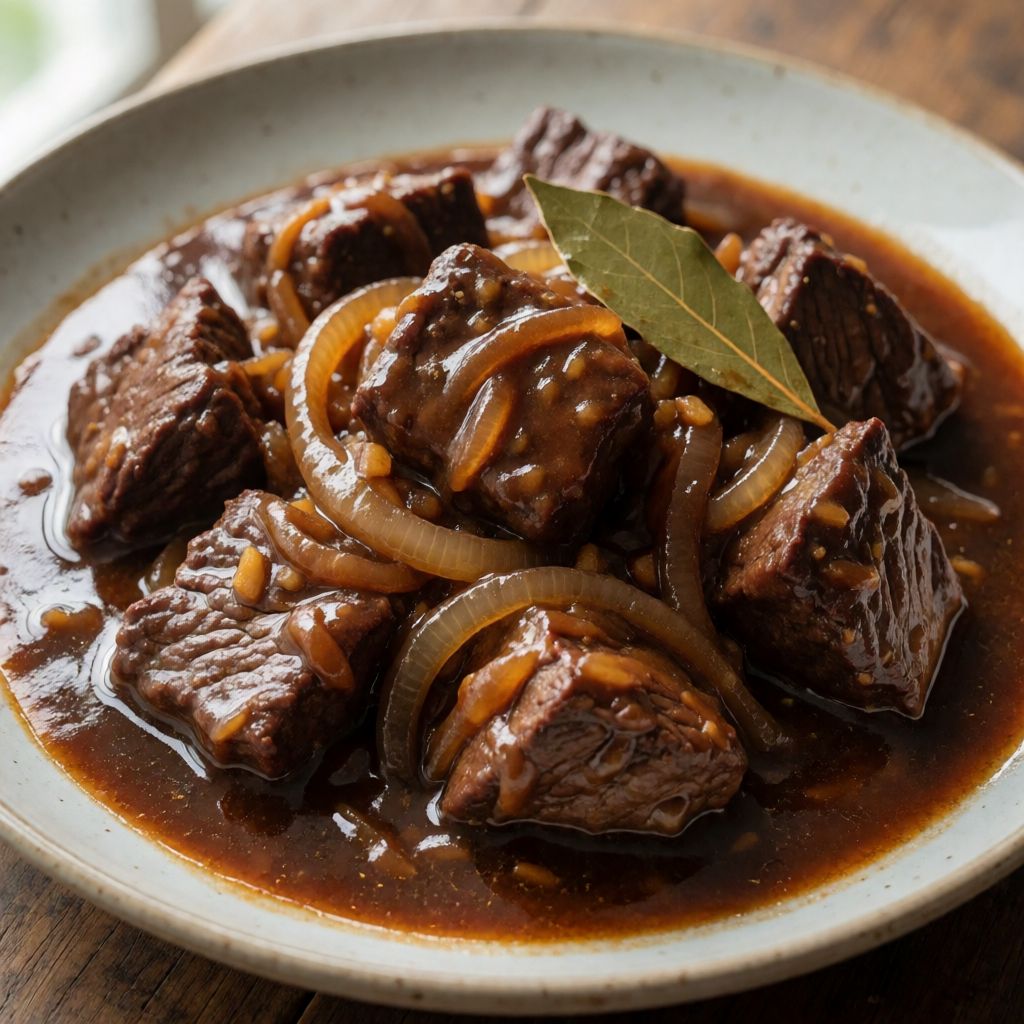
 AI photo
Beef Braised in Beer
A hearty beef stew slow-cooked with beer, herbs and a touch of cornflour to thicken the sauce.
Labels are worked out automatically from the ingredients and can be wrong. Check the packaging if it matters to you.
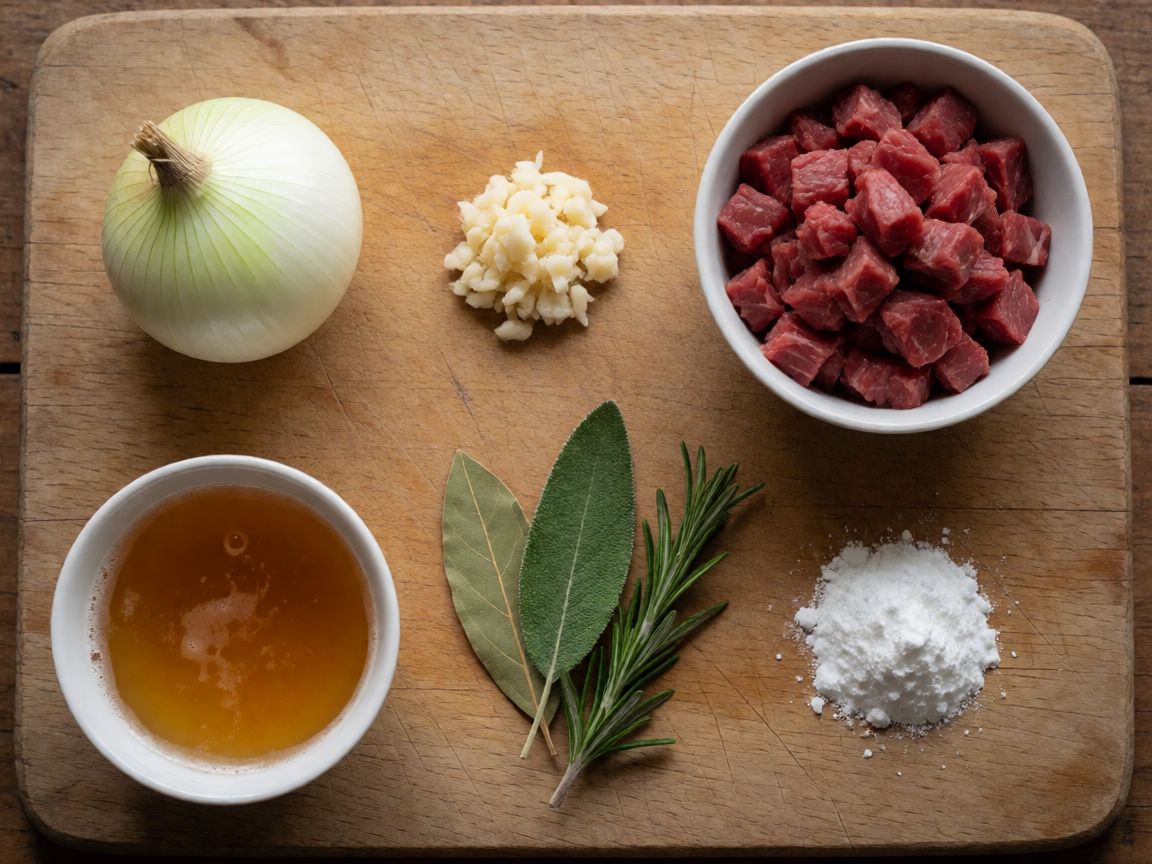
Ingredients












Steps
In three tablespoons of olive oil, fry the chopped onion and chopped garlic.
Brown the meat on all sides until golden, pour in the beer and let it evaporate.
Add the herb mix (bay leaf, sage, rosemary), season with salt and pepper, and pour in the water.
Close the pressure cooker and bring to pressure, then lower the heat and cook.
35 minLet the dish cool slightly; if the sauce is too thin, add cornflour or plain flour.
Stir until the sauce thickens and finish cooking the dish.
5 minServe the beef sliced, drizzled with the sauce.
This is a Sunday roast's cousin, but one that admits it hasn't got three hours to spare. Where a roast relies on dry heat and time to coax a joint tender, this one uses steam under pressure and a jug of beer to do the same job in under an hour. What decides whether it works isn't the beer you choose or the herbs you throw in — it's whether you actually brown the meat properly before the lid goes on, and whether you let the pressure cooker do its work without peeking.
Browning first. Some say you can skip it and the pressure will tenderise everything anyway — no, because browning isn't about tenderness, it's about flavour that only forms at high heat, when sugars and proteins on the meat's surface char slightly and turn savoury. Skip it and you get grey, boiled-tasting beef no matter how soft it ends up. The beer, once it's in the pan, needs to bubble down and lose its raw, yeasty harshness before you shut the lid — that's what "let it evaporate" means: not gone, just concentrated and rounded off.
The pressure cooker is doing the heavy lifting here, standing in for the long slow braise a cheap cut of beef actually needs. Under normal atmospheric boiling, collagen in tough muscle takes hours to break down into gelatine. Trap the steam and raise the pressure, and the same chemistry happens at a higher effective temperature, so it's done in well under an hour instead of three or four. That's the whole economics of this dish: a stewing cut, treated roughly, made tender quickly because of physics rather than time.
Start with the beef. You want a cut built for slow, wet cooking, not a quick-fry steak — chuck, shin, or braising steak, the kind labelled "stewing beef" in a British supermarket, cut into decent chunks. These are the muscles that did the most work on the animal, dense with collagen, which is exactly why they turn silky under pressure instead of just going dry. A lean, expensive cut wastes its money here; it has nothing to break down.
The beer matters less than people assume. Some will tell you it must be a dark stout or nothing — no, because the role of the beer is acidity and malt sweetness working together to soften the meat's surface and build a sauce with some bitterness to balance the richness. A brown ale or a bitter does this fine. What you don't want is a thin, sharp lager with nothing to it — it'll cook down to not much. If you've genuinely no beer, a splash of stock with a spoon of malt vinegar and a pinch of sugar gets you closer than wine would, because wine brings a different kind of acid entirely.
Onion and garlic go in first in the oil, and the point of frying them before the meat touches the pan is to build a base flavour the meat then sits on top of — not just softening them, but letting the onion's sugars start to turn, which sweetens the whole pot later. Olive oil here is doing nothing special flavour-wise; any oil with no smell of its own works just as well — sunflower, groundnut, whatever's in the cupboard — olive oil just happens to be what's to hand in most kitchens that cook this kind of food.
The herbs — bay, sage, rosemary — are a British larder trio, the same three you'd reach for near a roast chicken or a pork joint. Woody herbs like rosemary and sage survive the pressure cooking without disintegrating into mush the way something delicate like basil would, so use what holds its shape under heat, not what smells nicest raw.
On the cornflour versus plain flour question: cornflour thickens cleaner and clearer, with less chance of a floury taste if you're impatient and don't cook it out properly; plain flour needs a minute or two more stirring over heat to lose that raw taste, but either does the job of binding the sauce to the meat. Mix either with a splash of the cold liquid before adding it to the hot pot — stirring powder straight into simmering liquid is how you get lumps, not sauce.
If you haven't a pressure cooker, don't despair and don't try to rush this in a normal pan in the same time — a heavy pot with a tight lid, or foil pressed down if your lid's a loose fit, on the lowest flame that still keeps a gentle simmer going, for closer to two hours, gets you the same tenderness the slow way. That's the honest trade on a domestic hob: no pressure, no shortcut, just patience standing in for the machine.