
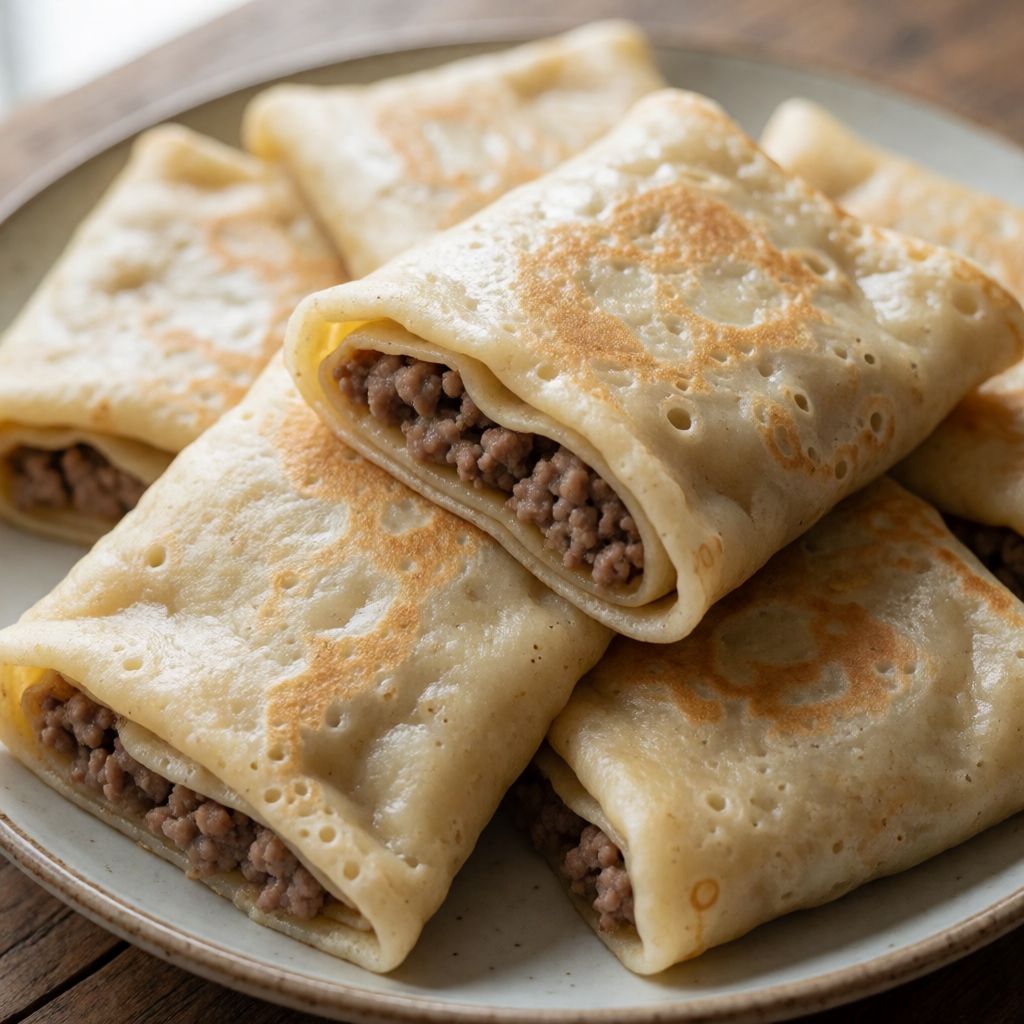
 AI photo
Beef-Filled Pancakes
Savoury pancakes rolled around a spiced beef, carrot, courgette, tomato and sweetcorn filling, topped with cheddar and baked, served with smashed avocado and lettuce.
Labels are worked out automatically from the ingredients and can be wrong. Check the packaging if it matters to you.
Ingredients
- 3 pcs Eggs
- 350 ml Milk
- 1 pinch Salt
- 110 g Plain Flour
- 50 g Wholemeal Flour
- 1 tbsp Butter for frying
- 250 g Beef Mince
- 1 pcs Onion finely chopped
- 2 clove Garlic finely chopped
- 1 tsp Cumin ground
- 1 tsp Ground Coriander
- 100 g Carrot coarsely grated
- 200 g Courgette coarsely grated
- 400 g Tinned Chopped Tomatoes
- 140 g Sweetcorn tinned
- 150 g Cheddar coarsely grated
- 1 tsp Olive Oil for frying
- Black Pepper freshly ground, to taste
- 1 pcs Avocado
- 1 pcs Lime juice and finely grated zest
- 0.5 tsp Cumin ground
- 1 bunch Parsley finely chopped
- 125 g Lettuce





















Steps
Whisk the eggs with the milk, salt, wholemeal and plain flour. Melt the butter in a frying pan and fry the pancakes one at a time on both sides until light golden brown.
12 minFry the beef mince in a hot pan with olive oil, stirring constantly, until browned. Lower the heat, add the onion, garlic, cumin and coriander, and cook until the onion softens.
6 minAdd the carrot, courgette, chopped tomatoes and sweetcorn to the pan. Stir and simmer uncovered for 5–10 minutes.
5 minSeason the beef filling with salt and freshly ground black pepper to taste.
1 minMash the avocado flesh with a fork on a plate and season with lime juice, finely grated lime zest, salt and cumin.
2 minFill each pancake with a few spoonfuls of the beef filling and a little cheddar, then roll up. Place seam-side down on a dish. Sprinkle the remaining grated cheddar on top.
3 minBake the pancakes in the oven at 200°C with fan for about 10 minutes.
10 minSprinkle the pancakes with finely chopped parsley and serve with lettuce and the smashed avocado.
1 min
This is a crepe standing in for a tortilla — a Russian-kitchen workaround for Tex-Mex, and a smart one, because a thin egg-and-flour pancake does exactly what a flour wrap does: it holds a wet filling without falling apart, and it's something you probably already have the ingredients for. What decides whether this works isn't the filling — mince with onion and spice is forgiving — it's the pancake. Too thick, and it tears when you roll it, or worse, it stays doughy in the middle while the outside browns. Too wet a batter, and it won't release from the pan at all.
The batter needs to run — properly run, coat the back of a spoon and drip off in a thin sheet, not dollop. That's what the 350ml milk against 160g flour is doing: diluting a dough into a liquid thin enough to spread by tilting the pan, not by spreading with a spoon (which bruises it and gives you lumps). Some say wholemeal flour makes a heavier, more "rustic" pancake — no, because the wholemeal here is a minority stake, 50g against 110g plain. It adds a slight nuttiness and a tan colour to the crepe, not heft. If you've only got plain flour, use all plain; you lose a little character, not the dish.
On the pancake pan: a wide domestic frying pan, nonstick, is your crepe pan here — you don't need a dedicated one. The thing that actually fails people is heat management on an electric hob versus gas: electric holds heat and overshoots, so your first pancake often burns while you're still calibrating. Don't panic and bin the pan — just pull it off the heat for ten seconds, wipe with a paper towel, and start again. That's the kazan-to-kitchen compromise: no steady radiant heat, so you compensate by eye, judging by colour — pale gold lace at the edges lifting cleanly, not the timer.
Eggs and milk are the structure — eggs for set, milk for spreadability and tenderness (water alone gives you a drier, more rubbery crepe, more like a British pancake than you want here). Three eggs to 350ml milk is a loose enough ratio that if you're short an egg, add a splash more milk and don't worry.
The butter for frying isn't about flavour so much as it's about a thin fat film that stops the first pancake sticking — after that the pan's seasoned by its own residue and you need less. If you don't have butter, any neutral oil works for frying; you lose a little nutty smell but gain nothing by insisting on butter out of habit.
Beef mince: look for one with a bit of fat in it — pure lean mince fries dry and crumbly, won't bind with the vegetable juices, and ends up tasting of nothing but spice. If you only have very lean mince, a spoon of oil in with it compensates. Cumin and coriander are doing the "Mexican" signalling here rather than authenticity — swap for a shop-bought fajita or taco spice mix if that's what's in the cupboard; the mechanism (hard-fried meat, softened aromatics, loosened with tomato) doesn't care what spice sits on top of it.
Carrot and courgette coarsely grated, not finely — fine grating turns to mush and disappears into the sauce, coarse keeps a bit of bite so the filling isn't just wet mince. Tinned chopped tomatoes and tinned sweetcorn are doing honest, unglamorous work: tomatoes for moisture and acidity to cut the richness of the meat and cheese, sweetcorn for a pop of sweetness and texture against the soft roll. Any tin will do — "fresh is better" is a myth that gets in the way here, since tinned tomatoes are cooked down already and tinned corn is picked at peak sweetness and locked in; you're not losing anything by reaching for the tin.
The avocado-lime side isn't decoration, it's the fat-and-acid counterpoint the dish needs because everything else — pancake, mince, cheese — is rich and savoury in the same register. Mash by hand with a fork, not a blender: you want texture, not purée, otherwise it slides off the plate instead of sitting against the roll. Lime for acid; if you've only got lemon, use it — the job is sourness and a citrus edge, not a specific fruit.
Patience here isn't long, but it's real: let the mince actually brown, don't crowd the pan or stir constantly out of anxiety, and let the pancake batter rest a few minutes before the first one hits the pan — rested batter releases air bubbles that would otherwise tear holes in your first crepe. This feeds four generously; if you're cooking for fewer, the filling keeps and reheats better than the pancakes do, so make the full batch of filling and fry pancakes as you need them.