
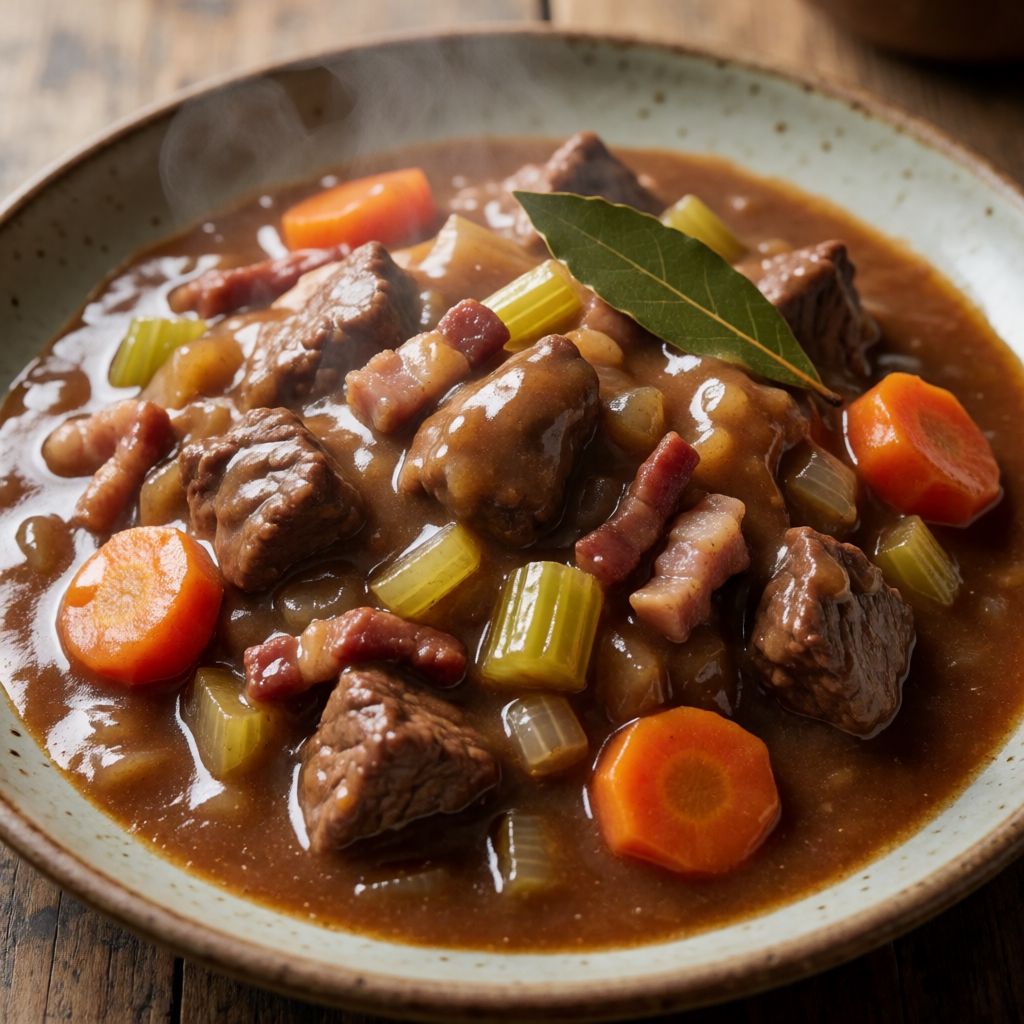
 AI photo
Beef and Bacon Stew
A hearty beef stew simmered with bacon, vegetables and white wine, finished with a touch of mascarpone for extra creaminess.
Labels are worked out automatically from the ingredients and can be wrong. Check the packaging if it matters to you.
Ingredients
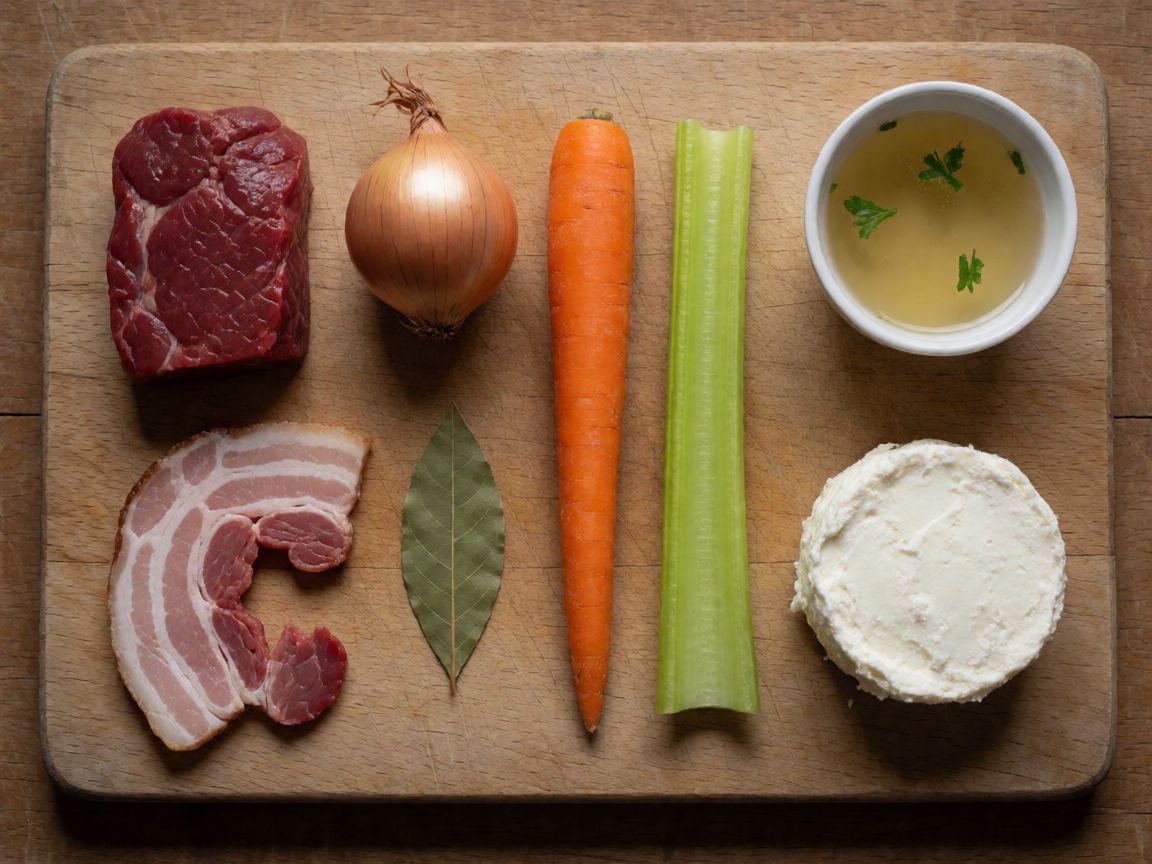
- 1.2 kg Beef
- 270 g Bacon
- 1 pcs Onion
- 1 pcs Carrot
- 1 pcs Celery stalk
- Bay leaf to taste
- Vegetable stock as needed
- 100 g Mascarpone
- 710 ml White wine
- Salt to taste
- Black pepper to taste
- Plain flour as needed
- Olive oil a small amount













Steps
Trim the beef of excess fat and cut into roughly 2 cm cubes. Toss in flour and fry in a pan until golden brown.
Peel the onion, carrot and celery stalk, and finely chop the vegetables.
Pour olive oil into a pot, add the vegetables and sauté.
Add the chopped bacon and wait until the fat renders.
Add the beef and bay leaf, pour in the white wine and let it evaporate.
Cover the meat with vegetable stock, season with salt and pepper. Cover and simmer gently over low heat.
45 min15 minutes before the end, add the mascarpone and stir.
15 minCheck the liquid level from time to time and top up with stock if needed.
This is a braise dressed up as something fancier — beef, bacon, wine, and at the very end, a spoon of mascarpone stirred in like it's a secret. It isn't. It's just cream cheese doing what cream always does to a brown stew: smoothing the edges, taking the rough tannic bite off the wine, turning "sauce" into "gravy you'd lick off a spoon". Whether this works depends on one thing above all: did you give the beef enough time, or did you rush it because the clock said sixty minutes and you believed the clock.
The flour-and-fry step at the start isn't decoration. Flour on wet meat, hit with real heat, builds a crust — that crust is where the savoury depth of the whole pot comes from, because without it you're just boiling grey meat in wine and hoping. Some say browning "seals in the juices" — no, it doesn't, meat is not a bag, juices still cook out. What browning actually does is the Maillard reaction: sugars and proteins charring into hundreds of new flavour compounds that a wet cube of beef sitting in liquid can never produce on its own. That's the whole point of the step, and it's also why a crowded pan ruins it — too much meat at once steams instead of browning, because the water it releases has nowhere to go.
The mascarpone goes in at the end and only at the end, and there's a reason for the timing, not just habit. Dairy fat and acid don't get on — simmer a soft cheese like this in a pot that's been loaded with wine (which is acidic) for the full hour and you risk it splitting, going grainy instead of glossy. Stirred in for the last stretch, off the fiercest heat, it melts into the sauce instead of curdling in it. If mascarpone isn't to hand, double cream does the same job — body and a bit of fat to round off sharp edges — just add it even later and more gently, since cream splits faster than mascarpone will.
The bacon earns its place before the beef, not after, because its fat is doing double duty: it's the cooking medium for the vegetables, and it's a flavour base — smoke and salt rendered straight into the stock everything else swims in. Wait for the fat to actually render, not just the bacon to look cooked; that rendered fat is what the onion and carrot fry in next, picking up smokiness they'd never get from olive oil alone. If you're using smoked bacon lardons rather than rashers you cut yourself, that's fine — it's the rendering, not the shape, that matters.
The vegetable trio — onion, carrot, celery — is the French mirepoix, inherited into British stewing because it's cheap, it keeps, and it builds a sweet savoury backbone without needing anything exotic. No single one of them is sacred: miss the celery and the stew won't collapse, it'll just lose a little of its slight bitterness and depth. What you're watching for as they sauté isn't a clock, it's colour — onion going from white to translucent to pale gold, carrot softening at the edges. Push past gold into brown here and you've started caramelising sugars too early, before the wine goes in to arrest it — that's a different, harsher sweetness than the recipe wants.
The white wine, poured in and left to "evaporate," isn't just for flavour — it's deglazing, lifting the browned bits stuck to the pot from frying the beef, the fond, which is concentrated flavour you'd otherwise scrape into the bin. Letting it bubble off burns away the raw alcohol sharpness, leaving the fruit and acidity behind to balance the richness of bacon fat and mascarpone later. Any dry, not-too-oaky white works — you're not drinking it, you're using its acid, so there's no case for buying something expensive.
Vegetable stock, topped up as it cooks down, is there because a covered pot on a domestic hob still loses liquid — lids on home pots rarely seal as tight as a lidded casserole in a slow oven, so the level drops faster than you'd think. Checking it "from time to time" isn't vague advice to be lazy about — meat left high and dry above the liquid line in the last stretch will dry out and toughen right when it should be going tender, undoing the whole point of the long simmer. Keep enough liquid in there to cover, top up with hot stock rather than cold so you don't keep knocking the pot back down to a stall.
As for the pan itself: a kazan or heavy cast-iron casserole holds heat evenly and that helps, but it's not essential — a wide, heavy-based pot with a lid that actually sits down on it will do the job on a British hob, you're just a bit more responsible for watching the heat yourself rather than letting the pot's mass do it for you. Serve it the way a Sunday roast gets served — mash, bread, something to catch the gravy, because that gravy, by the time the mascarpone's gone in, is the better half of the dish.