
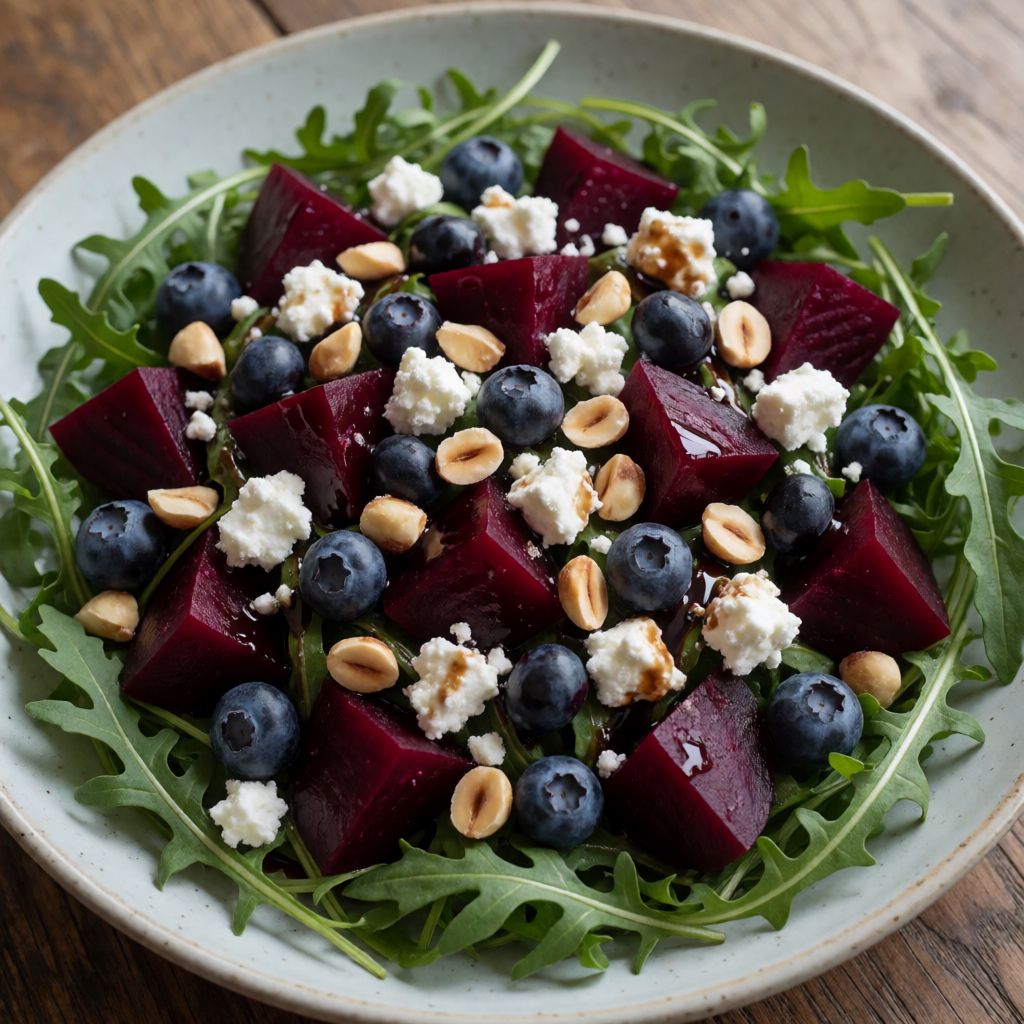
 AI photo
Beetroot and Feta Salad
A roasted beetroot salad with arugula, hazelnuts, dried blueberries, avocado and feta.
Labels are worked out automatically from the ingredients and can be wrong. Check the packaging if it matters to you.
Ingredients
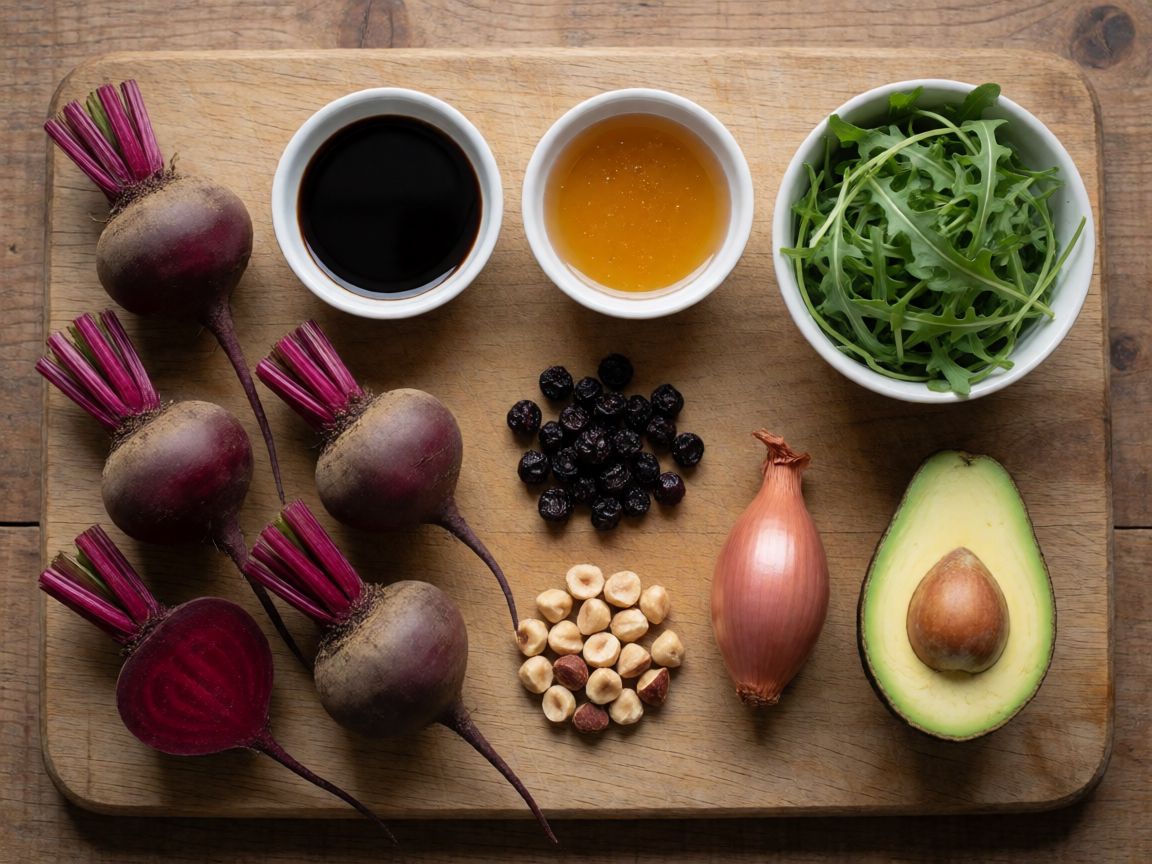








Steps
Chop the shallot and mix it with the balsamic vinegar, honey and olive oil into a smooth, even emulsion. Add salt and pepper.
Peel the beetroot and cut each one into quarters. Place on a baking tray lined with parchment and drizzle with some of the dressing.
Roast in an oven preheated to 200°C, stirring occasionally.
15 minBlitz the hazelnuts in a blender and mix them with the dried blueberries in a salad bowl.
Add the rocket and dress with the remaining dressing.
Take the beetroot out of the oven and add it to the rest of the ingredients.
Dice the feta and avocado and add to the salad.
Toss together — the salad is ready to serve.
This is a warm-cold salad — the trick that makes it more than "rocket with stuff on top." Beetroot comes out of the oven still faintly hot, and that heat is doing a job: it softens the feta at the edges, warms the olive oil in the dressing so it coats rather than sits, and makes the avocado creamier against your tongue than it would be cold. Build the whole dish around that one moment — beetroot out of the oven, straight into the bowl — and everything else falls into place.
What decides whether it works is the beetroot itself, not the dressing. Quartered beetroot at 200°C needs the browning you get at that heat — sugars catching at the cut edges, the smell turning from "boiled vegetable" to something closer to roasted chestnut. Fifteen minutes is the floor, not the target: a domestic oven loaded with a full tray of beetroot runs cooler than the dial says, so don't trust the clock. Push a knife into the thickest quarter. If it goes in with a little resistance and comes out clean, you're there. If it slides in like through butter, you've gone past roasting into stewing, and you lose the caramelised edge that's the whole point of oven over boil.
Some say beetroot has to be boiled first and roasted after, for colour and speed. No — because boiling drowns the sugars you're trying to concentrate. Raw into a hot oven is slower but it's roasting, not reheating; the surface actually browns instead of just drying.
Beetroot: look for ones that feel heavy for their size and firm with no give — a soft beetroot has started drying out from the inside and will roast patchy. Seven pieces for four people sounds like a lot until you remember beetroot shrinks hard in a dry oven; what goes in as a fist-sized root comes out noticeably smaller, moisture gone as steam. Keep gloves or an old chopping board to hand — beetroot stains worse than most kitchen accidents, and that's just betalain pigment doing its job, nothing wrong with the vegetable.
Balsamic vinegar: you want one with actual body — it should cling to a spoon, not run off it like malt vinegar. Cheap balsamic is often just wine vinegar with caramel colouring added for looks; it'll still work here because the honey and shallot carry most of the flavour, but a proper aged one gives you a rounder sourness instead of a sharp one. If you've only got red wine vinegar in the cupboard, cut it with a touch more honey — you're replacing both the acid and the sweetness balsamic normally brings on its own.
Hazelnuts: blitzed, not whole, so they coat the leaves instead of just sitting on top like a garnish. Any nut with a similar oil content works if hazelnuts aren't to hand — walnuts are the obvious swap, almonds a flatter but acceptable one. Toast them first if you want more than crunch; raw hazelnuts taste of very little, toasted ones taste of themselves.
Feta: it should be salty and a little crumbly, not rubbery — rubbery feta has usually been sitting in too little brine too long. Dice it rather than crumble it by hand, because diced feta holds its shape against warm beetroot instead of collapsing into the dressing. If you can't get feta, a firm goat's cheese is the nearest relative — same job of salty contrast against sweet roots, different texture but close enough.
Avocado: half an avocado per salad feeding four is restraint, not stinginess — it's there to add creaminess in specific bites, not to turn this into guacamole with extras. Choose one that gives slightly under thumb pressure near the stem end; rock-hard avocado won't ripen meaningfully once cut, and overripe avocado turns to paste the moment it meets the warm beetroot.
Olive oil: use one you'd be happy to taste on its own, since this dressing has no cooking stage to burn off a bad flavour — whatever the oil tastes like raw is what ends up in the bowl. Any neutral or fruity olive oil earns its place; avoid anything labelled "light" purely for frying, it's bred for heat tolerance, not flavour.
On patience: the whole dish is quick on paper — fifteen and fifteen — but the quarter-hour in the oven is not time to walk away for. Stir the beetroot once or twice so every cut face gets a turn near the hot tray, not just the pieces touching metal. Rushing this step gets you beetroot that's cooked through but pale at the edges, missing the bit of char that makes "roasted" mean something different from "steamed in its own skin."