
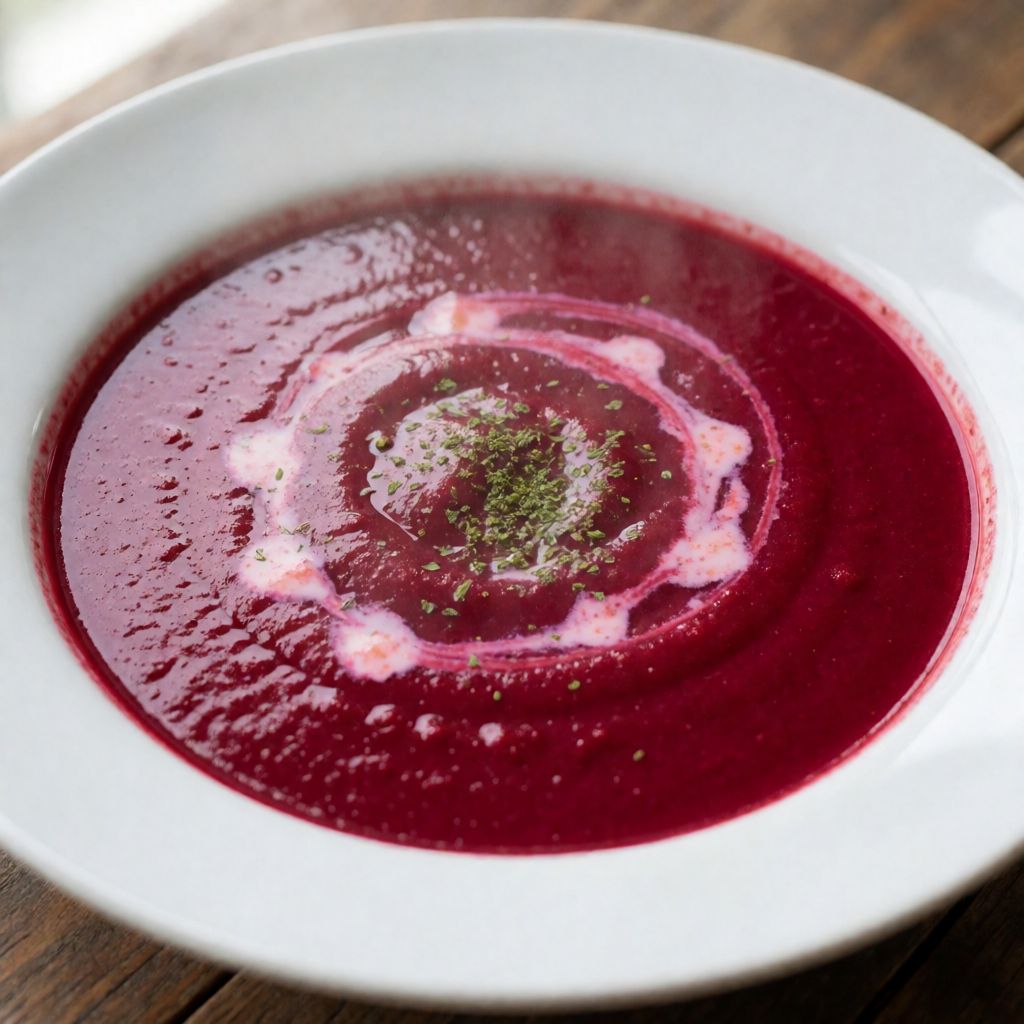
 AI photo
Beetroot Soup
A warming beetroot soup with potato, ginger and coriander, finished with crispy croutons.
Labels are worked out automatically from the ingredients and can be wrong. Check the packaging if it matters to you.
Ingredients
- 2 pcs Onion roughly chopped
- 3 clove Garlic finely chopped
- 450 g Potato diced
- 500 g Beetroot diced
- 1 l Stock
- 2 tsp Ground Coriander
- 20 g Ginger finely grated
- 1 tbsp Olive Oil
- Salt to taste
- Black Pepper to taste, freshly ground
- 1 bunch Parsley
- 100 ml Crème Fraîche












For the croutons
- 3 pcs Bread slices, e.g. wholemeal
- 3 tbsp Olive Oil
- 1 tsp Dried Thyme
- pinch Salt to taste, flaked

Steps
Put all the vegetables in a pan with the olive oil and fry, stirring, for 2 minutes over medium heat.
2 minAdd the stock, ground coriander and ginger, cover and simmer for 25 minutes.
25 minBlend the soup until smooth and creamy, season with salt and pepper to taste, adding a little more ginger if you like.
For the croutons, cut the bread into cubes and toss with the olive oil, salt and thyme.
Fry the bread until crisp in a pan, stirring often, or bake in a fan oven preheated to 175°C for 15 minutes.
15 minServe the soup topped with crispy croutons, parsley and crème fraîche.
This is a soup that works by brute force and a blender, not by finesse — which is exactly why it's a good one for a weeknight. You dice beetroot and potato roughly the same size, not because the recipe is fussy, but because the potato is a filler: it's cheap, it carries starch that thickens the liquid without flour or cream doing the work, and it has to cook at the same rate as the beetroot or you'll be blending something half-raw and gritty. Equal size means equal time. That's the whole secret of "dice" in this recipe — not neatness, timing.
What decides whether it works is the simmer, not the blitzing at the end. Beetroot is dense and earthy; if you rush it, you get a soup that tastes like dirt with sugar in it, because the sweetness hasn't had time to come forward and the raw vegetal edge hasn't softened. The test isn't a clock — it's a knife. Push one into a cube of beetroot: it should go in with barely a push, no resistance, like pushing into a ripe pear. If it still fights you, the soup isn't ready, whatever the timer says. The 25 minutes is a floor, not a verdict.
Some say beetroot soup has to be borscht, with cabbage and sour notes and a whole family argument about who adds vinegar. No — this isn't that. This is closer to a bisque logic: aromatics sweated, root vegetable cooked soft in stock, then pureed smooth. The ginger and coriander push it toward something warmer and more fragrant than the classic Eastern European pot, and that's fine. A dish doesn't owe its ancestors loyalty, just honesty about what it actually is.
Onion and garlic go in first with the oil because they need the fat to soften without catching — that's the whole reason for "fry, stirring" rather than just boiling everything together. Two minutes over heat that makes the onion sizzle gently, not spit and brown at the edges, is enough to wake up the aromatics before the liquid drowns them. If you let the onion actually brown here, you're building a different, heavier flavour than this soup wants — fine for a French onion soup, wrong for this one, which should taste bright, not caramelised.
Any neutral oil does the sweating job — "olive oil" here is really shorthand for "an oil with no flavour of its own loud enough to fight the ginger." A light sunflower or rapeseed oil, both cheap and common on a UK shelf, works the same. Save a proper peppery extra virgin for the croutons at the end, where its flavour is a feature, not a liability — that's why the recipe uses it twice, in two different jobs.
Beetroot: buy it raw, not the vacuum-packed cooked kind sold next to the salad bags — cooked beetroot has already lost moisture and flavour to its own packaging and will give you a flatter soup. Choose firm, heavy ones without soft spots. If you've only got the pre-cooked sort, it'll still work, but cut the simmer right down and taste earlier, because it's already soft.
The potato is doing two jobs: bulking out an expensive-ish vegetable (beetroot isn't cheap by weight once you account for peel waste) and thickening the puree so you don't need cream or flour to get that velvety body. Any floury potato — Maris Piper, King Edward — breaks down well under blending. A waxy new potato holds its shape and will leave the soup grainier, less silky.
Ginger and ground coriander aren't there for authenticity to any one cuisine — they're there because beetroot's sweetness needs a sharp, warm counterpoint or it tips into tasting like beetroot and nothing else. Grate the ginger fine because big pieces survive blending as unpleasant stringy threads; fibrous root vegetables like ginger don't puree down the way potato does.
The croutons are a genuinely useful bit of kitchen economics: stale bread, a slick of oil, a pinch of thyme and salt, into a pan or a 175°C oven until they go from pale to gold-brown and feel properly rigid when tapped, not spongy. That colour change, pale to gold, is your cue — not the 15 minutes, which is just there so you don't walk away and forget them. On a normal domestic hob, frying needs more attention than the oven method: stir constantly, because without a kazan's even heat a flat pan has hot spots and bread burns in patches before the rest has coloured. If your oven runs hotter or colder than it claims — most do — check at 10 minutes, not 15.
Crème fraîche sits on top rather than being stirred in because heat would split it; added cold at the end it stays thick and tangy, cutting the sweetness instead of melting into it. If you haven't got any, a dollop of plain yoghurt or soured cream does the same acid job — the brand name matters less than the acidity.
And patience matters more than any single ingredient here: give the vegetables their proper softening time before you blend, because a blender can smooth texture but it can't fix undercooked flavour. No machine makes raw beetroot taste like it simmered for half an hour.