
 AI photo
Gluten-Free Brioche Croissants
Soft, fragrant gluten-free brioche croissants filled with chocolate spread or jam to taste.
Labels are worked out automatically from the ingredients and can be wrong. Check the packaging if it matters to you.
Ingredients
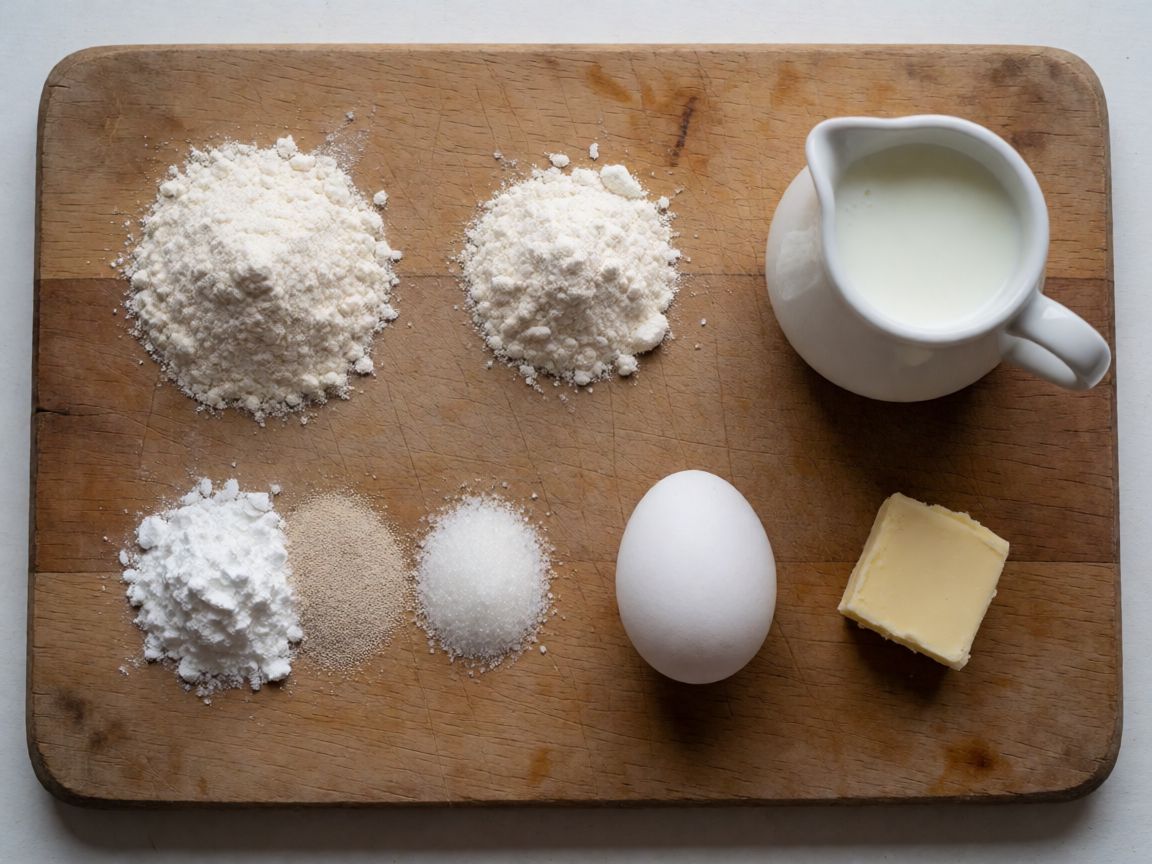
- 200 g Gluten-free flour (Caputo blend)
- 100 g Gluten-free flour blend
- 50 g Potato starch
- 12 g Yeast
- 80 ml Milk
- 80 ml Water
- 1 pcs Eggs
- 100 g Caster sugar
- 60 g Butter
- 1 pcs Vanilla pod
- Chocolate hazelnut spread to taste
- Jam to taste
- Milk to taste, for brushing, or one beaten egg yolk










Steps
In a large bowl, combine the Caputo gluten-free flour, the gluten-free flour blend and the potato starch; sift and mix well. Add the sugar and mix again.
Warm the milk slightly in the microwave.
In a separate bowl, dissolve the yeast in the water, then add the warm milk.
Pour the liquid into the flour mixture, add the soft or melted butter. Gently mix with a fork, then beat in the egg and knead until smooth with no lumps.
Cover the bowl with cling film and leave the dough to rise for at least 2 hours at room temperature.
120 minDust the work surface with flour and tip out the dough. Shape it into a ball.
On a floured surface, roll out the dough to about 3-4 mm thick and cut into triangles with a knife or a pastry wheel.
Place a little chocolate hazelnut spread or jam on each triangle, as you like. Roll the dough into a croissant shape, pinching the edges to seal.
Place the croissants on a baking tray lined with parchment and let them rise for a further 1 hour.
60 minBrush the surface with milk or beaten egg yolk and bake at 170°C for 20 minutes.
20 min
A croissant without gluten is a contradiction you're asked to resolve with starch and patience instead of lamination. Real croissant texture — those flaky, pullable layers — comes from gluten strands trapping steam between sheets of butter as they bake. No gluten, no strands, no layers in that sense. So this recipe doesn't fight that battle. It gives you a soft, enriched, brioche-style dough shaped like a croissant and filled like a pain au chocolat, and it's honest about that from the name onward: brioche croissants, not puff ones.
What decides whether this works is the dough's structure, built entirely from starch and egg rather than gluten. Gluten-free flour blends and potato starch have no elastic network of their own — they rely on the egg and the slow yeast rise to hold air and give the bread its lightness. That's why the two-hour first rise isn't a suggestion, it's load-bearing: without proper gluten, the yeast needs more time to inflate the dough fully, because there's no stretchy scaffold helping it along. Rush that and you get something dense and gummy, no matter how good your oven is.
Shaping matters less for flakiness here and more for even baking and a tidy seal. You're not after sharp lamination lines; you're after triangles that roll without tearing (they will tear a little — that's fine, pinch and move on) and a filling that stays inside instead of oozing into a puddle on the tray.
Look at the flour line-up: two different gluten-free blends plus potato starch, not just one bag of "gluten-free flour." That's deliberate. Commercial GF blends vary wildly — some lean on rice flour, some on maize, some already contain xanthan gum for structure. Using a strong, fine blend like Caputo's alongside a second, different blend spreads the risk: if one blend is heavy or gritty on its own, the other balances texture. The potato starch isn't filler — starch granules absorb liquid and swell on heating, giving softness and a slight chew that pure flour blends alone often can't manage. If you've only got one GF blend in the cupboard, use it for the whole 300 g, but expect a slightly denser result and compensate with a touch more liquid if the dough feels tight.
The yeast and its two liquids — milk and water — do a specific job beyond just "wetting the flour." Warming the milk gently wakes the yeast faster (yeast is sluggish in cold liquid, dead above roughly 50°C, so "slightly warm, not hot" is the real instruction hiding behind "warm the milk"). Dissolving the yeast in water first, separately, lets you see it's actually alive — bubbling, a faint beery smell — before you commit the whole batch to it. Skip that check and a dead sachet of yeast only reveals itself two hours later, when the dough hasn't moved.
The egg is doing the work that gluten normally does: binding, structure, a bit of lift from the proteins setting as they heat. One egg in this volume of flour is not a lot — don't be tempted to add a second "for richness," since GF doughs that are already short on structural gluten can turn gummy with excess egg and fat fighting for space.
Butter should be soft or melted, as the recipe says, because cold butter in a gluten-free dough won't incorporate evenly — there's no gluten web to drag solid fat through, so it just sits in lumps and leaves greasy pockets. Any flavourless, solid-at-room-temperature fat works as a substitute — a neutral dairy-free spread, for instance — but avoid liquid oils here; they won't give the same short, tender crumb.
Sugar at 100 g is more than seasoning — it feeds the yeast and, since GF breads stale faster than wheat ones (no gluten to retain moisture), the sugar also helps keep the croissants soft a day later. The vanilla pod is pure flavour, no mechanism to defend — use the seeds scraped out, or a good vanilla extract if a whole pod feels extravagant for a Tuesday bake.
Filling choice — chocolate hazelnut spread or jam — matters structurally too: thick spreads stay put during the second rise and bake; thin, runny jam will seep out through any gap in your pinched seal and scorch on the tray. If you're using jam, a stiffer one (and a smaller spoonful) behaves far better than a loose one.
The milk-or-egg-yolk brush at the end isn't decoration, it's colour chemistry — proteins and sugars browning in the oven's heat. Milk gives a gentler, paler gold; egg yolk gives a deeper, shinier brown. Use whichever you have — in a British kitchen with milk for tea always to hand, that's the easier default, and the result is still a good croissant, just a shade paler.
On a Sunday roast schedule, this fits nicely in the gaps: start the dough mid-morning while the oven's still cold, let it rise through the washing-up and the Yorkshire pudding batter resting, shape while something else is in the oven, and bake these alongside or just after the roast comes out — 170°C is gentle enough not to fight for oven space with much else, and twenty minutes is long enough to watch, not just time by the clock: pull them when they're golden and firm to a light press, not pale and still soft in the middle.