
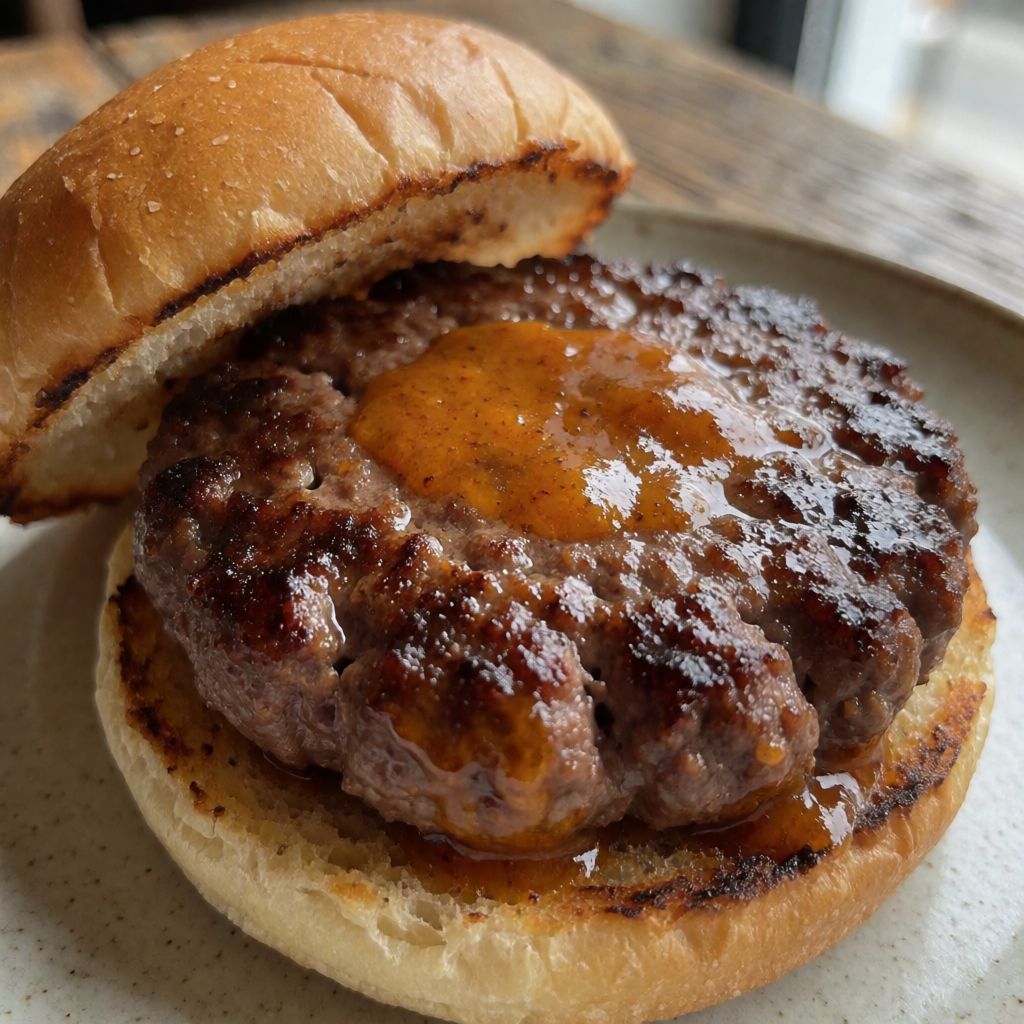
 AI photo
Australian Burger
A hearty beef burger piled with bacon, pineapple, beetroot and a fried egg, Aussie-style.
Labels are worked out automatically from the ingredients and can be wrong. Check the packaging if it matters to you.
Ingredients
- 400 g Ground beef
- 2 clove Garlic finely chopped
- 1 tbsp Apricot jam
- 2 tbsp Worcestershire sauce
- 1 tsp Smoked paprika
- Salt
- Black pepper freshly ground
- 4 pcs Pineapple peeled and cored, sliced
- 4 pcs Eggs
- 4 pcs Bacon rashers
- 2 bunch Rocket
- 8 pcs Beetroot slices
- 4 pcs Cheddar slices
- 4 tbsp Mayonnaise
- 1 pcs Onion thinly sliced into rings
- 1 tsp Butter
- 4 pcs Burger bun













Steps
Mix the ground beef with garlic, Worcestershire sauce, apricot jam, smoked paprika, salt and pepper, and shape into four patties.
5 minFry the patties on a hot grill or griddle pan.
9 minCook the patties for 4-5 minutes on each side. Once one side is done, flip, top with a slice of cheddar and let it melt while the other side finishes cooking.
4 minFry the pineapple slices alongside the patties until soft and warmed through.
5 minFry the bacon in a pan until crisp, then set aside on paper towel. In the bacon fat with a little butter, fry the onion until soft. Finally, fry the eggs in a hot pan.
Spread mayonnaise on the buns and assemble the burger with beetroot slices, rocket, the cheese-topped patty, bacon, pineapple, soft onion and the fried egg.
3 min
What was changed
The generic jam was swapped for Apricot jam, a specific product shoppers can easily find.
This is a burger built the way Australians actually eat them — not a beef patty with two token leaves, but a stack with a strategy, because beetroot, pineapple and a fried egg aren't garnish here, they're structural. Every layer is answering a different problem: fat, sweetness, acid, crunch, richness. Take one out and the thing collapses into "nice burger, something missing" territory, and you won't quite know what.
Whether it works comes down to one unglamorous fact: you are cooking five different things that all want different heat, in a kitchen with one hob, and the patty cannot sit around waiting for the egg. So sequence is the actual skill. Bacon first — it gives you fat and time, because bacon fat doesn't mind resting while you deal with the rest. Onion goes into that same fat, not for taste alone but because starting it in flavoured fat is cheaper and better than starting it in plain oil, then wondering why it tastes thin. Egg last, because an egg waits for no one — thirty seconds past soft-set and it stops being a sauce and becomes just "cooked egg," and a fair share of what makes this burger good is the yolk running down into the meat like a sauce you didn't have to make.
Ground beef: go no leaner than 15–20% fat, because a lean pub-style patty on a grill or griddle (no basting, no kazan steam trapped under a lid) will seize and dry before the crust forms. If your mince looks suspiciously lean, loosen it with a spoon of water or finely grated onion mixed in — not egg, egg sets and firms, which is the opposite of what a juicy patty needs.
Apricot jam: its job is a thin sugar glaze that browns rather than burns, giving you colour the grill alone won't manage on a domestic hob. Any smooth fruit jam with no large chunks does the same job — apricot, peach, even a mild marmalade scraped of peel. What won't work is anything chunky; it scorches in patches before the meat's done.
Worcestershire sauce: fermented anchovy and tamarind doing the savoury lifting that salt alone can't — it's there so the patty tastes seasoned all the way through, not just salty on the surface. If you haven't got it, soy sauce with a splash of vinegar gets you most of the way; the point is fermented saltiness plus acid, not the specific bottle.
Smoked paprika: this is substituting for a fire you don't have. A kazan or a real charcoal grill gives smoke for free; your griddle pan gives you heat and nothing else. Smoked paprika is the honest shortcut, not a cheat — don't swap it for sweet paprika, which gives colour but none of the smoke, and you'll wonder why the burger tastes flatter than it looks.
Bacon: fried first and set aside not to save time but because its rendered fat is the cooking medium for everything after — this is the same logic as rendering lardons before anything else in a French kitchen. Skip this and fry the onion in neutral oil and you've thrown away free flavour for no reason.
Onion: soft, not caramelised — you want "turned translucent and sweet," a few minutes, not the twenty-plus it takes to go properly dark and jammy. Some say onions need long slow cooking to be worth eating; true for a French onion soup, false here — this burger wants a gentler sweetness that won't fight the pineapple.
Pineapple: fresh rings grilled until the edges catch and the middle softens and turns translucent at the edge — that's the sugar in the fruit caramelising, same mechanism as the jam on the meat. Tinned pineapple works and is in fact what most Australian milk bars actually used, because fresh pineapple was never cheap or reliably in season there either — so don't feel this is a compromise, it's closer to the tradition than the fresh fruit is.
Egg: fried for a soft-set yolk, because that yolk is doing the job of a sauce. Push it to a hard yolk and you've lost the one element binding the sweet and the savoury layers together on the way down.
Rocket and beetroot: rocket for a peppery bite that cuts the fat, beetroot (pickled or cooked, either works) for acid-sweetness and colour. Treat them as the only two "cold, fresh" voices in a stack of hot fatty things — without them the burger is heavy from the first bite to the last, not just at the end.
Cheddar: melts on the resting side of the patty while the other side finishes, which is really a way of using the last few minutes of cooking instead of wasting them. A mild cheddar melts cleanly; anything very mature tends to split and go oily rather than smooth, so keep it middling.
Bun and mayonnaise: mayonnaise spread thin isn't decoration, it's waterproofing — it keeps the bun from soaking up egg yolk and bacon fat until it collapses before you've finished eating it. A soft white bun with a bit of structure, lightly toasted on the cut side, holds up best; a very airy supermarket bun will give out under this much weight.
Last thing: build the stack in the order given and eat it soon after. This isn't a dish that waits — the egg cools and firms, the pineapple's warmth fades, the bun starts softening. Patience belongs in the cooking, in letting the bacon render and the onion turn properly soft before you rush to the next pan — not in letting the finished burger sit on the plate posing for a photo.