
 AI photo
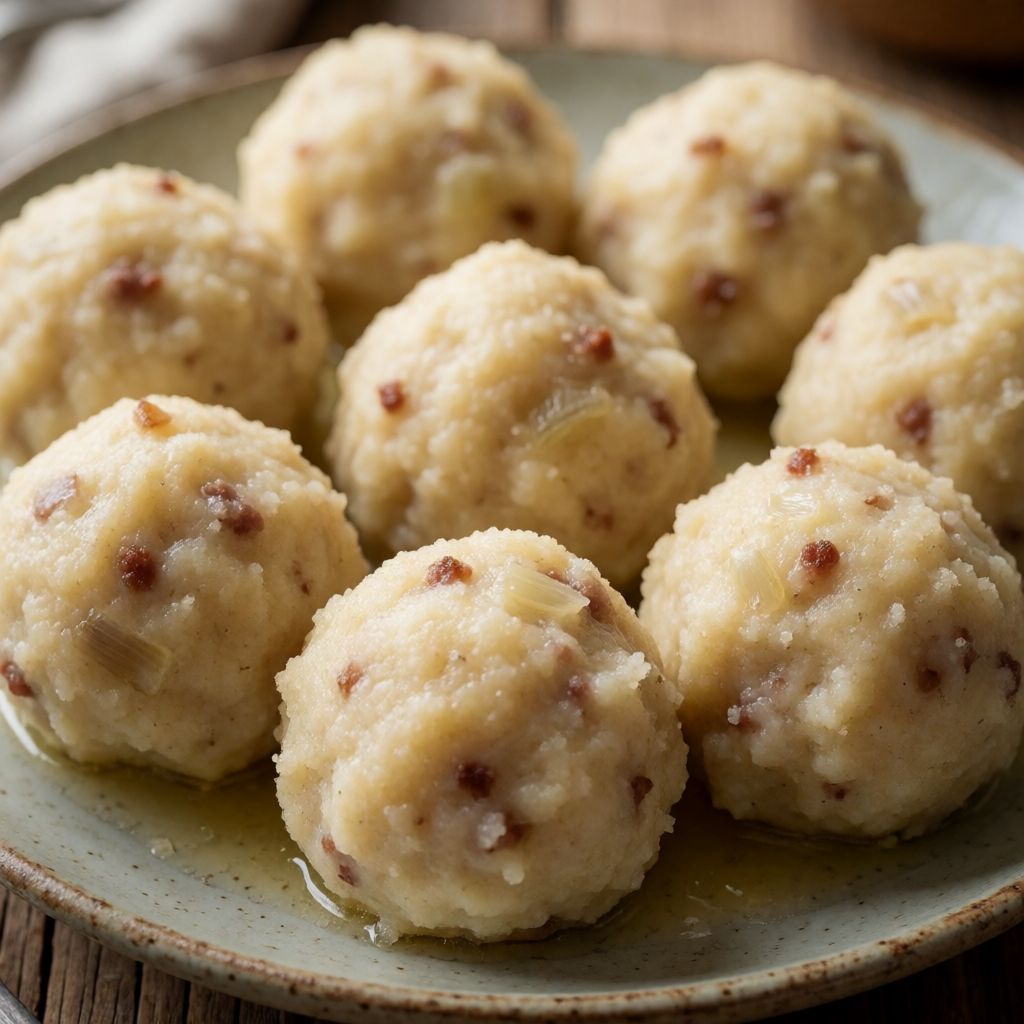
Canederli (Bread and Speck Dumplings)
Hearty bread dumplings with speck, a comforting South Tyrolean classic, simmered in broth or served with melted butter.
Labels are worked out automatically from the ingredients and can be wrong. Check the packaging if it matters to you.
Ingredients
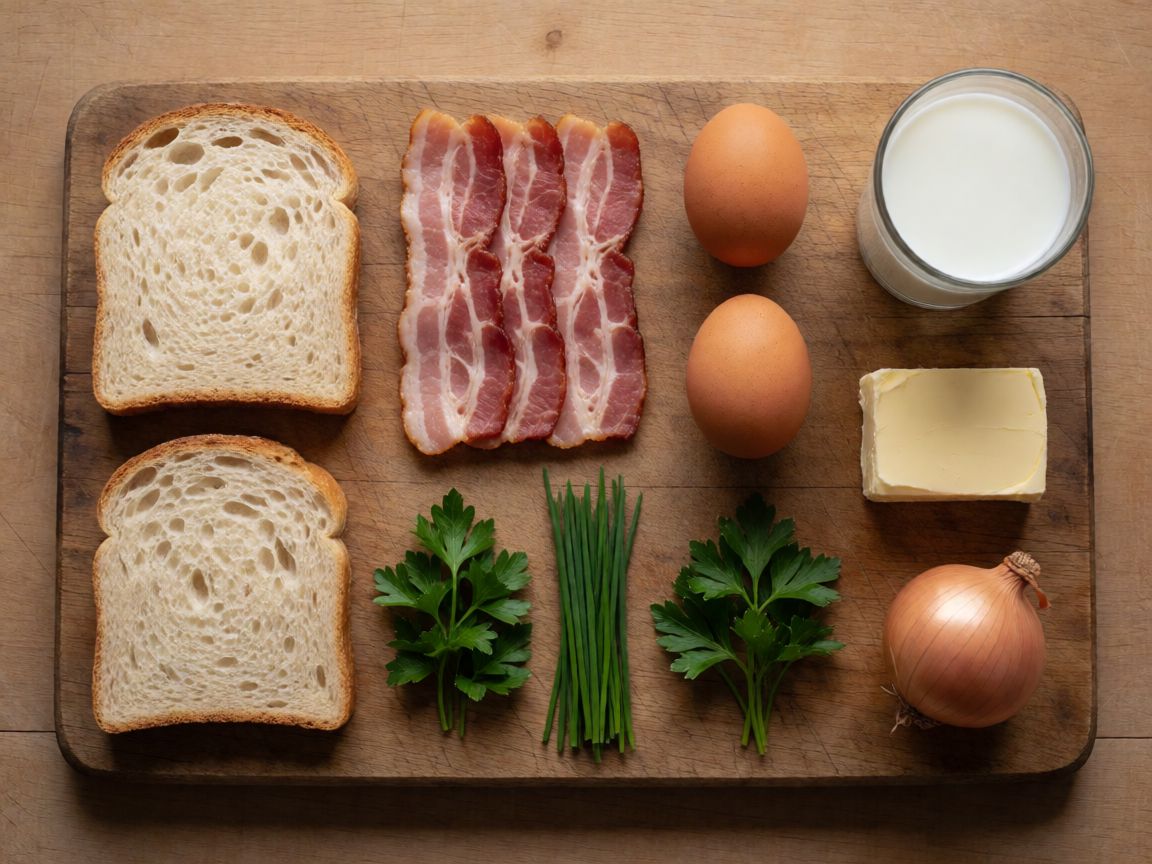
- 250 g stale bread
- 150 g smoked bacon (speck)
- 2 pcs eggs
- 125 ml milk
- 30 g butter
- 1 tbsp onion finely chopped
- 1 bunch parsley
- 1 tbsp chives
- salt to taste
- black pepper to taste
- 1-2 tbsp plain flour if needed
- stock to taste, for cooking










Steps
Melt the butter in a pan, add the onion and fry gently until soft.
Add the finely chopped bacon and fry for a few minutes, then set aside.
Cut the bread into cubes, place in a bowl, add the bacon with its fat and mix.
Beat the eggs with the milk, add salt, pepper, chives and parsley.
Pour the mixture over the bread, spreading it evenly, and mix well.
Leave to rest for at least 15-20 minutes.
15 minShape into balls about 5-6 cm in diameter by hand, adding 1-2 tbsp flour if needed.
Simmer the dumplings over low heat for 15 minutes, then drain.
15 minServe with stock or melted butter to taste.
Canederli are what the mountains do with bread that's gone past its best. Trentino and South Tyrol, poor cold country wedged between Italian and Austrian kitchens, couldn't afford to throw stale loaves away — so the loaf went into a bowl, got soaked back to life with egg and milk, and was bound into something you could actually eat with a spoon. Think of it as bread pudding's gruff alpine cousin, built for soup rather than dessert.
What decides whether it works is the bread, not the bacon. You need bread that's properly dry — days old, not "a bit stale", the kind that would otherwise go to the bin or the birds. If it's still soft in the middle, it won't drink up the egg-milk mixture; it'll just go to paste, and your dumpling will dissolve the second it hits hot liquid. Dry bread has structure to hold onto. That's the whole mechanism.
The second thing that decides it is the rest. Fifteen to twenty minutes isn't a suggestion, it's the time the liquid actually needs to migrate into the crumb — every cube evenly damp, none of it still chalky in the centre. Skip this and you're forcing a dumpling together with flour instead of letting the bread do its job, and flour is a patch, not an ingredient.
The bread itself: any firm white loaf will do, but it has to be a few days old and genuinely dry, not merely yesterday's. In a British kitchen that's your end-of-week sourdough heel, a stale bloomer, or the crusts nobody finished off the Sunday roast bread basket. If you're impatient, you can dry fresher bread in a low oven for ten minutes or so until it's properly stiff — but don't skip the drying, because wet-ish bread is the single reason canederli fall apart in the pot.
Speck is smoked, air-dried pork from the same mountains, cured with juniper and spice, smoked cold so it stays tender rather than crisp. If you can't get it, any smoked bacon with real fat on it will carry the flavour — the fat is doing the work here, basting the bread cubes from inside, not just seasoning them. Unsmoked bacon will leave the dumplings flat; you lose the whole reason bread needed rescuing in the first place, which was to taste of something again.
The eggs and milk are the glue, and nothing more exotic than that — egg sets with gentle heat and holds the crumb together, milk just carries it and softens the bite. Don't reach for cream thinking it'll be richer: more fat here just loosens the structure further, and you've already got bacon fat doing that job.
Onion and butter fried gently until soft — not coloured, not browned — because burnt onion turns bitter and that bitterness has nowhere to hide in a plain dumpling. Gentle here means the pan hot enough to sizzle but not to colour: watch the onion go translucent and slightly collapsed, that's your cue, not a clock.
Parsley and chives are there for green freshness against all that smoke and fat — don't skip them thinking they're garnish, they're balance. Flour is the safety net, not the plan: a tablespoon or two only if the mixture still won't hold a ball after resting, because more flour means a denser, gummier dumpling, and that's the trade-off every time you reach for it instead of trusting the rest period.
Cook them in stock if you have it — even a decent cube-and-water stock — because the dumplings are bland company in plain water and the broth is meant to be eaten alongside them, canederli being as much soup course as side dish traditionally. In your kitchen, a wide saucepan stands in for whatever pot they'd use at altitude; there's no kazan needed here, just enough room that the balls aren't crowding and knocking each other to pieces. Serve two or three per person as a starter, or treat them as the main event with extra stock poured over, the way the mountain farmers who invented this did when meat was too dear to waste a scrap of bread alongside it.