
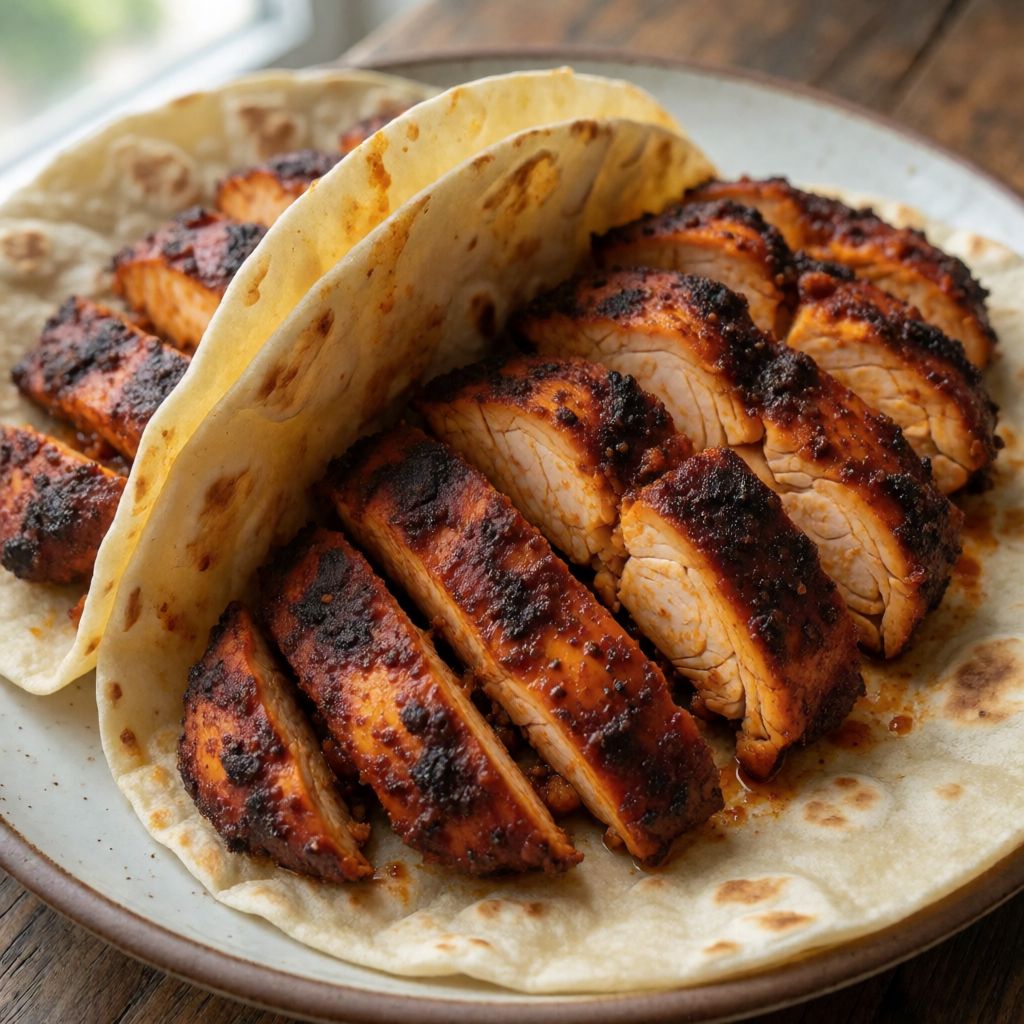
 AI photo
Chicken Tacos
Pulled chicken slow-roasted in a smoky spice rub, served with mango-avocado salsa, charred corn and rocket.
Labels are worked out automatically from the ingredients and can be wrong. Check the packaging if it matters to you.
Ingredients
- 1 tbsp Paprika
- 1 tsp Smoked paprika
- 1 tsp Cumin
- 2 tbsp Brown sugar
- 2 clove Garlic crushed
- 1 tsp Sriracha
- Salt
- Black pepper freshly ground
- 100 ml Stock
- 25 g Butter
- 800 g Chicken breast
- 1 pcs Mango finely diced
- 2 pcs Avocado finely diced
- 1 bunch Coriander finely chopped
- 1 bunch Basil finely chopped
- 2 pcs Lime juice and zest
- ½ pcs Red chilli finely chopped
- 140 g Sweetcorn
- 10 g Butter
- 75 g Rocket
- 8 pcs Tortillas


















Steps
For the chicken rub, mix the sweet paprika, smoked paprika, cumin, brown sugar, garlic, sriracha, salt and freshly ground black pepper.
Rub the chicken breasts all over with this marinade.
Place in an airtight container and chill for at least 30 minutes — or overnight.
30 minGrease a cast-iron pot with butter on the base and sides and add the chicken.
Pour over the stock, cover with a lid and place the pot in an oven preheated to 125°C (conventional setting) for 3 hours.
180 minRemove the chicken from the pot and shred it into strands using two forks.
For the mango salsa, mix the mango, avocado and fresh herbs in a bowl.
Season with lime juice and zest, chilli, salt and black pepper, and mix well.
Fry the sweetcorn in a hot pan with butter until golden.
Season with salt and black pepper.
Warm the tortillas in a dry pan and serve with the juicy pulled chicken, mango salsa, rocket and sweetcorn kernels.
This is pulled chicken dressed up as a taco — the Mexican format borrowing a very English habit: low, slow, covered cooking, like a pot roast that happens to end up in a tortilla instead of on a plate with gravy. What decides whether it works is not the spice rub, it's the 125°C and the three hours. Chicken breast is lean, almost no fat to protect it, and at a hot pan-fry temperature it goes from juicy to cardboard in the time it takes to answer the phone. At 125°C, covered, with a splash of stock underneath, the muscle fibres relax and let go of their grip on moisture slowly, instead of seizing and squeezing it all out. That's the whole trick — not a secret spice, just patience and a low number on the dial.
Some say chicken breast can't be a good pulled-meat cut, that you need thigh or shoulder with its fat marbling. No — breast pulls perfectly well if you stop fighting its nature. Thigh forgives overcooking because fat buys you time; breast doesn't forgive, so you compensate with gentleness instead. The stock and butter at the base aren't flavour extras, they're insurance: a thin layer of liquid fat and moisture between the meat and the hot metal, so the underside doesn't fry while the top is still steaming.
Chicken breast: buy it as breast, not because tradition says so, but because this method is built to rescue the one cut people are usually afraid to cook low and slow. If you only have thigh, use it — it's more forgiving and arguably suits pulled texture even better, but you'll need less liquid underneath since it bastes itself.
The rub's sugar: brown sugar specifically, for the trace of molasses that plain caster sugar doesn't have — that faint bitterness that stops the caramelised crust tasting like candy. If you haven't got brown sugar, white sugar plus a small pinch of salt gets you close enough; don't skip it thinking it's decorative, it's the only thing building colour in a covered pot.
Paprika and smoked paprika aren't interchangeable with each other, so use both if you can — sweet paprika gives colour and a round, mild base, smoked paprika gives the illusion of a wood fire you don't have. If you must choose one, pick smoked; it does more work alone.
Sriracha is doing acid-plus-heat-plus-a-little-garlic in one bottle — any thin chilli sauce with vinegar in it will substitute, just taste as you go since brands vary wildly in salt and sourness. Don't reach for dried chilli flakes here; they need time and fat to bloom, and a dry rub in a covered pot for three hours is exactly where they'd just sit unchanged.
The cast-iron pot matters because it holds heat evenly at a low setting — a thin pan will swing hot and cold as your oven cycles, and uneven heat is what dries meat out even at "safe" temperatures. If you don't have cast iron, any heavy ovenproof dish with a tight lid works; what you're protecting against is a draught of hot air drying the surface before the inside has caught up. No proper lid? A double layer of foil, pressed down at the edges, does the same job of trapping steam — a plate on top of a pan, which works for simmering on the hob, won't seal well enough in an oven.
Mango, avocado, lime: buy mango slightly underripe rather than soft and stringy — you want it to hold its dice, not collapse into juice when you cut it. Avocado should give gently under thumb pressure at the stalk end; rock-hard means days away, mushy means past it. Lime zest before juice, always — once you've squeezed it, the zest is gone with the shape of the fruit.
The sweetcorn frying in butter at a hot pan, uncovered, is the one high-heat moment in the whole dish — and it should be, because corn wants quick colour, not slow cooking; three hours of gentle heat would just turn it grey and chewy. Watch for kernels turning blistered and faintly golden at the edges rather than counting a time — a domestic hob's "hot" varies too much between electric and gas to trust a clock here.
Rocket goes in raw and last, for the same reason the salsa stays raw: after three hours of slow cooking, the dish needs something that still tastes like it was alive five minutes ago.