
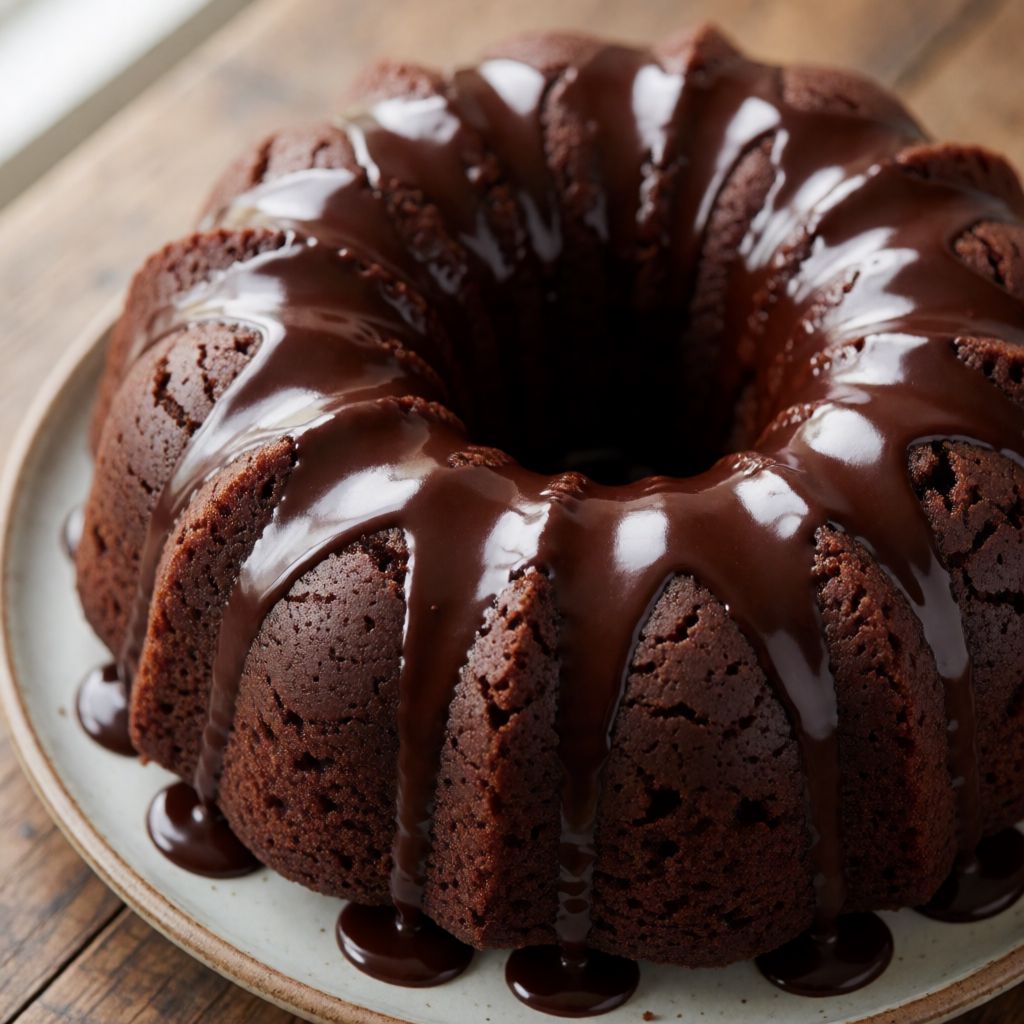
 AI photo
Chocolate Bundt Cake
A rich chocolate bundt cake with a glossy chocolate glaze.
Labels are worked out automatically from the ingredients and can be wrong. Check the packaging if it matters to you.
Ingredients
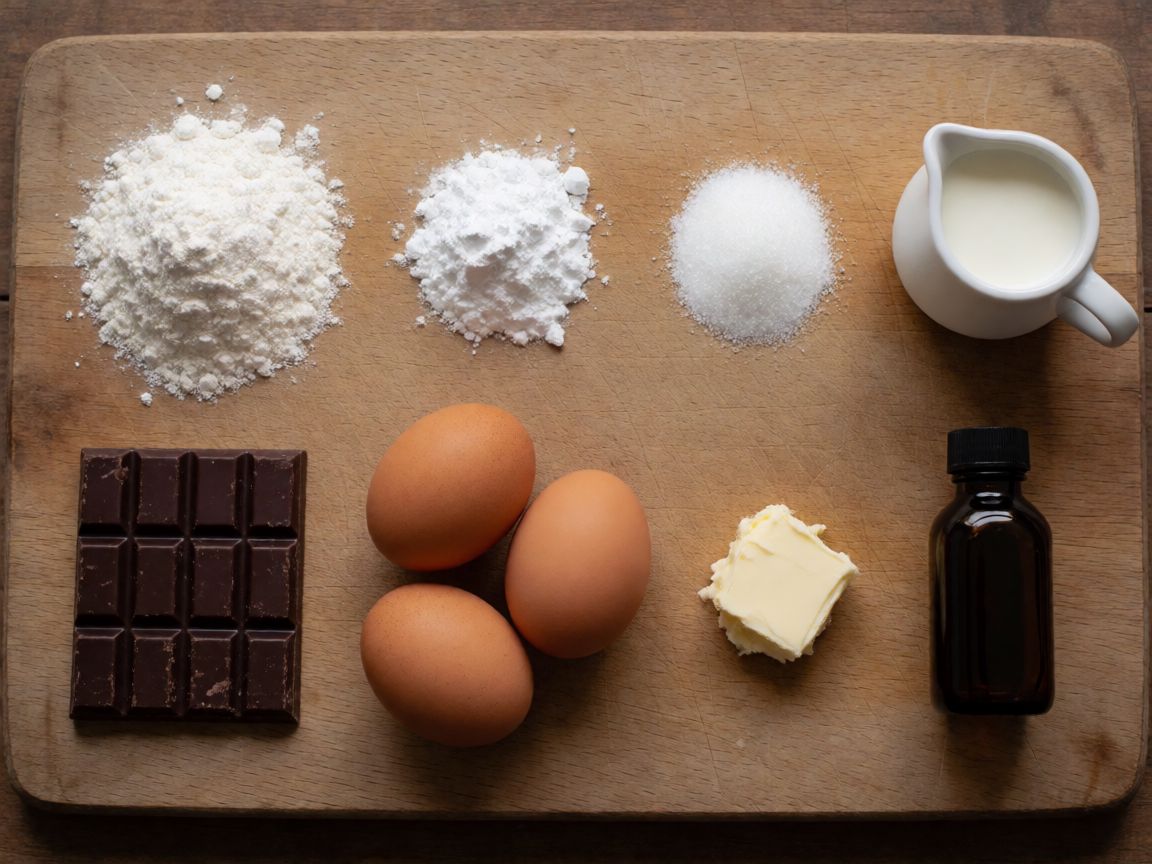
- 150 g Plain flour
- 50 g Potato starch
- 170 g Caster sugar
- 200 g Dark chocolate for the batter
- 3 pcs Eggs
- 120 g Double cream for the batter
- 30 g Butter
- 1 tsp Vanilla extract
- 1 pcs Baking powder
- 200 g Dark chocolate for the glaze
- 200 ml Double cream for the glaze
- 20 g Caster sugar for the glaze
- 50 ml Milk







Steps
Chop the chocolate (200 g) and melt it over a very low heat with the cream (200 ml), sugar (20 g) and milk until smooth.
Cover the glaze with cling film pressed directly onto the surface and leave to cool completely.
Chop the second portion of chocolate (200 g) and melt it over a bain-marie with the butter and cream (120 g).
Break the eggs into a bowl, add the sugar (170 g) and vanilla extract, and whisk with a mixer until light and foamy.
Add the warm melted chocolate to the egg mixture and whisk to combine.
Add the sifted flour, potato starch and baking powder, and fold with a spatula until the batter is smooth.
Spoon the batter into a 20-22 cm bundt tin, greased with butter and dusted with flour.
Bake the bundt cake at 180°C for about 35 minutes.
35 minTurn the cake out onto a wire rack and leave to cool completely.
Pour the glaze evenly over the cooled cake.
Decorate the top of the cake with red berries, if you like.
A bundt cake is really two separate acts wearing one dress: a dense, almost flourless-feeling chocolate sponge, and a poured glaze that sets into a thin, glossy shell. The ring shape isn't decoration — it's engineering. A hole in the middle means no cold, dense centre fighting a thin crust at the edges; heat gets to every part of the batter roughly at the same time, which matters enormously here because this batter is heavy with melted chocolate and cream, not the airy, flour-forward sponge you'd get from a Victoria sandwich tin.
What decides whether it works is temperature control at two separate moments, and they're not the same kind of control. Melting the chocolate for the batter happens in a bain-marie — a bowl sitting over, not in, simmering water — because chocolate scorches and seizes above roughly 50°C, turning grainy and dull the second cocoa solids meet direct heat. The glaze, by contrast, is made "over a very low heat" directly in a pan with cream and milk, because there the liquid is already doing the heat-buffering job the water bath does elsewhere.
The second decision point is the egg-and-sugar whisking. You're not just dissolving sugar — you're beating air into the eggs until they go pale and hold a ribbon when you lift the whisk. That trapped air is the only rising agent doing real work alongside the modest baking powder; lose it by folding roughly later and the cake comes out dense in the wrong way, more brownie than bundt.
The flour-to-starch ratio here (150 g plain flour, 50 g potato starch) is doing a quiet job: potato starch has no gluten, so swapping a fifth of the flour for it softens the crumb, stopping the cake turning rubbery under all that chocolate and cream. If you haven't got potato starch, cornflour does the same thinning-of-gluten trick — it's a method, not a brand loyalty.
Dark chocolate appears twice and means two different things. In the batter it's structural — melted with butter and cream it becomes a fat-and-cocoa base that the eggs get folded into, so pick something you'd eat off a bar, 60-70% cocoa, because at this concentration flavour weakness in the chocolate has nowhere to hide behind flour or spice. In the glaze, chocolate meets cream, sugar and milk in what's essentially a thin ganache; a slightly higher-cocoa bar here sets firmer once cold, which matters if you want a glaze that holds its sheen rather than staying tacky.
The eggs are your only leavening partner to the baking powder, so use them at room temperature — cold eggs whip less air in and your "light and foamy" stage takes longer and goes less far, which is the real cause of a short, dense cake, not an oven that's "too weak." British ovens vary more than people admit; 180°C is the number, but the real cue is the skewer coming out with a few moist crumbs, not wet batter, and the top springing back rather than denting when you touch it. Time (35 min) is the floor, not the verdict.
Double cream does double duty too — in the batter it loosens the melted chocolate so it folds into egg foam without deflating it instantly; in the glaze it's the emulsifier that keeps chocolate and milk from splitting into oil and water as they cool. If you're out of double cream, single cream will thin the glaze more than you want — fine for drizzling, less fine for a shell that needs to set.
The bundt tin itself deserves a word, because UK kitchens often don't have one sitting around the way they have a loaf tin or a roasting dish for the Sunday joint. Any deep ring tin of about 20-22 cm will do — the ring shape is the non-negotiable part, the brand of tin isn't. Grease with butter and dust with flour properly, right into the fluted grooves if yours has them, because the real failure this step prevents isn't a stuck cake out of spite — it's a torn, patchy surface where the glaze then pools unevenly instead of coating smooth.
Patience is the actual final ingredient, twice over: once while the cake cools completely on the rack before you touch it with glaze (warm cake sweats, and that sweat thins the glaze from underneath), and once while the glaze itself cools under its cling film. Rush either and you get a competent-looking cake with a glaze that slides. Red berries on top are entirely optional — the cake doesn't need rescuing, they're there for colour against all that dark glaze, nothing more.