
 AI photo
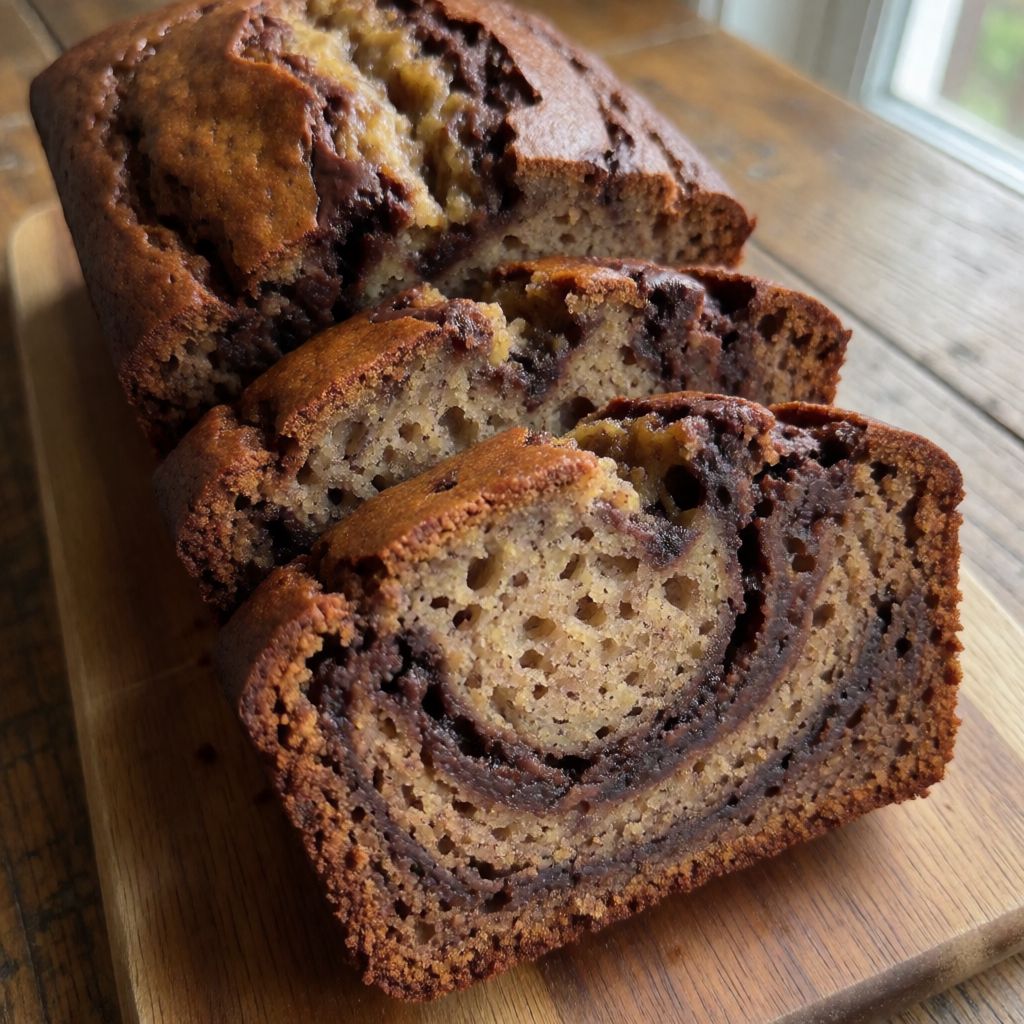
Banana Bread with Chocolate
A moist banana bread studded with dark chocolate, with a banana baked on top.
Labels are worked out automatically from the ingredients and can be wrong. Check the packaging if it matters to you.
Ingredients
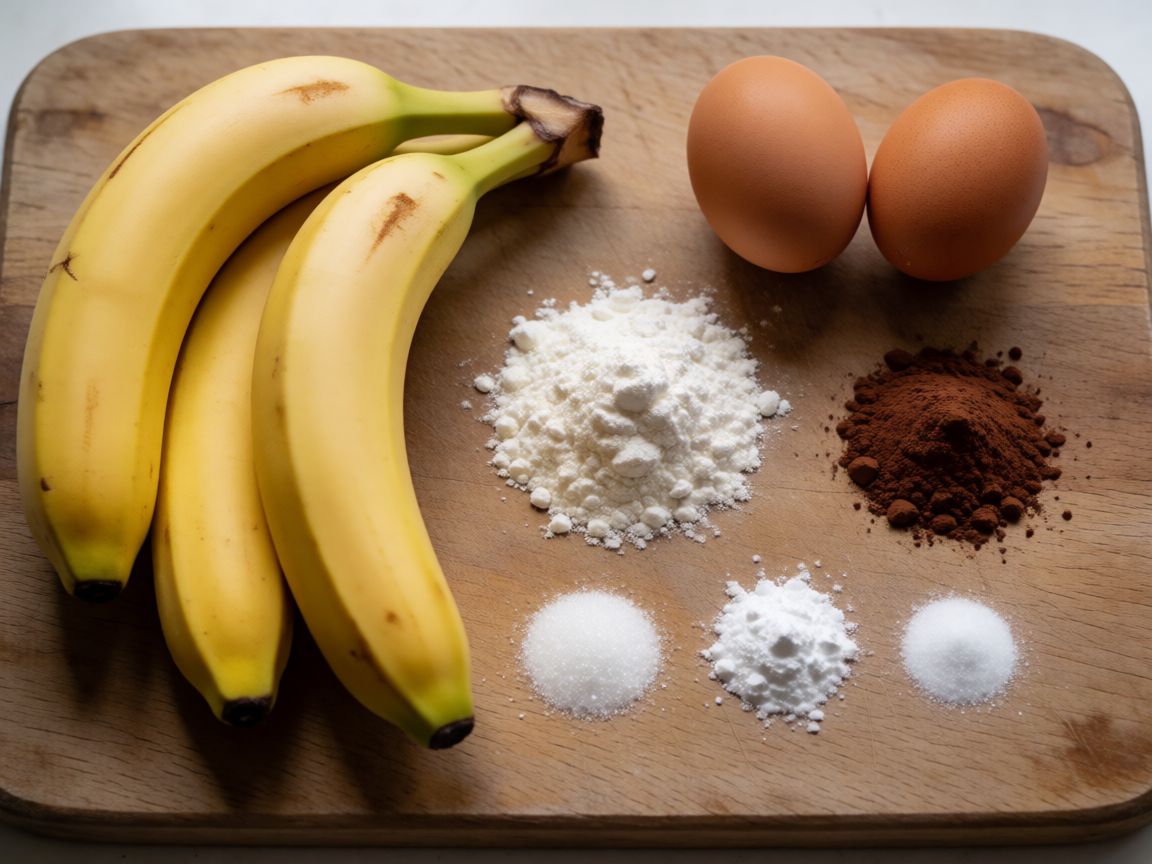
- 3 pcs Banana
- 2 pcs Eggs
- 160 g Plain flour
- 30 g Cocoa powder
- 30 g Potato starch
- 80 g Sugar
- 50 g Sunflower oil
- 8 g Baking powder
- 0.5 tsp Bicarbonate of soda
- 125 g Yoghurt
- 80 g Dark chocolate chopped, or chocolate chips
- pinch Cinnamon
- 1 tsp Vanilla extract












Steps
In a bowl, mash two of the bananas with a fork. Add the eggs, yoghurt, vanilla extract and oil, and mix until smooth.
In another bowl, combine the flour, potato starch, baking powder, sugar, cinnamon, cocoa powder and bicarbonate of soda.
Add the wet mixture to the dry mixture and mix together quickly.
Add the chopped dark chocolate and gently fold it into the batter.
Grease and flour a loaf tin, then pour in the batter. Cut the third banana in half lengthways and lay it on top.
Bake in an oven preheated to 180°C.
43 minCheck it is done with a wooden skewer — it should come out clean, not sticky.
Leave the bread to cool for 15 minutes, then turn it out of the tin and serve.
15 min
This is a quick bread, not a yeasted one — bicarbonate and baking powder do the lifting, so there's no proving, no kneading, no waiting around for dough to decide it loves you. That's the whole appeal: mash, mix, pour, bake. What decides whether it works is not the chocolate, it's the banana.
Overripe banana is not optional flavour — it's structure and moisture. The darker the skin and the softer the flesh, the more starch has broken down into sugar, and the more water it'll give up into the batter. Under-ripe banana gives you a dry, gummy loaf because there's nothing wet to bind the flour. Some say a banana with a few brown spots is "ripe enough" — no, because spots mean it's starting, not finished. You want it nearly black-skinned, the kind you'd otherwise throw out. That's the one that makes this bread worth making.
The cocoa and potato starch are doing a second job besides colour and chocolate flavour: starch is there for tenderness, to cut the gluten the plain flour would otherwise build when you stir. That's also why step 3 says "mix together quickly" — overmixing develops gluten, and gluten in a cake batter means toughness, not the open crumb you want. You're not kneading bread here; you're barely introducing flour to liquid.
The third banana laid on top, cut lengthways, is not decoration. It caramelises in the oven and gives you a visual, no-skewer-needed check — when it's gone from pale yellow to a deep brown with the edges curling slightly, the loaf underneath is very likely there too.
180°C is where this works because it's hot enough to set the raising agents into action fast — bicarbonate reacts with acid in the yoghurt and banana, baking powder reacts with heat and moisture both — before the structure can collapse, but not so hot that the outside burns before the middle sets. A domestic fan oven runs hotter than its dial suggests in some corners; if your loaf tin browns hard on top before the inside is done, that's your oven running fierce, not the recipe being wrong — drop it ten degrees next time rather than pulling it early.
Forty-three minutes is a lower bound, not a deadline. The skewer test in step 7 is the real instruction: push it into the centre, where it's slowest to cook, and if it comes out with wet batter clinging to it, it needs more time regardless of what the clock says. A few moist crumbs are fine — that's carry-over heat finishing the job as it cools, not raw batter.
On the eggs and yoghurt: yoghurt brings acidity, which bicarbonate needs to fizz and lift the crumb, and it brings fat and moisture without the heaviness of extra oil. If you've only got natural yoghurt that's thinner or thicker than usual, don't chase the gram number too hard — judge the final batter by eye: it should fall off a spoon reluctantly, not pour like pancake batter and not sit like dough.
Potato starch is here for lightness, not for thickening the way it would in a sauce. If you don't have it, cornflour does the same structural job — both are just pure starch with no gluten of their own to toughen the crumb. Plain flour alone instead would give you a denser, slightly chewier loaf — not wrong, just a different bread.
Sunflower oil is chosen because it has no smell of its own to fight the banana and chocolate — any neutral oil works the same way: rapeseed, a light vegetable oil, whatever's in the cupboard. Olive oil would leave its own flavour behind, which is fine if you actually want that, but it's not what this recipe is reaching for.
Dark chocolate rather than milk is a bitterness decision — milk chocolate melts into the batter and mostly disappears as flavour, drowned by the sugar already in the mix. Dark chocolate, chopped roughly rather than too fine, holds its shape better in the oven and gives you pockets of melted chocolate against the cocoa crumb, instead of one uniform sweetness.
The fifteen-minute rest before turning out isn't fussiness — a loaf this moist is still setting its crumb as it cools. Turn it out hot and it can sink or tear; a bit of patience here is the difference between a clean slice and a crumbling one. Make tea while you wait. It's traditional, if nothing else in this recipe is.