
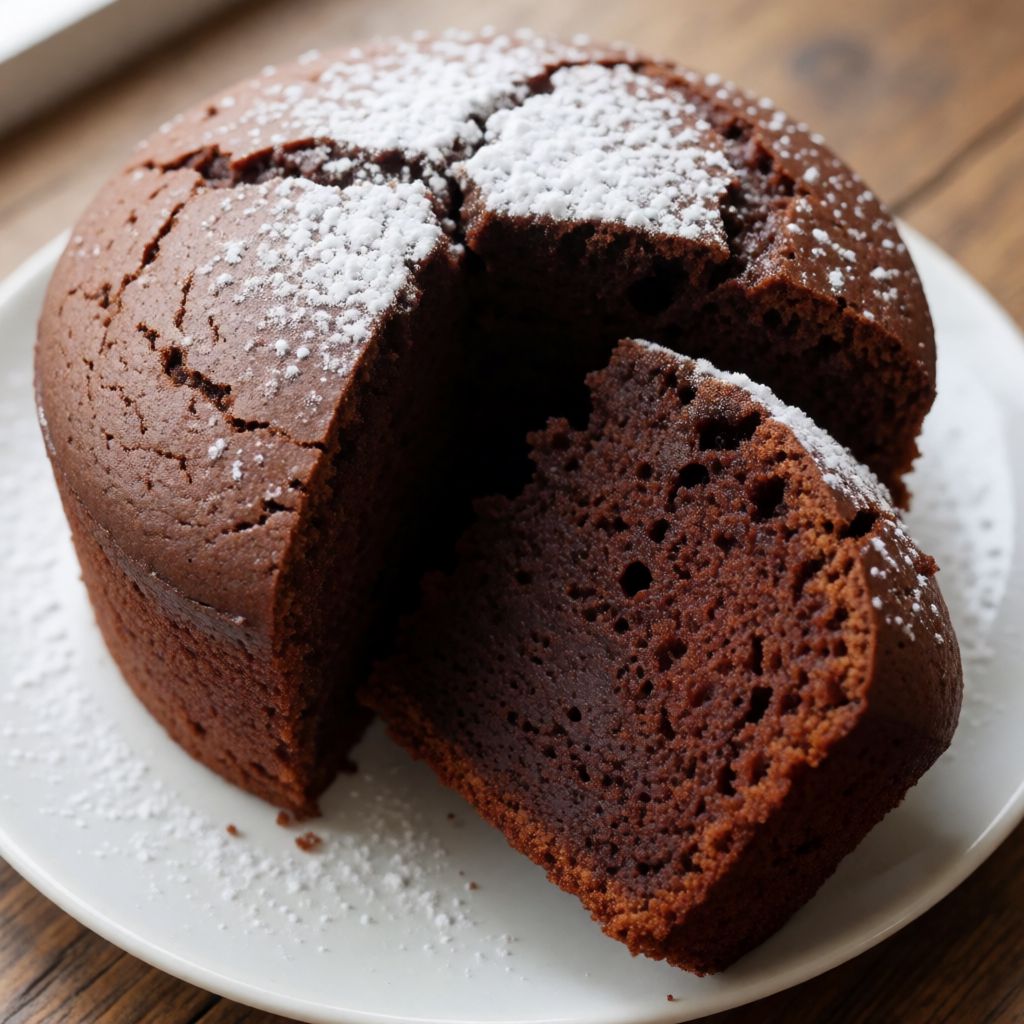
 AI photo
Soft Chocolate Cake
A soft, tender chocolate sponge finished with a smooth chocolate ganache.
Labels are worked out automatically from the ingredients and can be wrong. Check the packaging if it matters to you.
Ingredients
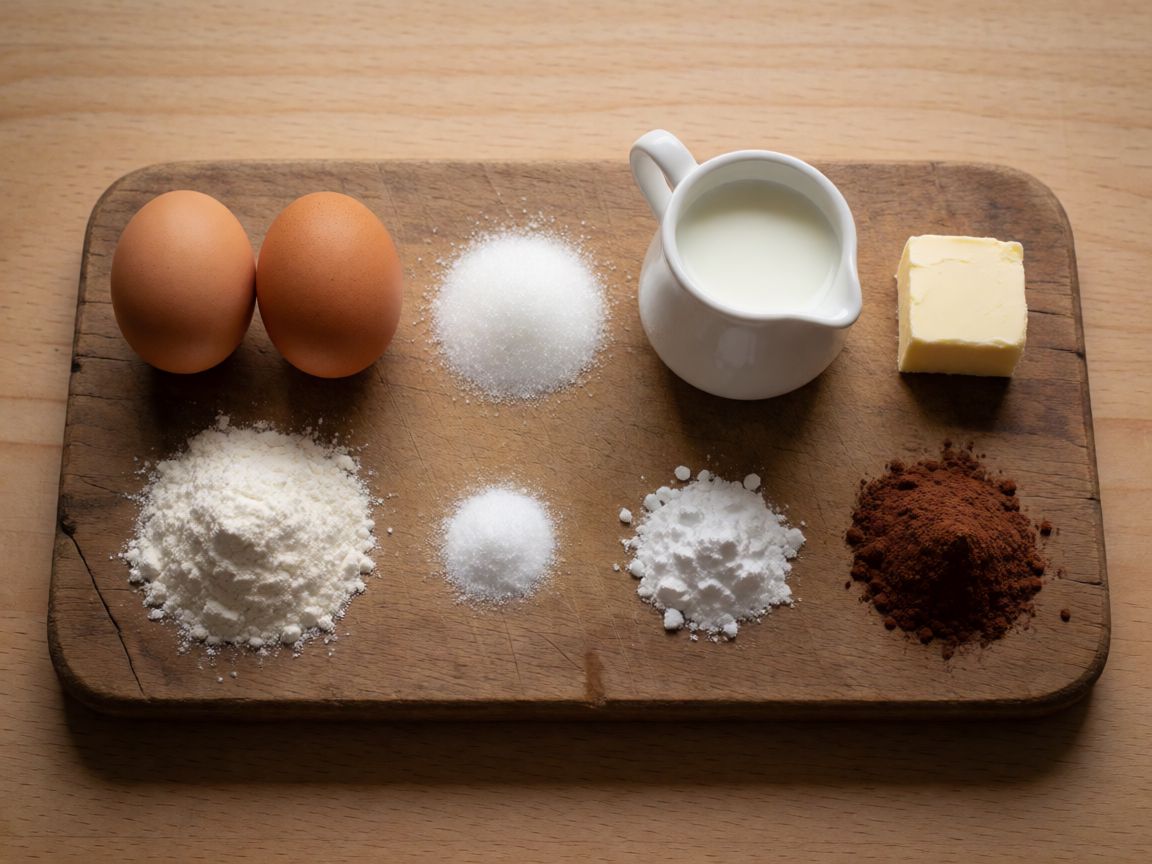
- 2 pcs Eggs
- 120 g Sugar
- 100 ml Milk
- 80 g Butter
- 150 g Plain flour
- 16 g Baking powder
- 50 g Potato starch
- 20 g Cocoa powder
- 200 ml Double cream
- 250 g Milk chocolate
- 1 pcs Mixed seasonal berries to taste
- 1 pcs Chopped pistachios to taste










Steps
Whisk the eggs with the sugar until the mixture is pale and creamy.
Pour in the milk, then add the melted butter, continuing to whisk.
Sift the flour, potato starch and baking powder, then beat into the batter with an electric mixer until smooth.
Add the sifted cocoa powder and mix thoroughly.
Pour the batter into a 26–28 cm tin greased with butter and dusted with flour, and smooth the surface.
Bake in a preheated fan oven at 180°C for about 20 minutes (or 25–30 minutes without the fan).
25 minLet it cool slightly, then turn the cake out onto a serving plate and leave to cool completely.
For the ganache, pour the cream into a saucepan and bring almost to the boil.
As soon as the cream is almost boiling, add the chopped milk chocolate and remove from the heat.
Stir with a whisk until the chocolate has completely melted and the mixture is smooth.
Pour the ganache over the cake and spread evenly.
Leave to cool, then decorate with chopped pistachios and mixed seasonal berries, if desired.
This is a cake built on two separate chemistries that have to meet without arguing. The sponge is a straightforward whisked batter lifted by baking powder, but with a quarter of its flour swapped for potato starch — that's what keeps it from being an ordinary dense chocolate sponge. Starch has no gluten in it, so the crumb stays short and tender instead of chewy; too much plain flour here and you get something closer to bread. The ganache on top isn't icing in the piping-bag sense — it's cream and chocolate forced into an emulsion by heat, poured on while still loose, so it sets into a shiny skin rather than sitting like a frosting.
What decides whether it works is almost entirely about temperature control at two different points. First, the eggs and sugar: whisked until pale and thick, which is you beating air into the mixture and dissolving the sugar crystals — skip this and the cake won't rise properly, because this batter has no other source of lift besides the baking powder and the air you've already trapped. Second, the cream for the ganache: "almost to the boil," not boiling. Cream that's actually bubbling can scorch the proteins and the ganache turns grainy or splits — oily on top, sludgy underneath. You want it hot enough to melt chocolate on contact, no hotter.
Eggs and sugar: two eggs isn't much structure for a cake this size, so the whisking stage is doing real work — it's not decorative. You're after "pale and creamy," which means the sugar has dissolved and the mixture has roughly doubled in volume with trapped air. That air is half your rising agent. The other half is the baking powder, and 16g to 150g of flour is a generous ratio — this cake wants a strong, fast lift, which also protects it from the extra weight of the butter and milk going in.
Butter: melted, not softened — it needs to pour and blend into a liquid batter, not sit as solid fat you're creaming separately. Any neutral fat that's liquid at room temperature would technically work in terms of mechanism, but butter also brings flavour and a slight richness to the crumb that oil won't; this isn't a cake where you want a fat with no character of its own, because there's nothing else carrying flavour except the cocoa.
Potato starch: this is the ingredient that makes the texture "soft" rather than just "chocolate cake." Starch thickens and sets without forming the elastic protein network that flour's gluten does, so swapping some flour for it directly reduces chew and increases crumb tenderness. If you don't have potato starch, cornflour does the same job by the same mechanism — both are pure starch with no protein to speak of. Don't reach for self-raising flour as a shortcut here either; it changes the ratio of raising agent you're actually controlling, and 16g of baking powder was chosen against 150g of flour specifically, not against some unknown amount already in the bag.
Cocoa powder: unsweetened, sifted in last so it doesn't clump against the wet ingredients before the flour's had a chance to hydrate. Dutch-processed or natural cocoa both work for colour and bitterness; natural cocoa will react slightly with the baking powder's acid components, but at this quantity it won't noticeably change the rise.
Double cream for the ganache: the fat content matters more than the brand. Double cream (around 48% fat in the UK) emulsifies cleanly with melted chocolate because there's enough fat to bind with the cocoa solids without the mixture turning watery. Single cream or anything lighter won't hold the emulsion the same way — you'll get a thinner, less stable coating that slides rather than sets.
Milk chocolate: chosen here over dark deliberately — it has more sugar and milk solids, which means the ganache sets softer and sweeter, in keeping with a cake that's meant to stay soft rather than firm up into something sliceable like a torte. If you want a firmer, more bitter-edged shell, dark chocolate will set harder because it has more cocoa solids relative to sugar — same mechanism, different balance.
The tin size, 26–28cm, isn't negotiable by much: go smaller and the batter sits thicker, so the outside can set and brown before the inside has finished rising, leaving you with a dense middle. Greasing with butter and dusting with flour is the usual defence against sticking, but the real job it does is create a slightly rough, floury surface the batter can cling to as it rises, rather than sliding and pulling away from the tin sides as it sets — that pulling-away is what gives you a sunken, cracked edge.
Doneness for the sponge isn't really about the 20–25 minutes quoted — that's your lower bound, nothing more. What you're watching for is the cake pulling slightly away from the tin's edge and the top springing back rather than leaving a dent when pressed. A skewer coming out clean works too, but on a cake this moist from milk and butter, don't expect it bone-dry — a few moist crumbs clinging on is still done, not underbaked.
Fan oven versus conventional: fan ovens move hot air around the cake constantly, so heat transfers faster and more evenly, which is why the time drops to about 20 minutes against 25–30 without. If your oven runs hot or cold against its own dial — most domestic ovens do, by a surprising margin — trust the cake's behaviour over the clock.