
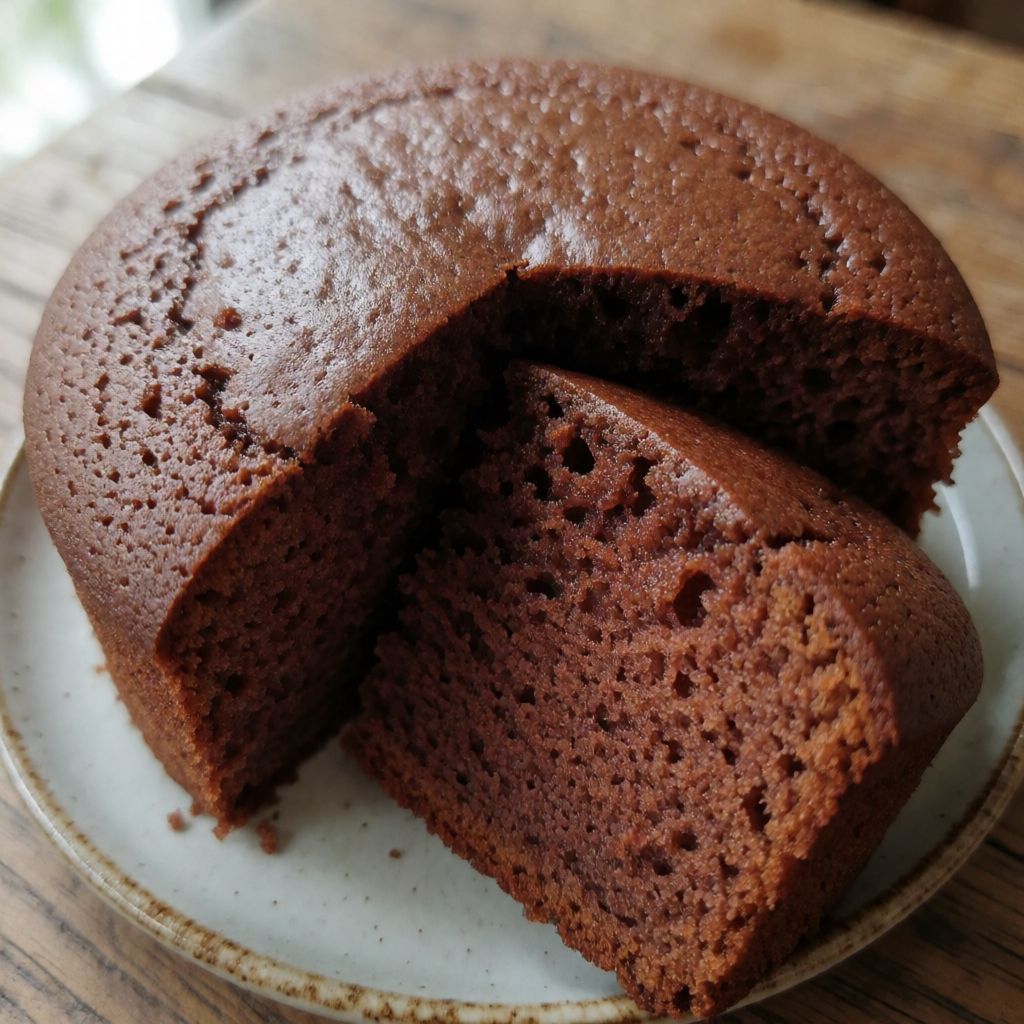
 AI photo
Chocolate Cake: A Soft and Simple Recipe
A soft, simple chocolate cake studded with chunks of dark chocolate.
Labels are worked out automatically from the ingredients and can be wrong. Check the packaging if it matters to you.
Ingredients
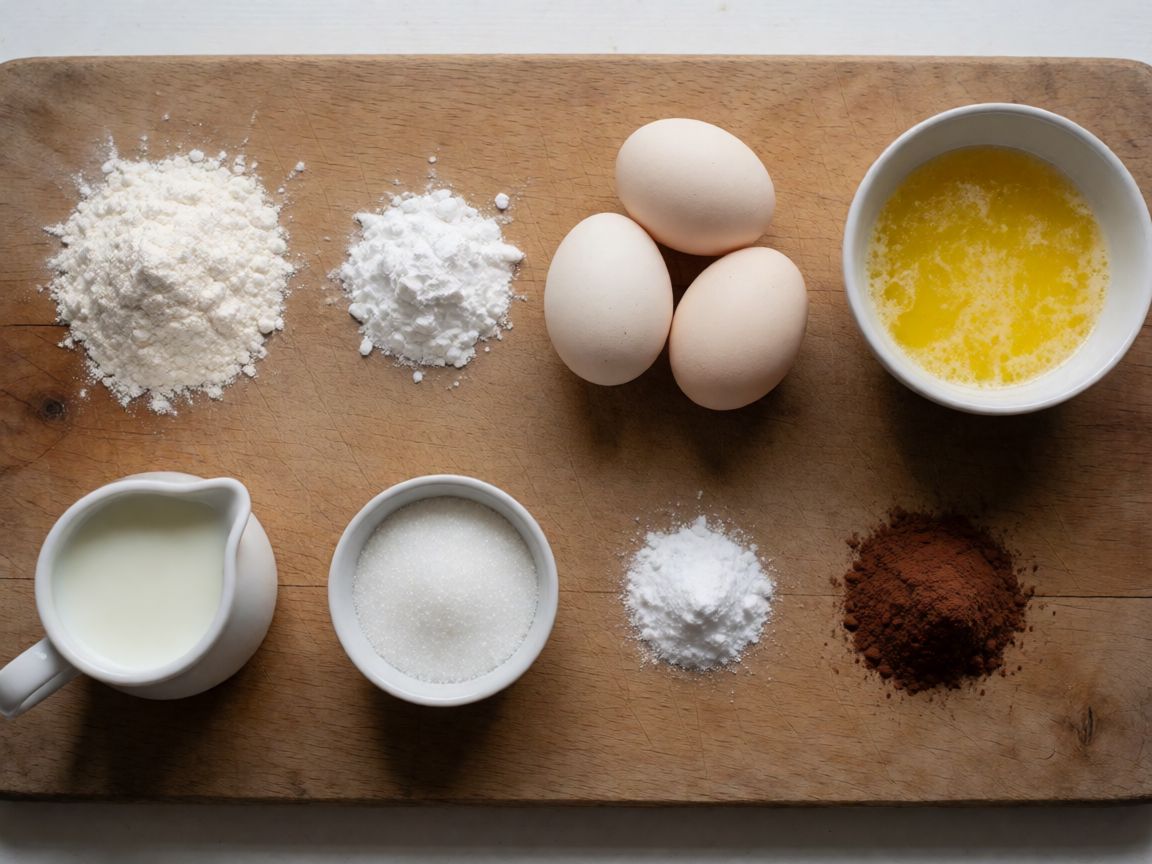
- 170 g Plain flour
- 50 g Potato starch
- 3 pcs Eggs
- 150 g Butter melted and slightly cooled
- 150 g Caster sugar
- 125 ml Milk at room temperature
- 16 g Baking powder
- 40 g Cocoa powder
- 100 g Dark chocolate roughly chopped
- 1 tsp Vanilla extract
- 1 tbsp Icing sugar for dusting, or to taste











Steps
Make sure all ingredients are at room temperature. Whisk the eggs and sugar with an electric mixer until light and creamy.
Gradually pour in the milk and melted butter while continuing to whisk. Add the vanilla extract.
Sift in the flour, potato starch and baking powder, and gently fold into the batter.
Sift in the cocoa powder and mix thoroughly until smooth.
Add the roughly chopped dark chocolate, then pour the batter into a greased 22 cm tin.
Bake in a preheated fan oven at 180°C.
50 minIf you like, dust with icing sugar before serving.
This is a plain, honest chocolate cake — no ganache, no syrup soak, no three-layer architecture. It stands or falls on one thing: whether the crumb stays soft after the oven, rather than drying into something you need tea to swallow. And that's decided less by the cocoa than by the flour-to-starch ratio and by how gently you treat the batter once the flour goes in.
Potato starch here isn't a filler — it's doing a real job. Starch has no gluten in it, so swapping a fifth of the flour for starch dilutes the gluten network that would otherwise tighten up and turn the sponge chewy. Some say a cake needs "more flour for structure" — no, because structure here comes from whipped eggs holding air, and too much gluten just fights that air and squeezes the crumb dry as it cools.
The eggs and sugar whisked to "light and creamy" aren't decoration — that's your raising mechanism, alongside the baking powder. You're beating in tiny air bubbles that expand in the heat; stop too early and the cake sits flat and dense, like a chocolate biscuit that lost its nerve.
Room temperature for everything matters for a boring but real reason: cold milk hitting melted butter re-solidifies the fat into little lumps, and a lumpy emulsion bakes unevenly — dense in spots, dry in others. Warm ingredients blend into one smooth batter, which is why step one insists on it before you even touch the mixer.
The folding instruction in step 3 is there to protect the air you just worked for. Whisking knocks air into the eggs; stirring the flour in hard knocks it straight back out, and overworking it also develops gluten strands you don't want. "Gently fold" isn't fussiness, it's damage control for two things at once.
On the flour: plain flour is doing the only job flour needs to do here, since the potato starch is handling tenderness. If you've no potato starch, cornflour behaves the same way — it's starch with no gluten, no strong flavour, and no particular loyalty to potatoes. Don't reach for self-raising as a shortcut either; this recipe already has its own baking powder dose calculated, and doubling up on raising agents gives you a cake that rises fast, peaks, then collapses as it cools — the "soufflé sink."
Cocoa powder and chopped dark chocolate are two different jobs, not a belt-and-braces repeat. The cocoa, sifted in with the flour, flavours and colours the whole crumb evenly. The chopped chocolate melts in pockets as it bakes, giving you soft dark spots instead of a uniformly flat taste — like finding the good bit of a stew. Use a dark chocolate with no added fillers or soft centre; if all you have is milk chocolate, the cake will still work, just sweeter and less assertive, so you might cut the caster sugar a touch.
Butter: melted and cooled is specific for the same emulsion reason as the milk — melted butter mixes into a batter smoothly, solid butter would need creaming with the sugar instead, which is a different cake entirely (denser, closer-crumbed). Any neutral butter will do; margarine works in a pinch but brings its own faint flavour, which in a chocolate cake is forgivable, since cocoa covers most sins.
On your oven: "preheated fan oven at 180°C" matters because a fan oven that isn't properly up to temperature when the tin goes in means slow, uneven rising — the edges set before the middle's had its lift, and you get a sunken crater in the centre. If your oven runs hot or cold against its own dial — most do, a bit — judge doneness by the cake, not the clock: it should spring back when pressed lightly in the middle, and a skewer should come out with just a few moist crumbs, not wet batter. The 50 minutes is where to start checking, not where to stop.
Let it cool in the tin a good while before turning out — a hot sponge is structurally held together mostly by steam, and steam leaves fast; turn it out too soon and you'll watch it crack or fold in on itself. Patience here isn't optional, it's the last ingredient on the list that nobody writes down.