
 AI photo
Fig and Chocolate Cake
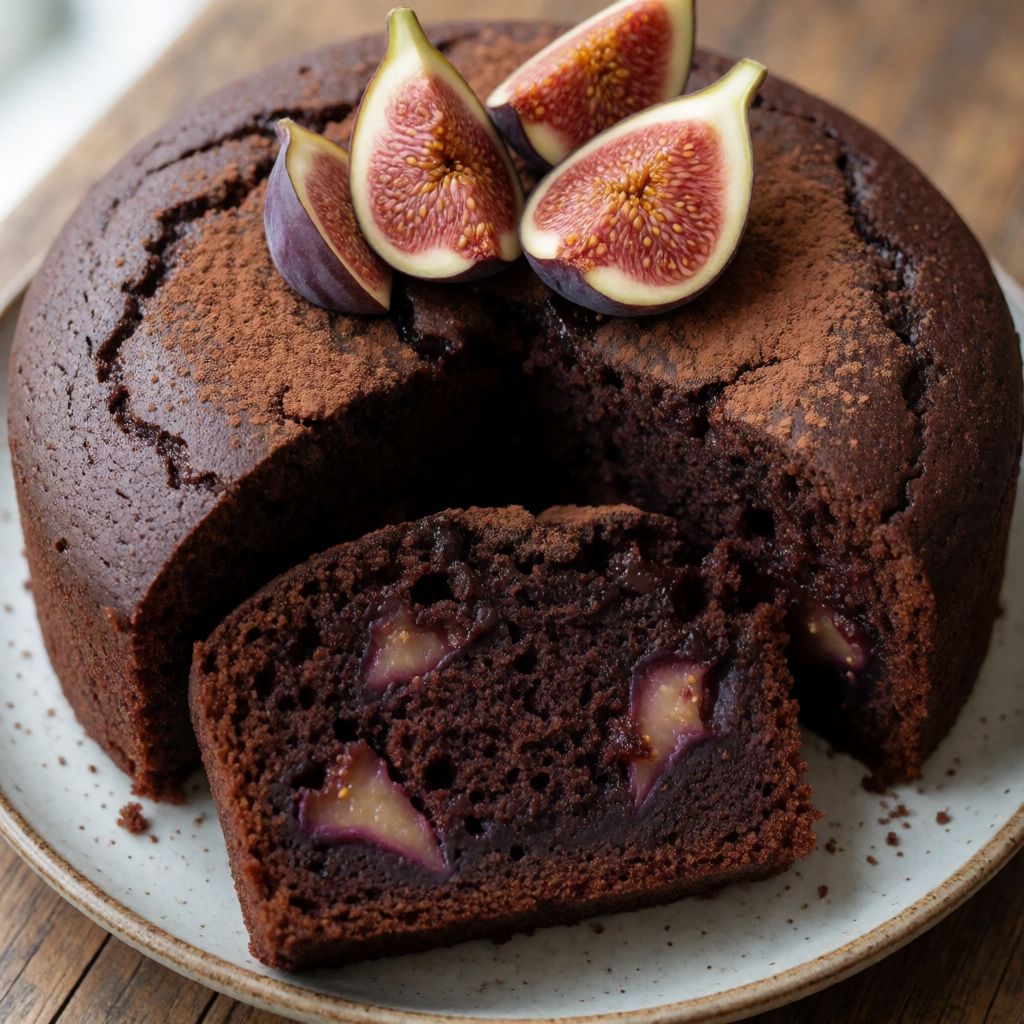
A fluffy fig and chocolate cake, finished with a dusting of icing sugar.
Labels are worked out automatically from the ingredients and can be wrong. Check the packaging if it matters to you.
Ingredients
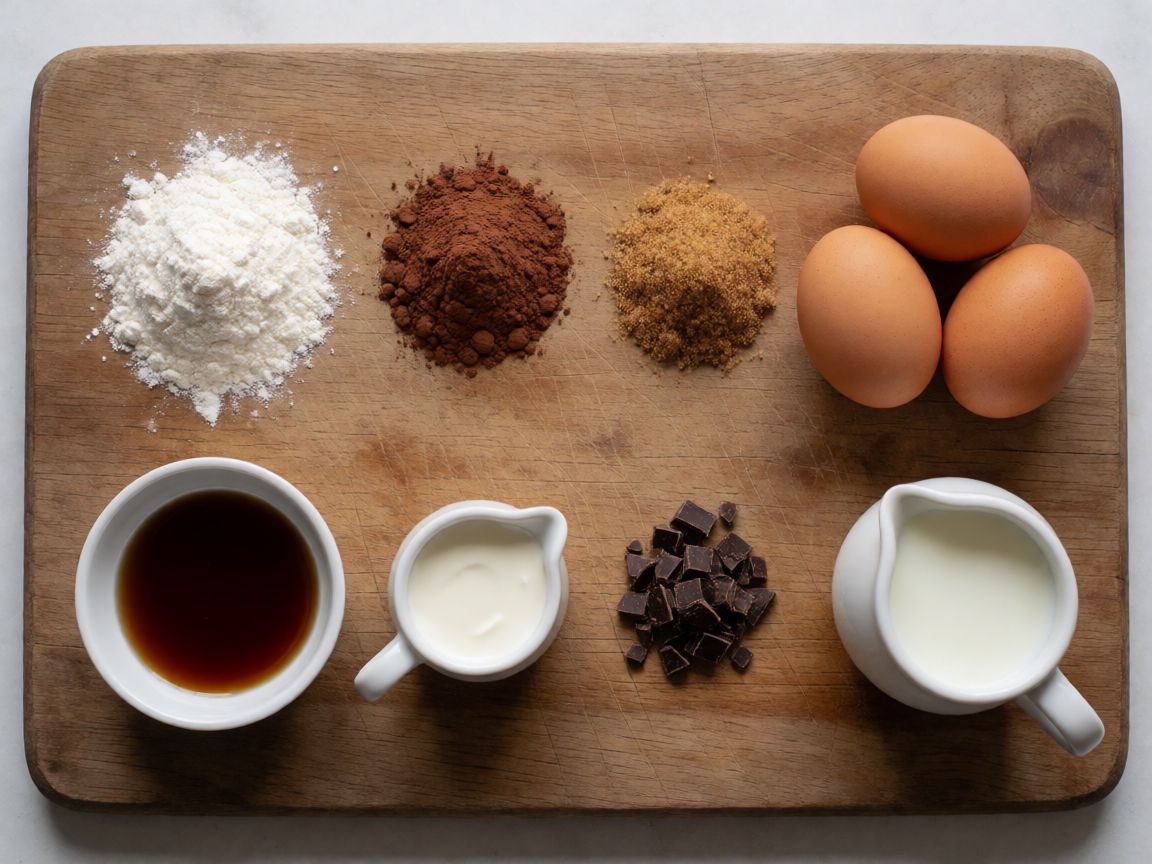
- 200 g Plain flour
- 20 g Cocoa powder
- 150 g Brown sugar
- 3 pcs Eggs
- 1 tsp Vanilla extract
- pinch Salt
- 150 g Double cream at room temperature
- 50 g Dark chocolate
- 30 g Milk
- 16 g Baking powder
- 5-6 pcs Figs
- 1 tbsp Icing sugar for dusting










Steps
Crack the eggs into a large bowl, add a pinch of salt, the vanilla and the sugar. Whisk with an electric mixer until light and fluffy.
Sift the flour together with the baking powder and cocoa, and fold into the egg mixture with a spatula until smooth.
Add the double cream at room temperature, continuing to fold gently.
Break the chocolate into pieces, combine with the milk and melt in a bain-marie or in the microwave, then leave to cool slightly.
Pour the melted chocolate into the batter and mix until smooth.
Wash and dry the figs. Peel 2 of them, cut into cubes and fold into the batter.
Pour the batter into a round 22 cm tin greased with butter and dusted with flour, and level it out. Slice the remaining 3 figs and arrange on top.
Bake the cake at 180°C for about 45 minutes.
45 minTake the cake out and let it cool completely before dusting with icing sugar.
This is a chocolate sponge that uses cream instead of butter, and figs instead of anything you'd call a "topping" in the usual sense — they sink slightly, bleed a little jam-like sweetness into the crumb, and leave their skins as dark freckles on top once baked. It's not a fancy cake. It's a Sunday-afternoon cake, the kind you'd cut into eight slices and hand round with tea, and whether it works comes down to two things: how you whip the eggs, and whether you trust the batter when it looks wrong.
Whisking the eggs with sugar and vanilla until "light and fluffy" isn't decoration talk — it's the only rising agent you've got besides the baking powder. Those tiny trapped air bubbles are what keep a flourless-feeling, cream-heavy batter from baking into something dense and fudgy. If you rush this step, the cake will still rise — baking powder sees to that — but it rises thin and dry instead of soft, because there's no structure of bubbles for the heat to expand into.
Folding, not beating, matters from the flour stage onward, and here's the mechanism: every time you beat instead of fold, you knock air out of the eggs and develop gluten strands in the flour that have no business being there in a cake. Folding keeps the bubbles alive and the crumb tender. Some say a cake like this needs vigorous mixing to "combine properly" — no, because what you're combining doesn't need force, it needs patience and a light hand with a spatula.
Flour and cocoa and baking powder get sifted together for one plain reason: baking powder clumps, cocoa clumps worse, and an unsifted clump of either sits in the finished cake as a bitter or soapy-tasting pocket that never dissolved. Sifting isn't about lightness so much as distribution — you want the leavening and the bitterness spread evenly through every crumb, not concentrated in one unlucky bite.
The chocolate and milk melted together, then cooled slightly before it meets the batter, is doing the same job the room-temperature cream does: matching temperatures so nothing shocks. Pour chocolate in too hot and it will start cooking the eggs that are already whisked into the batter, which shows up later as tiny firm threads in the texture. Dark chocolate here wants to be the kind with no added vanilla or hazelnut nonsense — any chocolate with a clean, assertive cocoa flavour and not too much sugar in it, that's the real criterion. A 70% bar works; a block of cheap "cooking chocolate" with waxy mouthfeel will melt fine but taste thin.
Double cream is standing in for butter, and the reason is simple fat chemistry: cream carries fat suspended in liquid, so it hydrates the flour and keeps the crumb moist while butter, which is nearly all fat, would make the sponge richer but drier unless you also added more liquid. If you don't have double cream, any cream with enough fat to coat a spoon and not split when warmed will do — crème fraîche thinned slightly, or even full-fat soured cream in a pinch, though it brings its own tang.
Figs are the one ingredient you can't really substitute and keep this the same cake — their appeal here is that they're soft enough to half-dissolve into the batter when diced, giving little pockets of jammy sweetness, while the sliced ones on top hold their shape and dry slightly at the edges in the oven's heat, which is the texture contrast the cake is built around. Out of fig season, a ripe pear or some stewed plum will behave similarly — soft, not too wet, sweet without being syrupy — but a fresh fig's particular perfume won't come back.
On baking powder at 16 grams for 200 grams of flour — that's a generous amount, more than most sponges carry, and it's there because the batter is heavy with cream and melted chocolate, both of which weigh down a crumb that needs extra lift to fight through. Don't be tempted to cut it back thinking "cake has enough eggs already" — the eggs give you air, the baking powder gives you lift against density, and this batter has plenty of the second problem.
As for the oven: 180°C is where this cake's exterior firms into a crust before the inside dries out, which is the usual compromise temperature for a sponge that's thick in a 22cm tin. A domestic fan oven runs hotter at the same dial setting than a conventional one, so don't take "about 45 minutes" as gospel — the toothpick test, or the surface springing back when you press it gently rather than leaving a dent, is the actual sign, and the fig juice bubbling slightly at the edges tells you it's close. Let it cool completely before dusting with icing sugar — a warm cake sweats, and icing sugar on a sweating surface just melts into invisible wet patches instead of sitting as a dusting. That wait is not wasted time; it's the step that decides whether the sugar on top actually shows.