
 AI photo
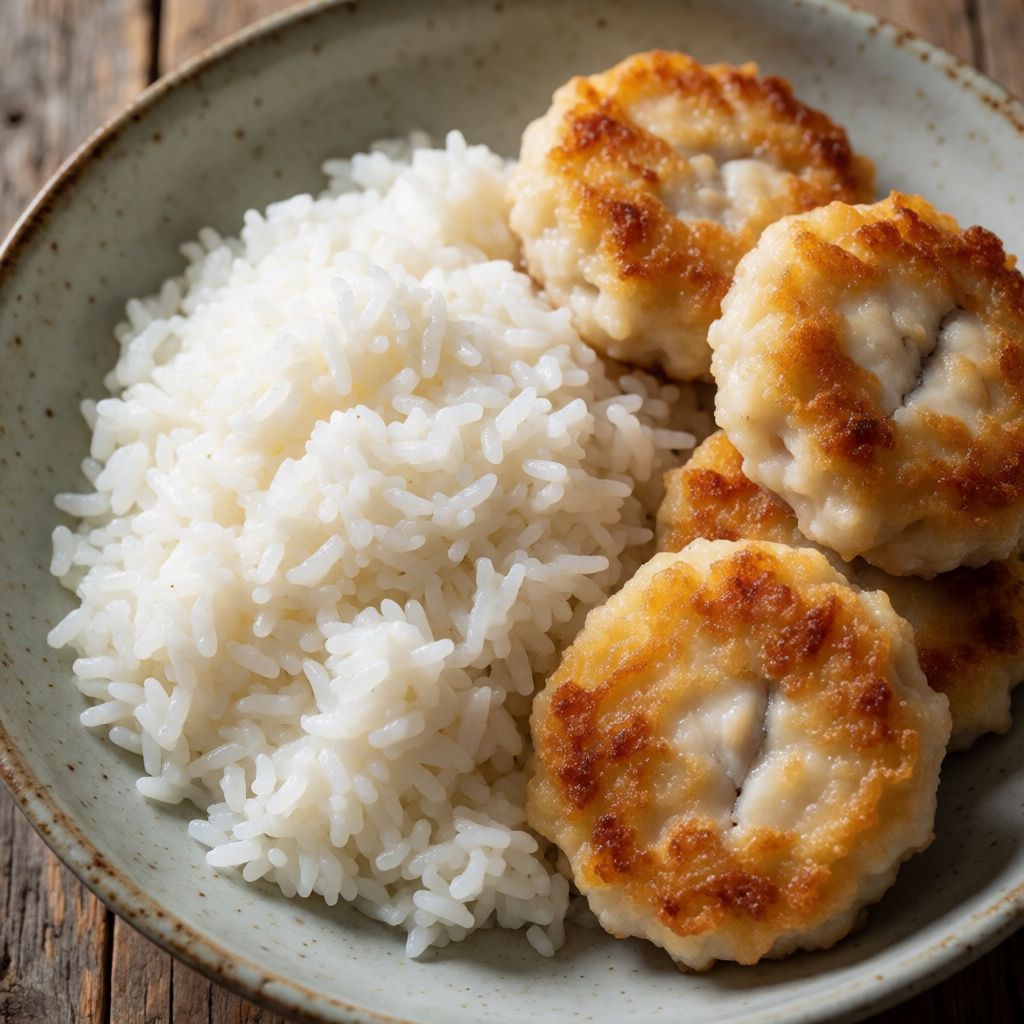
Fish Cakes in a Bowl with Coconut Rice, Asian Mayo and Vegetables
Crispy Asian-style fish cakes served over coconut rice with garlic-fried vegetables and a tangy mayo dressing.
Labels are worked out automatically from the ingredients and can be wrong. Check the packaging if it matters to you.
Ingredients
Coconut Rice
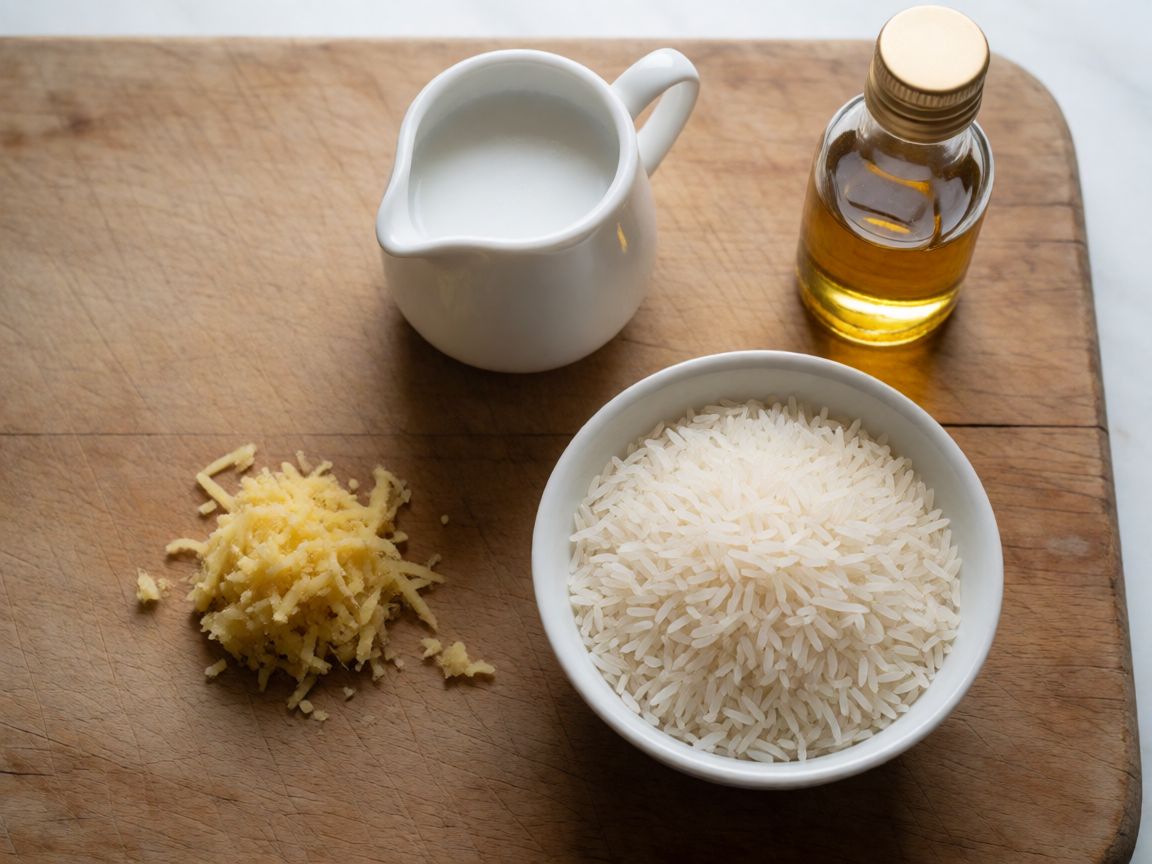
- 10 g Ginger finely grated
- 300 ml Basmati Rice
- 400 ml Coconut Milk
- 100 ml Water
- ½ tsp Salt
- 1 tsp Sesame Oil





Asian Fish Cakes
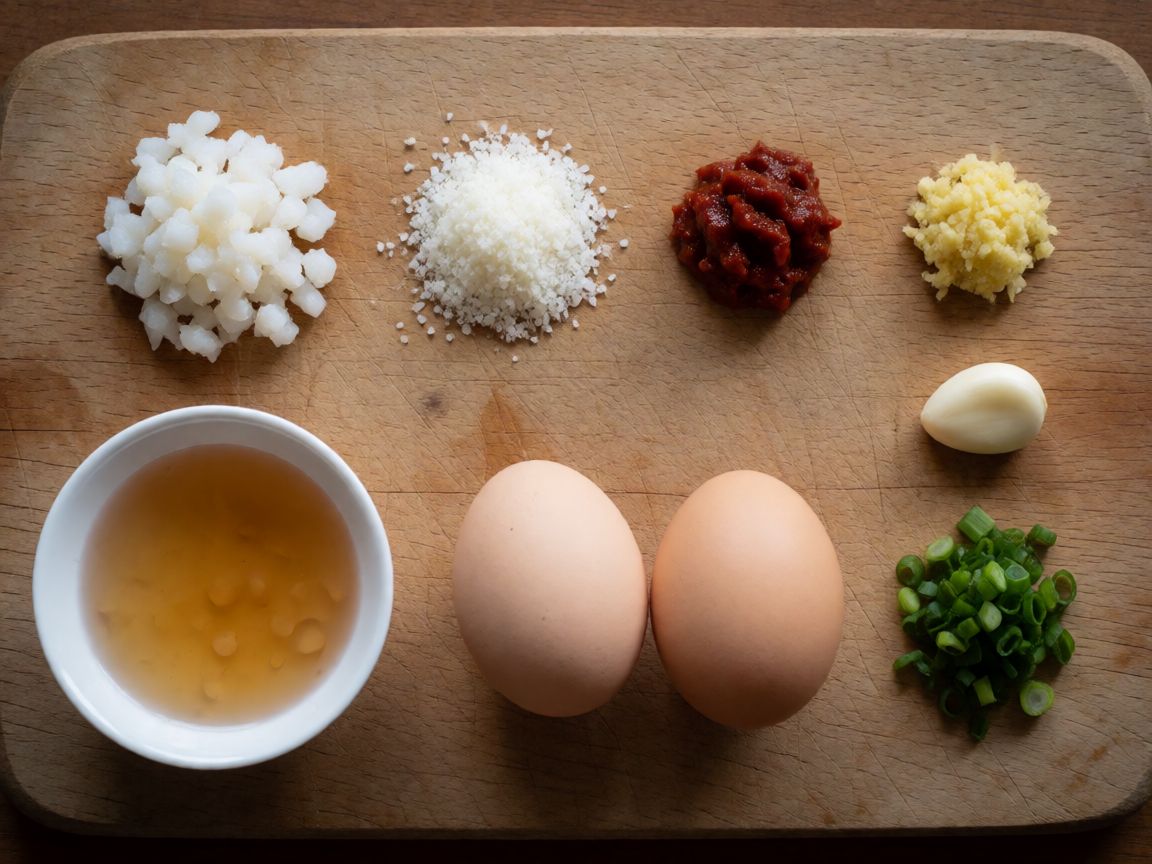
- 500 g Cod finely chopped
- 50 g Panko
- 2 tbsp Red Curry Paste
- 1 tsp Ginger finely grated
- 1 clove Garlic crushed
- 1 tbsp Fish Sauce
- 2 pcs Eggs
- 1 pcs Spring Onion finely chopped
- 1 tsp Salt




Garlic-Fried Vegetables
- 400 g Bok Choy roughly chopped
- 2 pcs Carrot halved and sliced
- 1 pcs Courgette halved and sliced
- 2 clove Garlic finely chopped
- 1 tsp Soy Sauce
- pinch Black Pepper freshly ground
- 2 tbsp Sesame Oil for frying




Asian Mayo Dressing
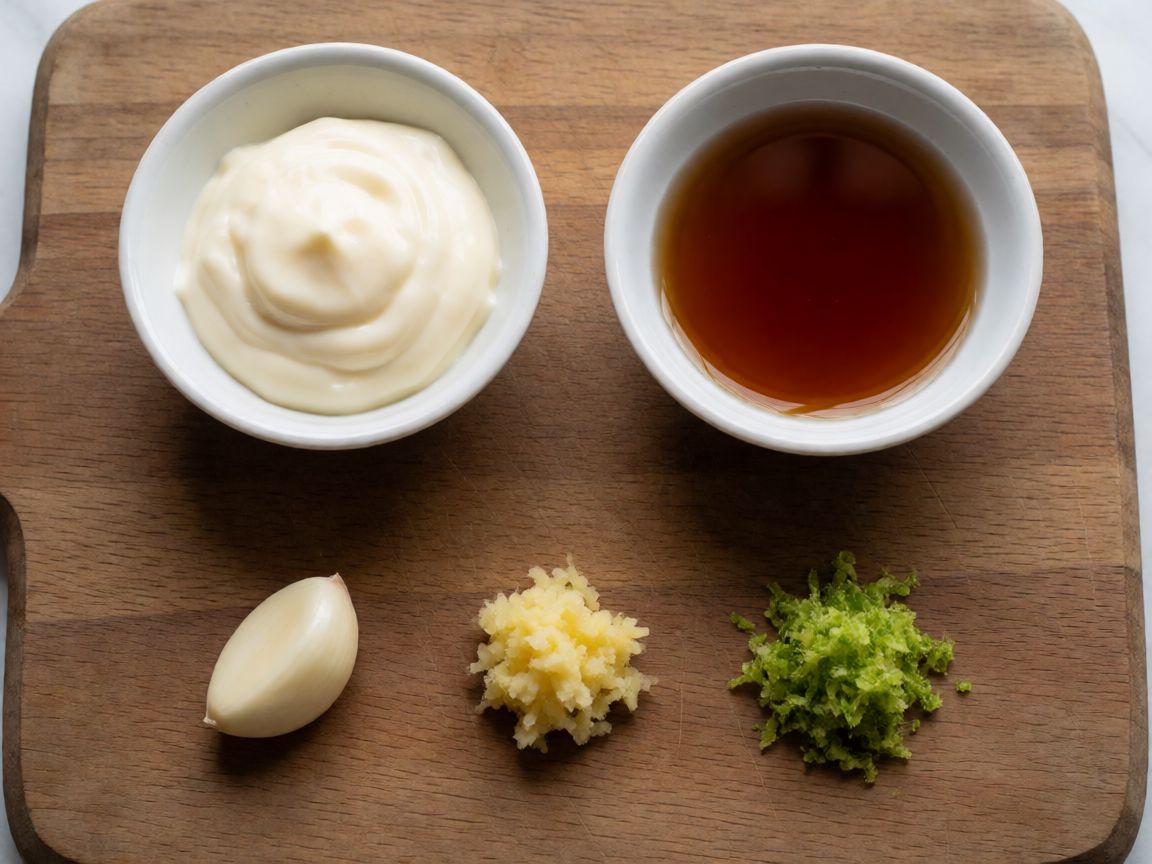
- 75 g Mayonnaise
- 1 tsp Fish Sauce
- 1 clove Garlic crushed
- 1 tsp Ginger finely grated
- 1 pcs Lime finely grated zest
- pinch Black Pepper freshly ground


To Serve
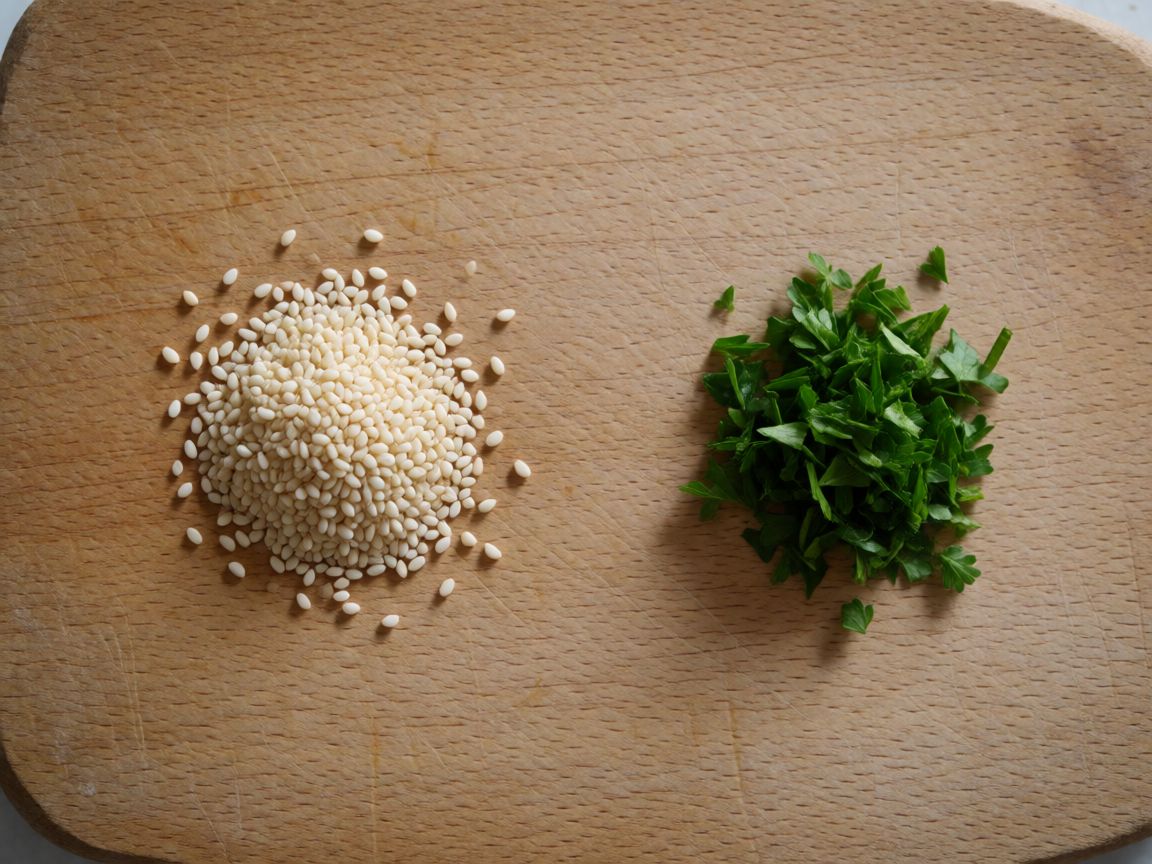
- 20 g Sesame Seeds
- 1 bunch Parsley finely chopped


Steps
Heat the sesame oil in a saucepan, add the ginger and fry gently until lightly fragrant, taking care not to burn it
Add the coconut milk, water, basmati rice and salt, and stir well
Cover with a lid and bring slowly to the boil
Cook covered on a low heat for 10 minutes
Remove from the heat and let the rice rest, covered, for a further 10 minutes
Combine all the fish cake ingredients in a large bowl and mix until a firm mixture forms
Shape into cakes and fry in a hot pan with oil over a medium heat for 5 minutes on each side, until crisp
Heat a pan with oil and fry the carrot and courgette over a medium-high heat for a few minutes
Add the bok choy and garlic, and cook for about a minute
Season the vegetables with soy sauce and pepper
Mix the mayonnaise with fish sauce, garlic and ginger, then season with the finely grated lime zest
Divide the rice, fried vegetables with garlic, fish cakes and Asian mayo between plates
Sprinkle with sesame seeds and finely chopped parsley
This is a bowl built in three separate stations that only meet on the plate: rice cooked in coconut milk, cod patties fried hard enough to hold together, vegetables kept crunchy on purpose, and a mayo doing the job a proper Thai dipping sauce would do if you had the ingredients for it. Nothing here is one dish — it's four small jobs, and the whole thing stands or falls on whether you treat them as separate jobs instead of throwing everything in one pan at once.
What decides whether it works: the rice must not turn to porridge, the fish cakes must not fall apart in the pan, and the vegetables must still have a bite in them when they land on the rice. Three different failure points, three different fixes, and none of them is about following a clock too literally.
Start with the rice, because it waits the longest. Coconut milk behaves differently from water — it's got fat and sugar in it, both of which scorch if you're not paying attention, which is why you fry the ginger gently first and why the heat stays low once the rice goes in. Some say coconut rice needs constant stirring like a risotto — no, because rice cooked this way is closer to a pilaf: you want the grains to steam, not to be agitated into starch soup. Lid on, low heat, then off the heat entirely to finish on residual steam. That resting time isn't optional decoration — it's the rice evening out its own moisture so the bottom layer isn't gluey while the top is still crunchy.
The vegetables get their own short, hot pan, separately, and that separation matters more than it looks. Carrot and courgette go in first because they need the longer cook to soften even slightly — carrot especially, since raw carrot doesn't bend, it snaps, and you're looking for the point where it just starts to give under a fork, not go limp. Bok choy goes in last because its leaves wilt in under a minute and its stem is basically just crunchy water — any longer and you've cooked the crunch clean out of it, which is the one thing bok choy is bringing to this bowl. Garlic goes in with the bok choy, right at the end, because garlic burns fast and bitter the longer it sits in hot oil — that's the actual reason recipes keep telling you to add garlic last, not tradition for tradition's sake.
On the fish cakes themselves: cod is the right choice because it's a clean, mild white fish that takes on the curry paste and ginger without fighting them — any firm white fish with low oil content does the same job, haddock or pollock included, so don't go hunting specifically for cod if your fishmonger's sold out. Red curry paste is doing the seasoning work a whole spice cupboard would otherwise need to do — it's a shortcut built by people who needed flavour without buying a dozen separate jars, which is the entire economic logic behind curry pastes existing in the first place. Fish sauce is salt plus something savoury underneath it — if you genuinely can't get it, a splash of soy with a pinch of extra salt gets you most of the way, though you lose some of the depth.
The mayo is where this dish admits it's not trying to be a traditional Thai sauce and isn't pretending to be one. A real nam jim or nuoc cham is built from lime juice, fish sauce, chilli and sugar in balance — what you've got here is that flavour profile folded into mayonnaise instead, because mayonnaise is already in most British fridges and lime-fish sauce dressings often aren't. It's a reasonable trade: you get the garlic-ginger-fish sauce punch without needing to balance an unfamiliar sauce from scratch. Some say mayo has no place near Asian flavours — no, because mayo is just egg and oil, a blank base, and a blank base takes on whatever you put in it. Any neutral oil-based mayonnaise works; homemade or shop-bought makes no real difference here since it's being flavoured hard anyway.
Sesame oil shows up twice, in two different jobs. The teaspoon used with the ginger at the start is there for scent — it's a finishing-style oil even when used early, so don't swap it for a neutral oil there or you lose the point of using it at all. The oil for frying, two tablespoons, is doing a heat job, and if your sesame oil is the dark toasted kind, know that it smokes and turns bitter faster than a plain one — if that's all you've got, cut it with a neutral oil, anything with no smell of its own, sunflower or vegetable oil both do fine.
Last thing: this is a dish with four components that each need their own small window of attention, and no single stage takes long, but they don't all finish at the same moment. Get the rice resting before you start the vegetables, get the vegetables resting under a loose cover of foil or a plate before you finish the fish cakes, and you're not actually multitasking — you're just sequencing patiently instead of panicking. That patience is the real ingredient holding the bowl together, not any single component in it. Feeds four, assuming everyone's having one fish cake with a full bowl of rice and veg each — scale the rice and veg up before you scale the fish cakes, since two eggs and 500g of cod won't comfortably stretch to a sixth patient.