Vegetables
Bok Choy
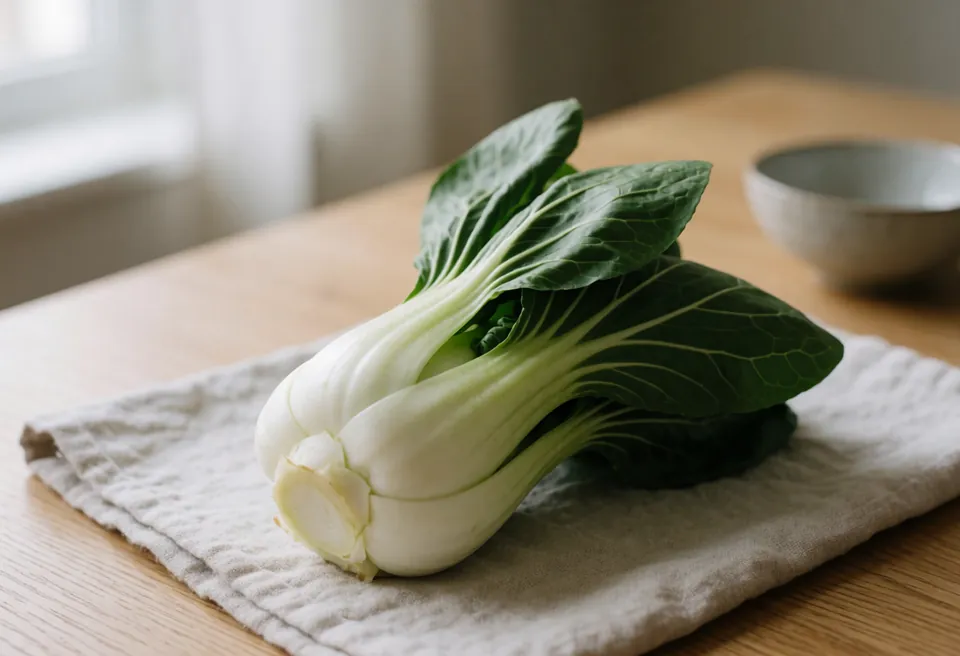
Bok choy is an Asian leafy cabbage with crisp pale stalks and dark leaves. It's quickly stir-fried in a wok or added to soups.
20 kcal per 100 g
Nutrition per 100 g
20 kcal
| Protein | 1 g |
|---|---|
| Fat | 0.2 g |
| Carbs | 3.5 g |
| Fiber | 1.3 g |
Source: USDA FoodData Central, 2026-09-21. Per 100 g raw (per USDA FDC).
Good to know: Bok Choy
Bok choy is really two vegetables in one. The white stalks are crisp and watery, built like celery — they want heat and time to turn tender. The dark green leaves are thin and wilt in seconds, like spinach. Cook them the same way, in the same pan, at the same time, and you ruin one half or the other. That's the whole mechanism, and once you see it, you'll never treat bok choy as a single ingredient again.
Choose it by the stalks: they should be pale, glossy, and snap cleanly when bent, not bend and fold like old rope. The leaves should stand upright, dark and matte, no yellow edges, no slime at the base. Smell the cut end — it should smell fresh, faintly sweet, like cucumber. A sour or fishy smell means it's been sitting too long.
Some people say bok choy is just like standard round cabbage, so cook it exactly the same way. No! Cabbage is dense all the way through. Bok choy is not. Treat it like cabbage and you'll get mushy leaves sitting on top of raw, crunchy stalks — a plate that fights itself. Slice the stalks first, let them hit the hot oil, and only then throw in the leaves, at the very end, just long enough to change color.