
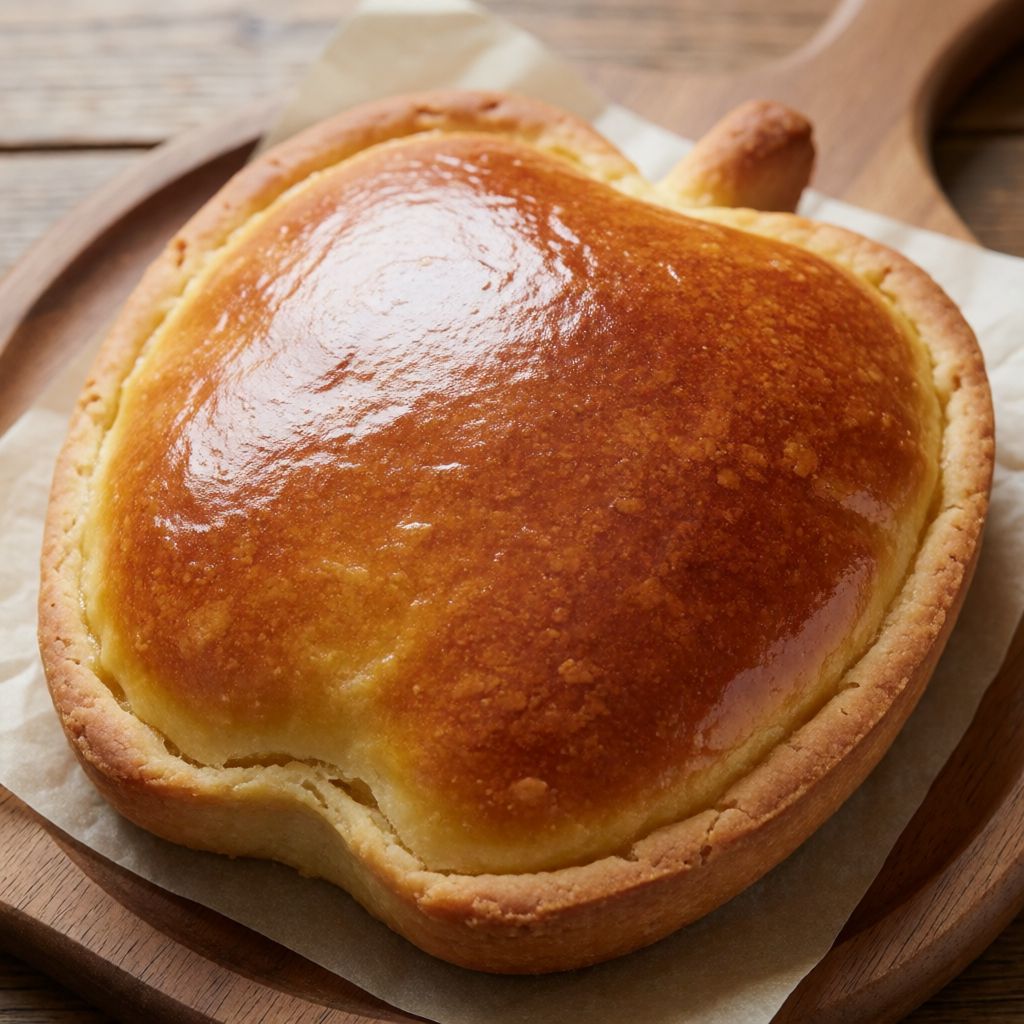
 AI photo
Leccese Fruttone Filled with Jam and Almond Cream
A festive filled pastry from Lecce, with a lard shortcrust shell holding fruit jam and almond cream, finished with a dark chocolate glaze.
Labels are worked out automatically from the ingredients and can be wrong. Check the packaging if it matters to you.
Ingredients
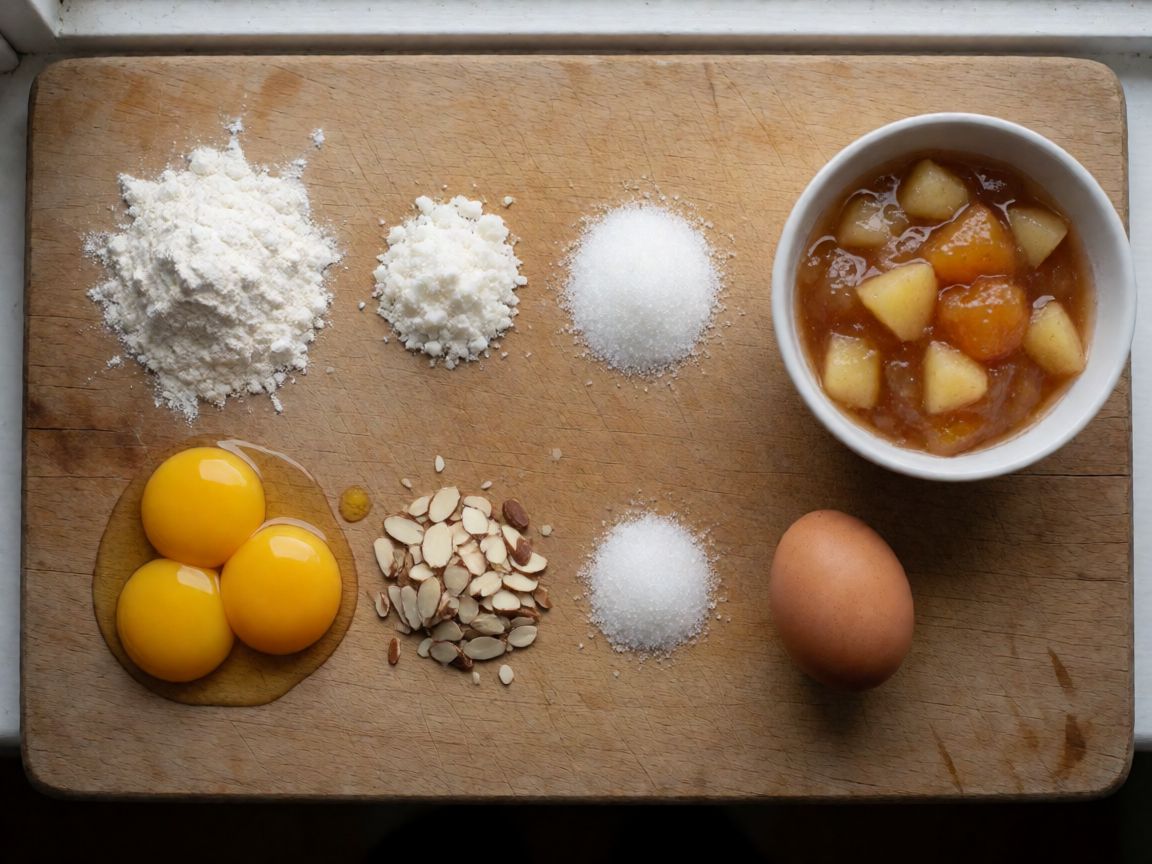
- 200 g Plain flour
- 100 g Lard cold
- 80 g Caster sugar
- 3 pcs Egg yolk 60 g
- 60 g Almonds
- 40 g Caster sugar
- 1 pcs Egg
- 150 g Jam apple, pear or apricot
- 75 g Dark chocolate chopped
- 45 g Butter









Steps
In a bowl, combine the flour, sugar, cold lard and egg yolks. Mix by hand to a smooth, soft dough, then knead briefly on the work surface.
Roll out the dough between two sheets of baking parchment to a thickness of a few millimetres, then chill it in the fridge.
Blitz the almonds with half the sugar to a fine crumb. Transfer to a bowl, add the egg yolk and mix.
Whisk the egg white with the remaining sugar to a stiff foam and gently fold into the almond mixture with a spatula. Transfer the cream to a piping bag.
Cut the dough into rounds to fit 10 cm moulds, leaving 1-2 cm extra around each.
Line the moulds with the dough, trimming off the excess from the edges, and spoon a dollop of jam onto the base of each fruttone.
Using the piping bag, pipe a layer of almond cream on top, leaving a 1-2 mm border free.
Cover each fruttone with a lid cut from the remaining dough and press the edges firmly to seal.
Bake in a preheated oven at 170°C, static (conventional) mode.
20 minRemove the fruttoni from the oven and let them cool completely.
Melt the chopped chocolate together with the butter over a bain-marie or in the microwave.
Dip the top of each fruttone into the chocolate and let the glaze set before serving.
A fruttone is Lecce's answer to the question of what to do with leftover almonds, egg whites and a shortcrust that has to hold its shape without a tin. It's a sealed pastry dome — shortcrust bottom and lid, jam in the middle, almond cream on top of the jam, chocolate glaze on top of that — baked in a small round mould, usually the size of a jam-jar lid. What decides whether it works isn't the almond cream, which is forgiving, but the pastry: it has to be rollable thin, strong enough to seal into a dome, and short enough to shatter rather than chew. That's a short-pastry problem, not a filling problem.
The dough here is pasta frolla built on lard instead of butter, and that's not a rustic substitution — it's the original economics of southern Italian baking, where butter was a luxury that had to travel from the north and lard was what the pig gave you for free. Lard melts at a lower temperature and carries less water than butter, so it coats the flour more completely and gives you a shorter, more fragile crumb with less risk of toughening if you overwork it slightly. Some say pasta frolla must have butter to taste "proper" — no, because the fat's job here is physical, not flavour: it blocks gluten strands from linking up, and lard does that job at least as well, arguably better, which is exactly why generations of Pugliese bakers never bothered switching.
Flour and lard are the skeleton, sugar and yolk are what make it frolla rather than plain shortcrust — the yolks bring fat and a little protein that sets on baking, giving you a crust that's crisp rather than crumbly-collapsing once it's cool. If you can't get lard, you want a fat that's solid and nearly flavourless at room temperature, which rules out olive oil and points you to a cold, hard block butter, or a vegetable shortening if you want the closest texture match — the trade is always flavour neutrality against melting point, and lard happens to sit at the useful end of both.
The almonds should be blanched and skinned if you're buying whole ones, because the brown skin is bitter and fibrous and will sit as dark flecks in what's meant to be a pale, fine cream — ground almond flour sidesteps the whole issue if you've got it in the cupboard, though fresh-ground from whole almonds has more oil in it and a rounder taste. Blitzing them with sugar rather than alone matters: sugar crystals act as a grinding aid, cutting between the almond particles so they shear into powder instead of clumping into paste from their own released oil, which is the usual way home almond-grinding goes wrong and turns into marzipan by accident.
The jam is doing a job the almond cream can't: moisture and acidity. The cream alone bakes dry and a bit flat-tasting; a spoon of fruit jam underneath gives you a pocket of sharpness that cuts the sweetness of almond and sugar and chocolate stacked on top of it. Apple, pear and apricot are named because they're set jams with body — they won't run thin in the oven and soak the base pastry into sogginess, which is the real reason you want a "stiff" jam and not a runny fruit compote here.
Dark chocolate with butter melted in isn't just for shine — the butter lowers the chocolate's melting point and keeps it glossy and slightly soft once set, rather than the hard, dull snap you get from chocolate melted on its own, which also tends to seize if it meets a drop of condensation. If you've only got milk chocolate, you can use it, but cut back on how much sugar's gone into the almond cream, because milk chocolate adds its own sweetness on top of a filling that's already carrying sugar twice over — once in the frolla, once in the cream.
On moulds: a proper fruttone uses small round metal moulds about the width of your palm, but in a UK kitchen you've got Yorkshire pudding tins or a muffin tray, both of which will do the job — just watch that the dough comes up the sides generously enough to seal against a lid, because the seal is where the whole dome depends, and a shallow mould forces a flatter, less dramatic shape.
Static oven heat is named because it's gentler and more even side-to-side than a fan setting, which would bake the exposed edges and the domed top faster than the enclosed base — important here, since you're baking a sealed parcel where the inside has to cook through steam and residual heat as much as from the oven air directly reaching it. Twenty minutes is your lower bound, not your answer: look for the pastry going from pale and raw-looking to a light gold, especially at the seam where the lid meets the base, and trust that colour over the clock, because ovens vary more than recipes admit.