
 AI photo
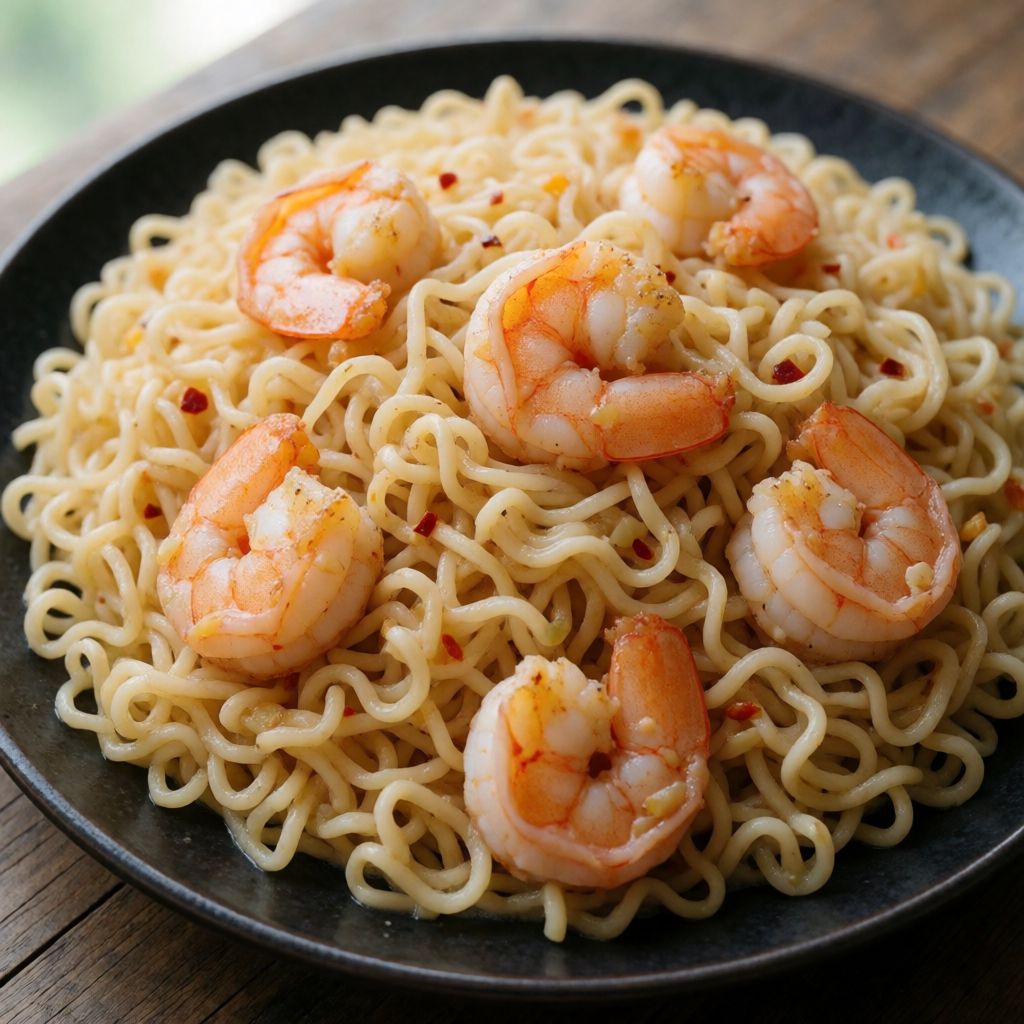
Asian Prawn and Garlic Wok with Coconut Milk
A quick Asian-style wok of noodles with garlic prawns in coconut milk, broccoli and spinach.
Labels are worked out automatically from the ingredients and can be wrong. Check the packaging if it matters to you.
Ingredients
- 250 g Noodles
- 2 tbsp Honey
- 6 clove Garlic
- 1 tsp Ginger grated
- 0.5 tsp Chilli flakes
- 250 g Prawns thawed
- 30 g Butter
- 400 ml Coconut milk
- 1 tbsp Fish sauce
- 1 pcs Broccoli
- 250 g Spinach
- 100 ml Stock
- 3 tbsp Sesame oil or another oil for frying
- Salt
- Black pepper freshly ground
- 1 pcs Lime juice and finely grated zest
- 0.5 tsp Chilli flakes for sprinkling
- 2 pcs Spring onion finely sliced
- 30 g Cashews

















Steps
Cook the noodles in lightly salted water according to the pack instructions. Drain and rinse under cold water.
In a bowl mix the honey, garlic, ginger, chilli flakes and oil. Toss the prawns in this mixture.
Fry the prawns in a wok, stirring, for about a minute.
1 minDrain off excess liquid, add the butter, salt and pepper. Fry the prawns until pink and golden. Set half aside.
Add the coconut milk, the liquid from the prawns, fish sauce, broccoli, spinach and stock. Simmer gently for a few minutes.
5 minServe in deep bowls with the noodles and garlic prawns, topping with the fried prawns, spring onion, cashews and chilli flakes.
Serve with lime wedges for squeezing over.
This is really two dishes sharing one wok: a quick, almost dry stir-fry of garlic-honey prawns, and a loose coconut broth with greens that the noodles sit in. What decides whether it works is not the coconut milk or the fish sauce — it's whether you keep those two stages separate in your head. Fry the prawns hard and fast, pull half of them out, and only then build the liquid. Dump everything into the pan at once, as the ingredient list might tempt you to do, and you get grey, rubbery prawns swimming in a broth that tastes of nothing but boiled honey.
The honey-garlic-ginger-chilli paste is doing a specific job before it ever meets heat: it's a marinade, not a sauce yet. Raw garlic and ginger are harsh and one-note; a few minutes sitting in honey and oil softens that edge and lets the sugars start to cling to the prawn's surface. That's also why step 4 tells you to drain the liquid off before frying properly — prawns thrown into a hot pan still wet with marinade won't fry, they'll steam. Steamed prawn is pale, soft, and sad. Fried prawn, with the surface dry enough to catch the pan, goes gold at the edges while staying just pink and springy inside. That edge-gold, centre-pink state is the only "doneness" that matters here — not a stopwatch count.
A word on your hob: this wants real heat for the prawn stage, hotter than most British rings comfortably give a wide pan without the edges lagging behind the centre. A flat-bottomed wok or your widest frying pan is fine — just fry in batches if the prawns start crowding and weeping liquid into a puddle instead of browning. Crowding is the enemy of colour far more than the pan shape is; a kazan wouldn't save you from that.
Noodles: the recipe doesn't name a type, which is honest, because almost anything works — wheat, rice, egg. What matters is the rinse under cold water in step 1. That's not tradition for its own sake; it washes off surface starch so the noodles don't clump into one solid block while they wait around for the broth to finish, and it stops them cooking further from their own residual heat.
Garlic, ginger, chilli flakes: this trio is the backbone flavour, and all three want to be fresh-ish rather than ancient jar-dust, because their whole value is aromatic oils that fade with age and heat. Grated ginger rather than sliced gives you flavour without fibrous lumps in your mouth — if you only have ground ginger, use less, since it's more concentrated and has none of the fresh brightness.
Fish sauce: this is the dish's salt, but salt with a savoury, almost meaty backbone — fermented fish, essentially a very old way of capturing protein's flavour before refrigeration existed. If the smell puts you off raw from the bottle, don't worry, it mellows completely once it hits the hot broth. Soy sauce is the honest substitute if you have none, though you lose some depth; add it a little at a time since saltiness varies bottle to bottle.
Coconut milk: full-fat, from a tin, is what gives the broth body — the fat is what carries the chilli and ginger flavours and stops the whole bowl tasting thin and watery. Light coconut milk will work but gives you a thinner broth; you're trading richness for fewer calories, your call. There's no real substitute that tastes of coconut — oat cream or similar will get you creaminess but not the flavour, so only use it if coconut itself is the problem, not the cream.
Sesame oil "or another oil for frying" is the recipe being honest with you: sesame oil burns at a lower point than neutral oils and its nutty smell can dominate the prawns before the garlic gets a look in. Use it for the small amount stirred through at the end for aroma if you like, but for the actual high-heat frying, any oil with no smell of its own — sunflower, groundnut — does the real work better.
Butter added after the prawns are already cooking is a French-kitchen trick more than a Southeast Asian one, and it's there for one reason: butter browns and smells different from oil, nutty rather than neutral, and it finishes the prawns with a gloss and a last layer of flavour that a all-oil fry doesn't give you. Don't put it in at the start — butter's milk solids burn well below the heat you need to sear a prawn, and you'll get bitter brown specks instead of golden crust.
This feeds four as a proper bowlful, or three if your household treats noodles the way most of Britain treats a Sunday roast — second helpings expected. Have the lime wedges and spring onion ready at the table rather than stirred in early; squeezed in at the end, the lime cuts through the coconut richness instead of just cooking off and vanishing into it. That's the patience part of this dish — not long cooking, but holding your nerve and keeping the fresh garnishes back until the very last second before the bowl goes down.