
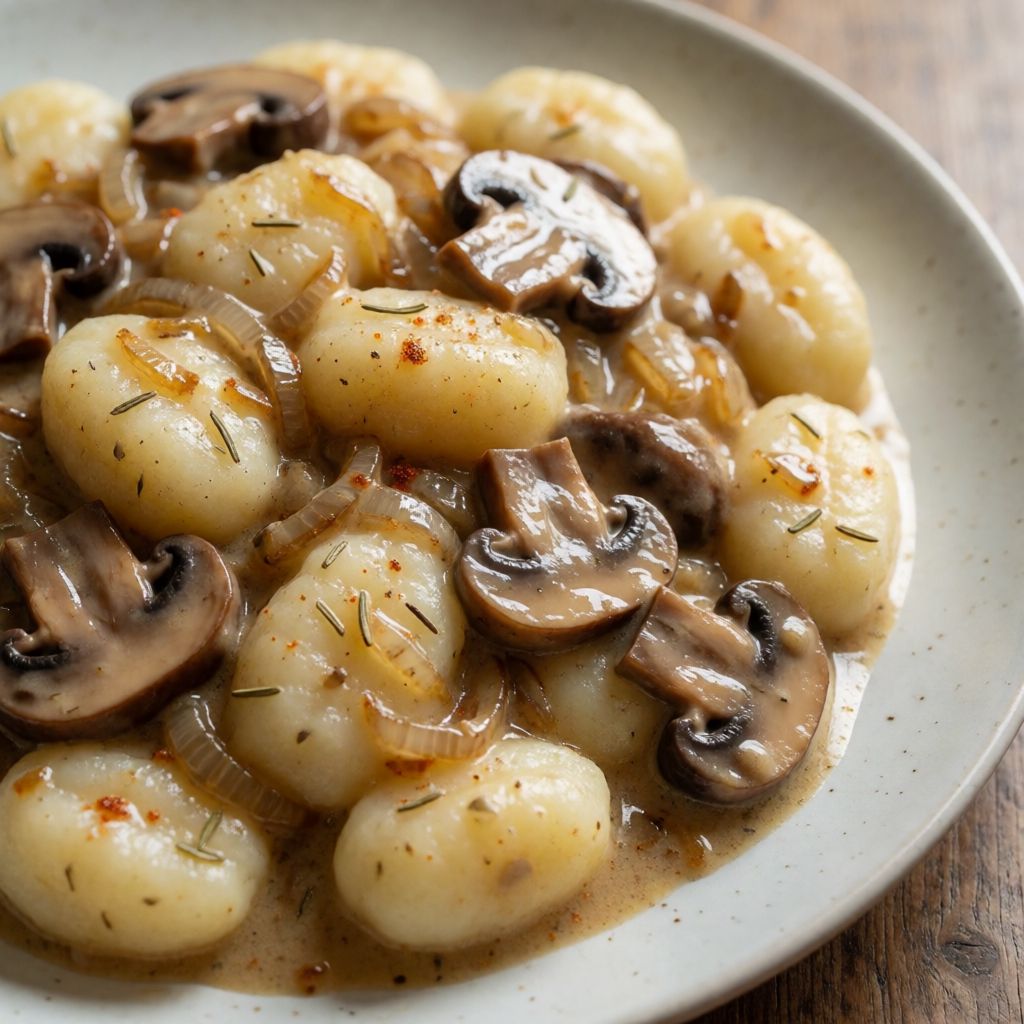
 AI photo
Gnocchi in Mushroom Sauce
Soft gnocchi in a creamy mushroom sauce with spinach and toasted pine nuts.
Labels are worked out automatically from the ingredients and can be wrong. Check the packaging if it matters to you.
Ingredients
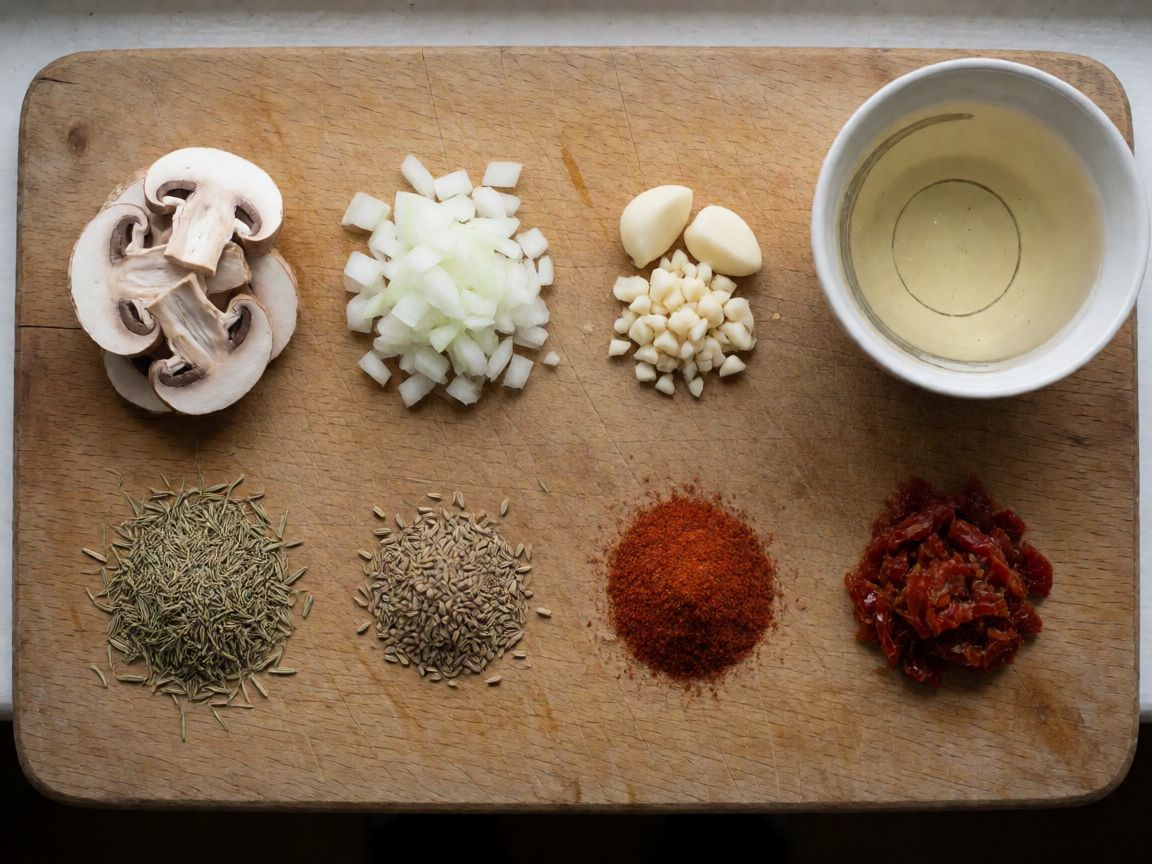
- 400 g Mushrooms sliced
- 1 pcs Onion finely chopped
- 2 clove Garlic finely chopped
- 1 tsp dried rosemary
- 0.5 tsp Fennel seeds crushed
- 1 tsp smoked paprika
- 30 g sun-dried tomatoes finely chopped
- 100 ml white wine
- 100 ml Stock
- 200 ml Double cream
- 1 tbsp Cornflour
- 500 g Gnocchi
- 200 g Spinach
- 0.5 pcs Lemon zested + a little juice
- 1 tbsp Olive oil for frying
- 10 g Butter for frying
- Salt
- Black pepper freshly ground
- 20 g Pine nuts toasted











Steps
Heat a pan with olive oil and butter and fry the mushrooms over high heat, stirring constantly.
Once the mushrooms have taken on a nice golden crust, reduce the heat slightly.
Add the onion, garlic, dried rosemary, fennel seeds, smoked paprika and finely chopped sun-dried tomatoes, and fry until the onion softens.
Add the white wine and stock, and bring to the boil.
Stir the cornflour into the double cream and add to the pan along with the gnocchi.
Stir through and add the spinach.
Simmer for 4-5 minutes, until the gnocchi are heated through and pleasantly soft.
Season with lemon zest, lemon juice to taste, salt and freshly ground black pepper.
When serving, sprinkle with toasted pine nuts and freshly ground black pepper.
This is a pan sauce wearing a Sunday-dinner coat — gnocchi standing in for the potatoes, mushrooms doing the work a roast usually does. The whole dish hinges on one decision made in the first ninety seconds: does the pan stay hot enough to brown the mushrooms, or does it sulk and steam them instead? Everything after — the depth, the colour, whether the sauce tastes of something or of nothing — comes from that first contact.
Mushrooms are mostly water held inside cell walls. Thrown into a pan that isn't properly hot, they don't fry, they weep — the water comes out before the surface has a chance to catch, and you get grey, slippery slices simmering in their own liquid instead of mushrooms with a crust. Some say you must never crowd a pan of mushrooms, as if it were superstition — no, it's physics: too many at once and the water they shed has nowhere to go but up as steam, cooling the pan exactly when you need it hottest. A domestic hob doesn't have the brute heat of a restaurant ring, so if your pan looks full, do it in two batches. Better two short noisy fries than one long quiet poach.
You're listening for the sound to change — a wet hiss settling into something sharper, almost a crackle — and watching for colour: pale going to gold, gold going toward the edge of brown. That's your cue to ease back, not a clock. Once you add onion and garlic, the heat work is largely done; from here the pan is simmering a sauce, not searing anything, and burnt garlic is a different and much more bitter problem than soft onion.
Mushrooms, plain button or chestnut, are the backbone — the sliced shape matters more than the variety, since what you want is maximum cut surface meeting hot metal. If you can get something with more character, like a few portobello or even a small handful of dried porcini (soaked, chopped, their soaking liquid used in place of some of the stock), the dish gets a meatier, more savoury note, but it isn't required — this is a Tuesday-night dish built from a supermarket shop, not an occasion for rare finds.
The onion and garlic are the base every stew or sauce in most kitchens is built on, and the reason is economic before it's culinary: they're cheap, they keep, and cooked slowly they turn sweet instead of sharp, which means you don't need much else to make a sauce taste rounded rather than raw. Rosemary, fennel seed and smoked paprika aren't there to taste of themselves individually — crush the fennel seed, don't leave it whole, or you'll bite into a little aniseed bullet instead of a background warmth. The smoked paprika is doing the job real wood smoke would do if this were cooked over coals — a shortcut, not a cheat.
Sun-dried tomatoes bring a concentrated sourish-sweet hit that fresh tomato can't, because most of their water has already left them — that's the whole point of drying food, historically: less water means less rot, more flavour per gram, longer storage. If you haven't got any, a teaspoon of tomato purée cooked briefly with the onions gets you partway there, though it won't have the same chewy little bursts.
Wine and stock together do a job neither does alone: the wine's acidity cuts through the cream so the sauce doesn't sit heavy and flat on the tongue, the stock gives it savoury backbone. No wine in the house — don't panic and skip it, just use a little extra stock with a squeeze of the lemon added early instead of late, since it's really acidity you're after.
Gnocchi here isn't pasta pretending — it's simmered straight in the sauce rather than boiled separately in water first, and that's deliberate: gnocchi are mostly potato and starch, and as they warm through in the sauce they shed a little of that starch into the liquid, thickening it further and binding sauce to dumpling rather than leaving two separate things on a plate. Watch them, don't guess by the clock — they go from firm and slightly resistant to properly soft and slightly swollen, and that's the only test that matters; a minute too long and they turn mushy, losing the bite that makes gnocchi worth eating over mash.
Spinach goes in at the end because it needs almost nothing — raw leaves wilt from residual heat alone, and ten more minutes of cooking only buys you grey sludge and a pan of green liquid, nothing you'd want.
Pine nuts toasted separately, scattered at the very end, are there for one single reason: texture. Everything else in this bowl is soft — cream, gnocchi, wilted leaves — and without something that cracks when you bite it, the whole dish reads as one long mouthful of the same thing. No pine nuts — toasted flaked almonds or even sunflower seeds do that same job of interruption; it doesn't have to be expensive, it has to be crunchy.
And give it the patience the first two minutes ask for. Rush the browning and you're not saving time, you're just moving the missing flavour from the mushrooms onto your own plate, where you'll notice it's gone.