
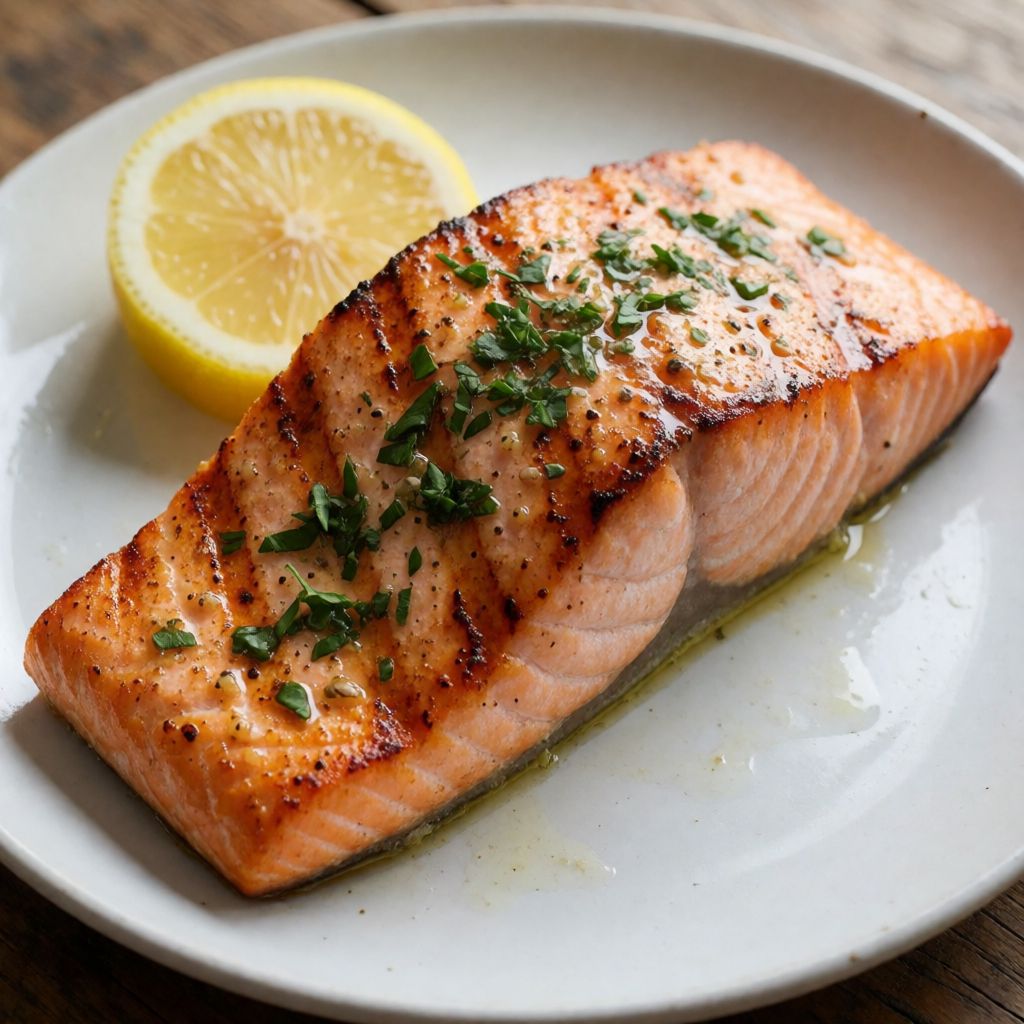
 AI photo
Grilled Salmon with Lemon and Herbs
A simple grilled salmon dish finished with lemon and fresh herbs.
Labels are worked out automatically from the ingredients and can be wrong. Check the packaging if it matters to you.
Ingredients
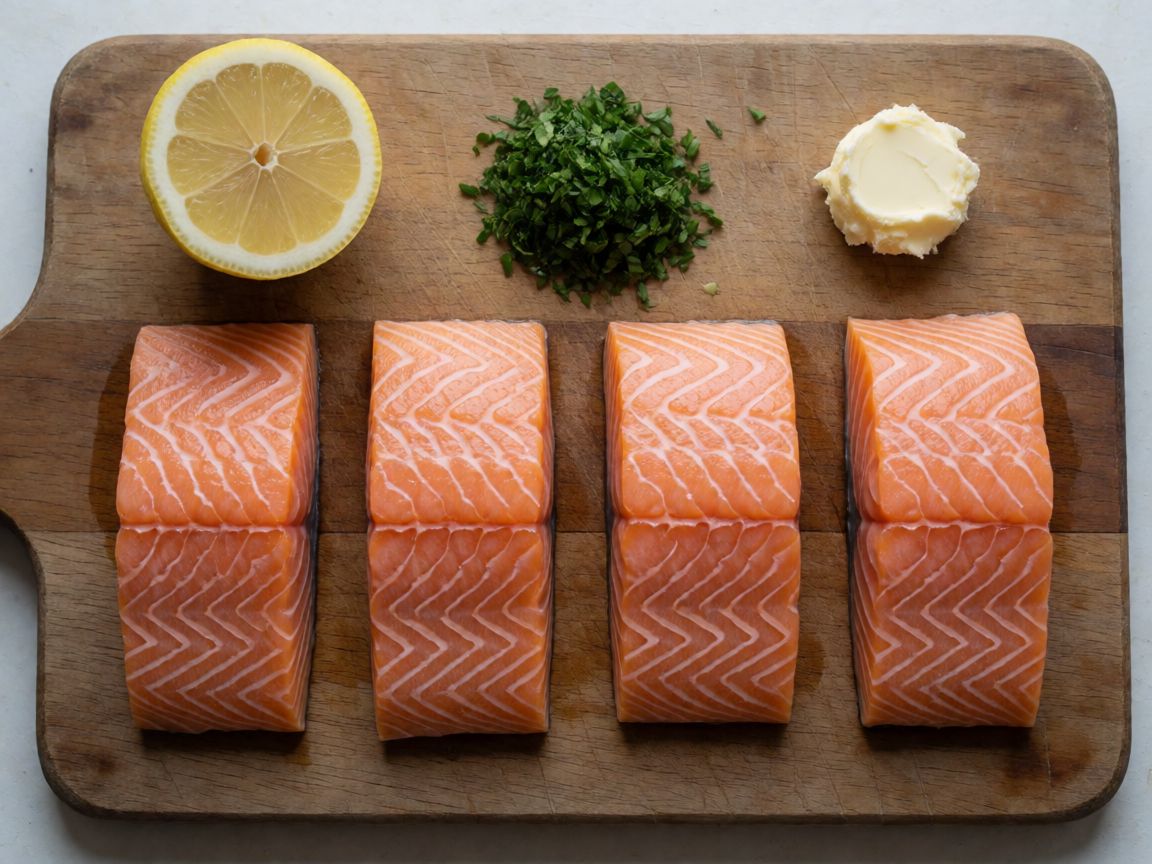
- 4 pcs Salmon
- 1 pcs Lemon sliced
- 1 bunch Fresh herbs chopped, e.g. dill, chives and thyme
- 1 tbsp Butter e.g. flavoured with herbs
- 1 tsp Salt
- 1 tsp Black pepper freshly ground






Steps
Rub the salmon with lemon juice from a lemon slice and place the salmon fillets on the grill, adding the lemon slices.
If you like, cover with a lid and grill for 10-15 minutes depending on the heat of the grill.
15 minThe salmon is ready when it flakes easily with a fork but is still slightly pink inside.
The key is not to overcook the salmon on the grill.
The dish can also be made in an ovenproof dish and baked at 200°C for 12-16 minutes.
16 min
Grilled salmon with lemon and herbs is a dish that lives or dies on one thing: the moment you pull it off the heat. Salmon has almost no connective tissue to break down, unlike the shoulder of lamb you'd put through a Sunday roast for three hours without worry. There's no "it'll be fine, it's had long enough" with fish. The muscle fibres are short and the fat is distributed in thin seams, not thick caps, so once those proteins tighten past a certain point, the flesh goes from silk to sawdust in the time it takes to answer the phone.
That's why the recipe gives you a cue, not a clock: it flakes with a fork but the centre still holds a blush of pink. The pink isn't underdone — it's where the carryover heat still has to finish the job after the fish leaves direct heat. Pull it exactly "done" on the grill and by the time it reaches the plate, it's gone past done. This is the whole dish's single real skill, and it has nothing to do with the herbs.
Lemon juice rubbed on before cooking isn't there to "cook" the fish — it's acid, and acid on raw fish for a few minutes firms the surface protein slightly and cuts the fattiness, which matters because salmon fat tastes richer, almost fatty-sweet, when hot. The lemon slices on the grill aren't decoration either: they char and soften, and you can lay the warm slices back over the fillet or squeeze them, getting a bitter-sweet edge that plain juice doesn't give you.
Buy salmon by thickness, not by weight on the label. A fillet cut from the thick shoulder end of the fish behaves completely differently to a tail piece — the tail will be done and drying out while the shoulder is still raw in the middle if you cook them side by side for the same time. If your four pieces aren't even thickness, stagger when you start them, or just accept the thin ones come off first.
Skin on or off is really a heat-management decision, not a flavour one. Skin-on gives you a barrier between the direct heat and the flesh, which buys you a little margin against the overcooking problem above — the skin takes the brunt, the flesh underneath stays gentler. If your fishmonger's taken the skin off, you've lost that buffer, so watch it more closely and maybe pull it a touch earlier.
The herb bunch — dill, chives, thyme is the suggestion, not a rule — wants to go on mostly after cooking, or very late, because fresh soft herbs like dill and chives lose their colour and most of their smell to heat within minutes. Thyme is the exception: it's tougher, has oils that survive heat better, so it can go on earlier or even into the butter. "Any fresh herb goes" is roughly true as a substitution rule, with one real criterion: reach for the soft, grassy ones (parsley, tarragon, chervil) over the woody ones (rosemary, sage) unless you want a much stronger, more savoury note than this dish is built for.
Butter, even a tablespoon, is there to carry fat-soluble flavour and to stop the surface looking dry under grill heat — basting, essentially. If you don't have butter, any flavourless oil does the carrying job just as well, though you lose the slight browning and milk-solid nuttiness butter gives; a dairy-free household just swaps it and loses nothing structural.
On salt and pepper: a teaspoon each for four fillets is light-handed, and that's deliberate — salmon's own flavour is strong enough that this isn't a dish built around seasoning, it's built around not ruining good fish with too much heat for too long. Season just before it meets the heat, not long before, because salt pulls moisture to the surface over time, and a wet surface on a grill means steaming and sticking instead of the bit of char you actually want.
One myth worth naming: that fish needs to be "cooked through" the way chicken does, with no colour left anywhere. Some say this out of a food-safety habit learned from poultry — but salmon doesn't carry the same risk, and farmed salmon sold for retail in the UK is handled with that in mind. The pink centre the recipe describes isn't a compromise on safety; it's the actual sign of doing it right.