
 AI photo
Grilled Vegetable Soup with Tomatoes and Peppers
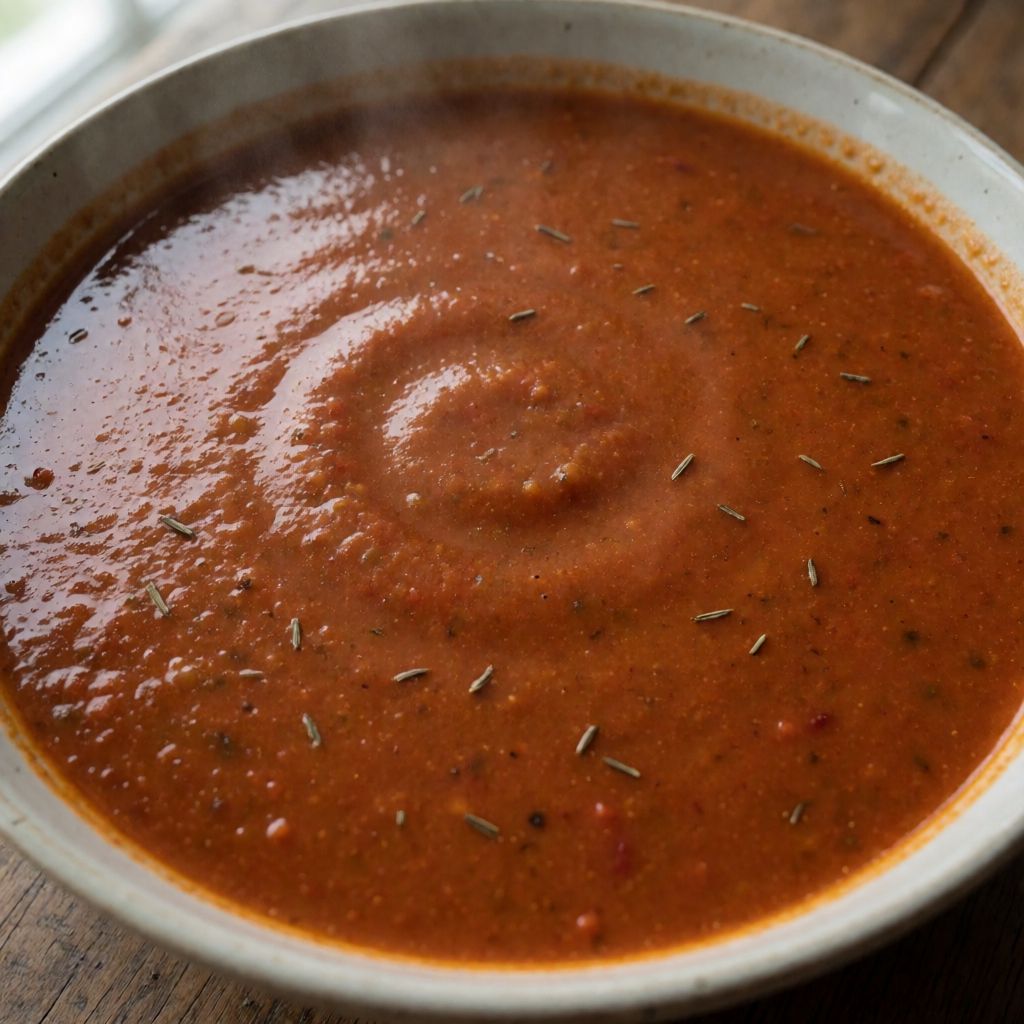
A smoky, creamy soup of grilled tomatoes, peppers and onion, finished with cream and a crisp paprika chickpea topping.
Labels are worked out automatically from the ingredients and can be wrong. Check the packaging if it matters to you.
Ingredients
- 700 g Tomato
- 3 pcs Pepper
- 2 pcs Onion
- 5 clove Garlic
- 600 ml Stock
- 2 tsp Dried Thyme
- 100 ml Double Cream
- 2 tbsp Olive Oil
- Salt
- Black Pepper freshly ground
- 100 ml Crème Fraîche
- 1 bunch Parsley roughly chopped
- 1 bunch Watercress
- 1 can Chickpeas
- 1 tbsp Olive Oil
- 0.5 tsp Smoked Paprika















Steps
To grill: toss the tomatoes, peppers, onion and garlic in oil, salt and pepper, place on the rack and grill, turning a few times, until the vegetables are soft.
Or to roast: toss the tomatoes, peppers, onion and garlic in oil, salt and pepper, spread on a baking tray and roast in a preheated oven at 180°C for 30-35 minutes.
33 minPut the grilled or roasted vegetables into a blender with the vegetable stock and thyme and blend until smooth and creamy.
Stir in the double cream to make the soup even creamier and richer.
Fry the chickpeas in a pan or roast in the oven, tossed with oil and smoked paprika, until crisp.
Serve the soup in deep bowls with crème fraîche, parsley, watercress and the crisp fried chickpeas.
This is a roast-vegetable soup wearing a modern coat — tomatoes, peppers, onion and garlic charred first, then blended, then softened with cream. The whole dish turns on one decision: do you blacken these vegetables, or do you merely cook them? A pale, boiled tomato gives you tomato-water soup. A tomato that's been allowed to blister and brown gives you something sweeter and darker, because the sugars on its skin have caramelised — that's the whole trick, and it costs you nothing but heat and patience.
Some say roasting vegetables for soup is a restaurant affectation, a thing done to simple food to make it sound expensive. No — it's the opposite of affectation. Charring is just concentrating. Raw tomato and raw pepper are mostly water; fire drives the water off and leaves the flavour behind, sitting on the surface as sugar gone dark. You are not decorating the vegetable. You are reducing it before it ever sees the blender.
What decides whether this works is not the blending — any machine does that — it's whether you let the vegetables actually char, skins splitting and going brown-black in patches, rather than pulling them out soft but pale because you got nervous about burning. Softness without colour means you've steamed them in their own juice. You want both: soft enough to blend to silk, coloured enough to taste of more than themselves.
A British kitchen doesn't have a grill the way a kebab stall does — it has an oven grill function, which is really an overhead element, and a hob with a ring that gets hotter than you think. Either does the job here: the recipe gives you both roasting and grilling because the mechanism is the same fire, delivered from above or below. If your oven grill is weak, go the roasting route at the oven temperature and time given — 180°C, roughly half an hour — and judge doneness by sight, not by the clock: skins should blister, split, and start to blacken at the edges; the onion wedges should bend, not snap, when you nudge them with a fork. The time in the recipe is a floor, not a ceiling — pull them out when they look right, even if that's past the stated minutes.
Tomatoes: 700g, and here ripeness matters more than variety. A tomato that's already soft and a bit too ripe for a salad is perfect for this — it has more sugar to caramelise and less raw acid to fight. Underripe, firm, pale tomatoes will char on the outside before they've softened inside, and you'll be blending skin and sinew. If it's winter and the supermarket tomatoes taste of nothing, a tin of good plum tomatoes, drained and roasted anyway for colour, is not cheating — it's working with what's actually in season.
Peppers (3) bring sweetness and body once charred — red or yellow peppers char sweeter than green, which stays more bitter and vegetal even blackened. Onion and five cloves of garlic, roasted whole or in big pieces alongside, go soft and mellow in the heat; garlic roasted whole loses the sharp raw bite entirely, which is the reason you can use five cloves here and have it taste rounded rather than aggressive — raw, that same amount would dominate the bowl.
The stock (600ml) is simply the liquid that lets the blender do its work — use what you'd put in any soup; a weak vegetable stock here lets the roasted vegetables lead, a stronger chicken stock adds its own backbone underneath. Dried thyme, two teaspoons, is doing a herbal job that fresh thyme sprigs could do too, thrown in during roasting instead — dried is just the version that keeps in a British larder without wilting.
Double cream and crème fraîche are doing two different jobs, not the same one twice. The double cream goes into the pot while it's still hot, blended or stirred in, to round off acidity and give the body of the soup weight — it melts into the mixture. The crème fraîche goes on top, cold, at the table, precisely so it doesn't melt into the mixture — it stays as a cool, faintly sour streak against the hot purée, the way soured cream does on a borscht. If you haven't got crème fraîche, soured cream is the same idea by another name; Greek yoghurt works at a push, though it's thinner and will split a little if the soup's too hot when it lands.
The chickpeas, fried or roasted with smoked paprika until they rattle rather than give, are the one piece of real texture in a bowl of smooth purée — without them, nothing in the dish resists the spoon. Smoked paprika specifically, not sweet paprika, because it's doing a second job alongside colour: a whisper of the same charred, smoky note the vegetables got from the grill, so the topping doesn't feel bolted on. Parsley and watercress at the end are freshness and bitterness respectively — green, raw, cold against a bowl that's otherwise warm and smooth throughout. Patience is the real ingredient in the whole thing: there's no clever technique here, just the discipline to let the vegetables actually blacken before you call them done.