
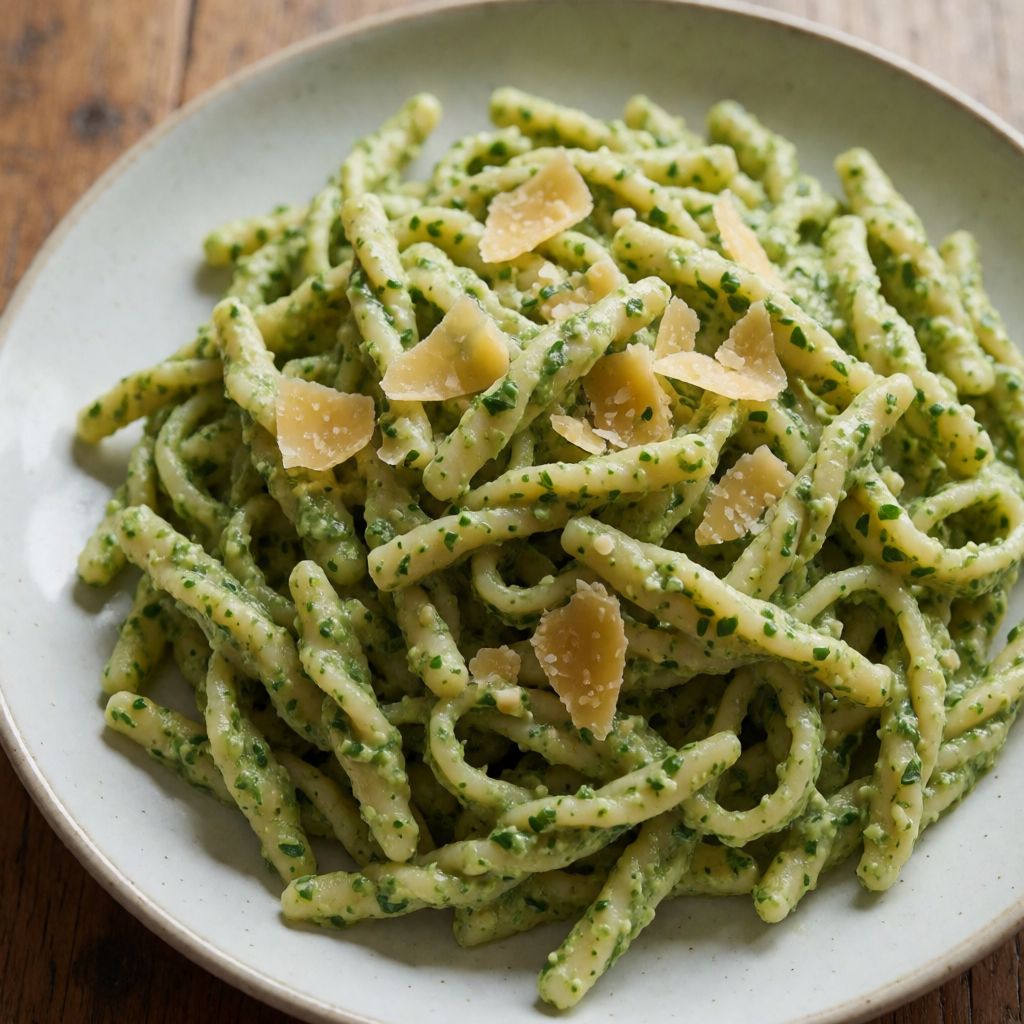
 AI photo
Trofie with Herb Pesto
A simple pasta dish tossed with a vibrant blend of fresh basil, herbs, almonds and parmesan.
Labels are worked out automatically from the ingredients and can be wrong. Check the packaging if it matters to you.
Ingredients
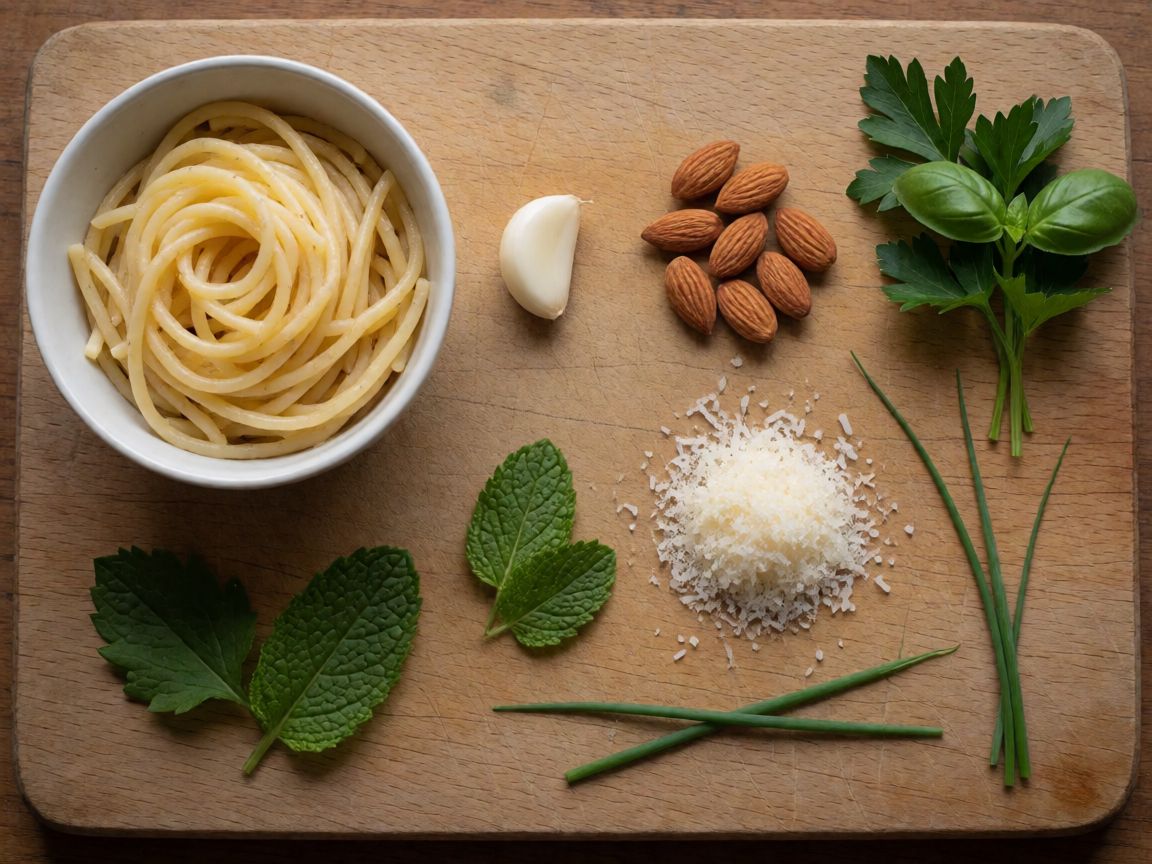
- 400 g Trofie
- 1 clove Garlic
- 100 g Almonds
- 2 tbsp Parmesan
- 1 bunch Basil
- 2-3 pcs Parsley leaves
- 2-3 pcs Mint leaves
- 2-3 pcs Chive stalks
- 2-3 pcs Marjoram leaves
- Olive oil to taste
- Salt to taste
- Black pepper to taste












Steps
Put the basil and all the herbs in a blender, add a pinch of salt and blend.
Add the almonds, parmesan, black pepper and olive oil, and blend until you have a smooth pesto.
Cook the trofie in a large pot of salted water.
5 minDrain the pasta, transfer it to a bowl and toss with the pesto.
Serve immediately.
Trofie are short little twists of pasta, and the twist isn't decoration — it's a trap. Pesto is thick, almost a paste, and a straight tube would let it slide straight off the fork. The spiral grips it. So really you're doing two jobs at once: boiling the pasta while a blade does in ninety seconds what a mortar and pestle used to need twenty minutes of patient bashing to achieve.
What decides whether this works is simple: this sauce is raw. Nothing here gets fried, nothing simmers. Which means every mistake happens in the blender, not on the stove. Run the blade too long and the friction heats the basil just enough to start cooking it from the inside — the bright green dulls toward khaki, the smell shifts from sweet grass to boiled spinach. That's the one failure you can't walk back. Short bursts, scrape down, short bursts again — not a continuous roar.
Some say pine nuts are non-negotiable, that without them it isn't real pesto. No — because pine nuts earned their place in Genoa for a dull reason: they grew on the hillsides right there, free for the gathering, while almonds had to be carted in and cost more. Nothing mystical about it, just supply. Almonds give you the same thing pine nuts give — fat to carry flavour and a bit of grain for texture — and they're cheaper and easier to find on an ordinary British shelf. The dish survives the swap fine; it just tastes slightly rounder, slightly less resinous.
Trofie themselves ask nothing special of you except a wide pot and water salted like the sea — enough that you can taste it on a stirring spoon. Five minutes is a lower bound, not a clock to set and walk away from: pull one out, bite it, and it should give with a little resistance, not crunch and not collapse to mush. If you can't find trofie, any short pasta with a groove or a twist — gemelli, fusilli, even cavatappi — will do the same job of catching the sauce; a smooth penne will just let it pool at the bottom of the bowl.
The herbs are doing almost all the talking, and basil is the one doing most of it — a whole bunch against a few leaves each of parsley, mint, chive and marjoram. Think of those smaller ones as seasoning for the basil rather than equal partners: parsley for green weight without extra perfume, mint and marjoram for a cool or warm edge you'll only half-notice, chive for a soft onion whisper that stands in for the raw bite of actual onion, which would be too much here. Salting the herbs before you blend isn't fussiness — salt starts pulling moisture out of the leaves straightaway, which helps them break down into paste instead of just shredding into confetti around the blade.
One clove of garlic, not three, because raw garlic never gets the mellowing that cooking gives it. In a fried dish, heat breaks garlic down and rounds it off; here it stays exactly as sharp as it goes in. Too much and it stops being a sauce for pasta and becomes a sauce you remember for the wrong reasons the next morning.
Almonds carry the fat and the body. If they feel dry when you taste one raw, you'll need more olive oil to bring the pesto to a spoonable paste rather than a crumbly one — that's exactly why the recipe leaves the oil open-ended instead of fixed; nut dryness varies batch to batch, and you're chasing a texture, not a volume. Walnuts or cashews work on the same logic — any nut with enough fat in it and not too loud a flavour of its own.
Parmesan here is a minor instrument, not the main one — two tablespoons, just enough salt and savoury depth to round the sharper green notes off, not the thick cheesy backbone you'd want in a carbonara. A hard, well-aged grating cheese does the same job; anything with no real age to it will just taste salty rather than deep.
And the oil: whatever you use, it should have no strong smell of its own fighting the basil for attention — a light, mild olive oil, nothing heavily peppery or green-tasting, which would compete rather than carry. This whole dish, start to finish, takes less time than it takes to get a roast into the oven on a Sunday — it belongs to a different kind of evening, the one where you've got twenty minutes and want something that still tastes like it was made on purpose.