
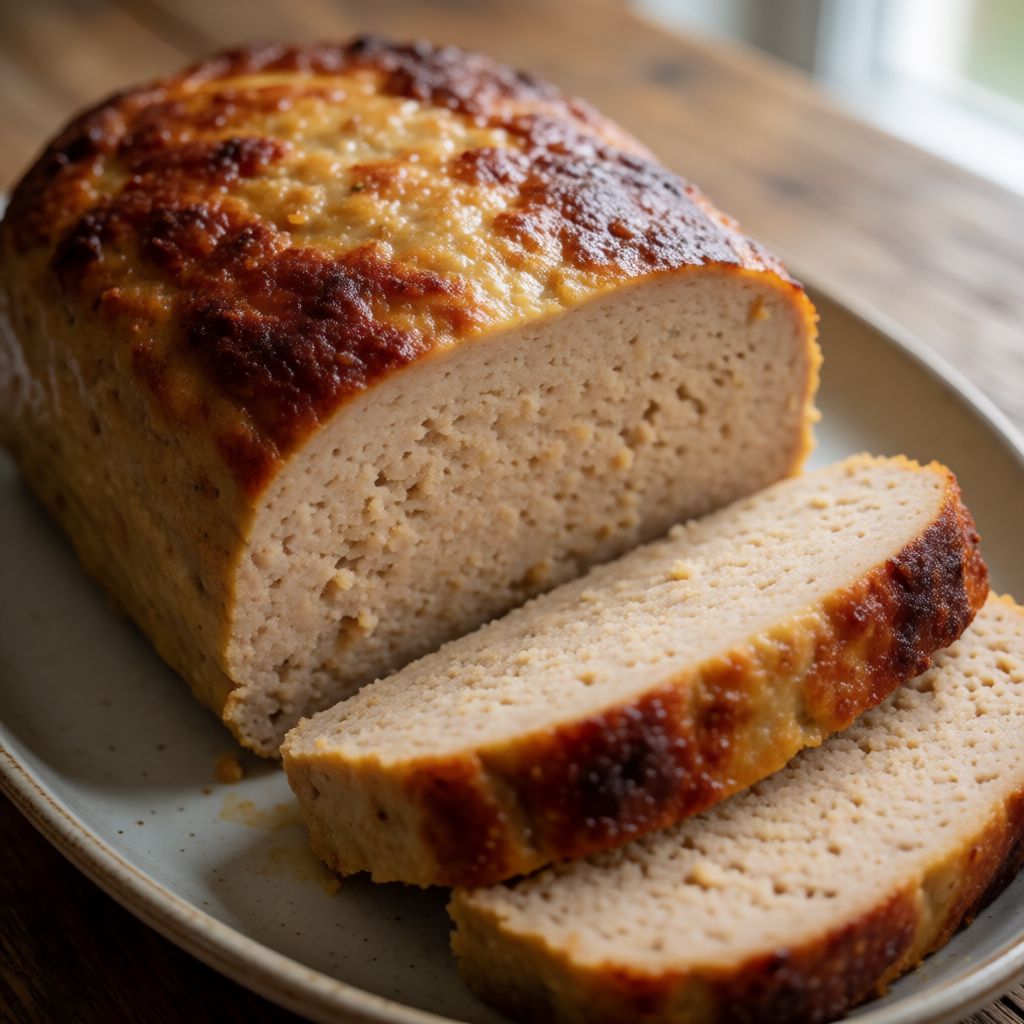
 AI photo
Easy Turkey Meatloaf
A simple, light turkey meatloaf, flavoured with herbs and Parmesan, finished in the oven.
Labels are worked out automatically from the ingredients and can be wrong. Check the packaging if it matters to you.
Ingredients
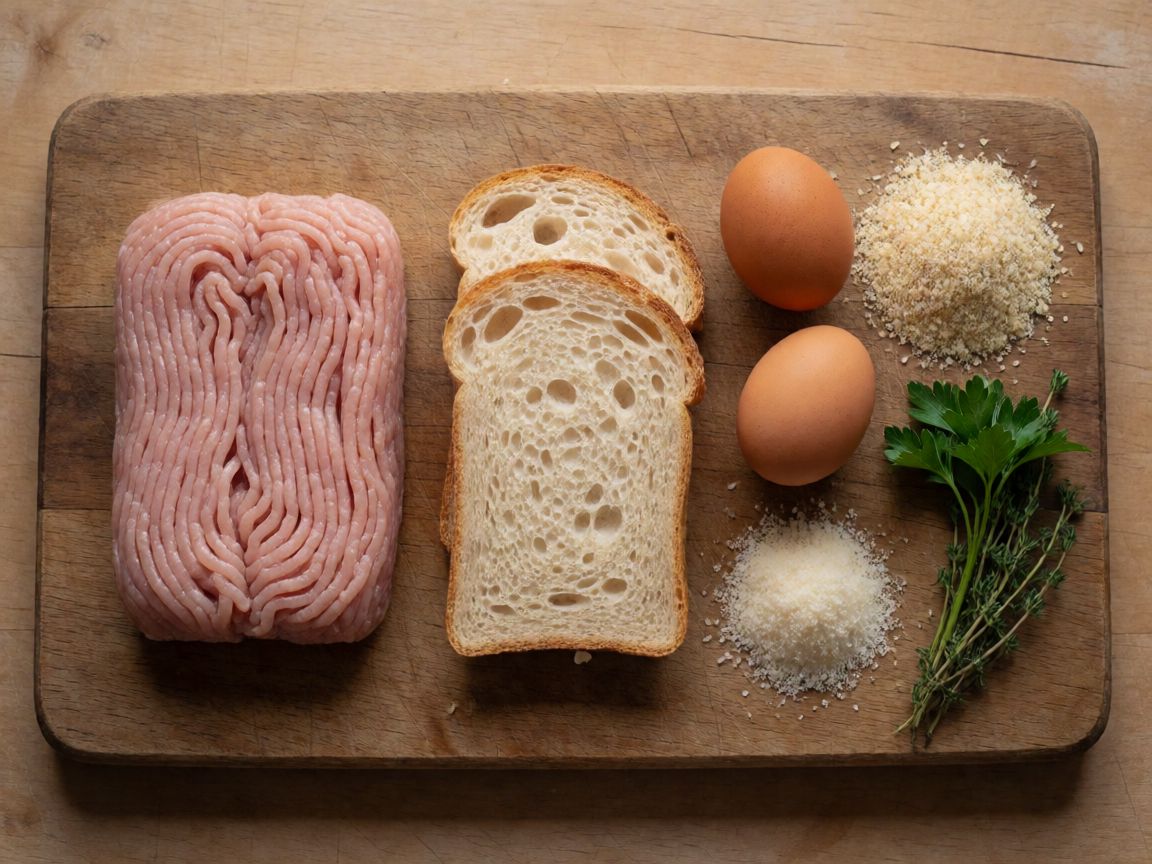
- 500 g Turkey mince
- 2 pcs White bread slices soaked in water, then squeezed dry
- 1 pcs Egg
- Breadcrumbs to taste
- Parmesan to taste
- Parmesan to taste
- Parsley to taste
- Thyme to taste
- Marjoram to taste
- Sage to taste
- Bay leaf to taste
- Salt to taste
- Black pepper to taste
- Olive oil to taste
- Garlic to taste
- 120 ml White wine












Steps
Soak the bread in water, then squeeze it dry. Mix it with the turkey mince, egg, Parmesan, parsley, salt and pepper into an even mixture.
Shape into a loaf and coat it in breadcrumbs.
Place the loaf on a baking tray lined with parchment paper.
Add the garlic, thyme, marjoram, sage and bay leaf, drizzle with oil and pour in the wine.
Bake at 180°C for about 50 minutes, until the centre reaches 71°C internally.
50 minLet the loaf cool and serve with mashed potatoes or a salad.
Turkey meatloaf is not a loaf of bread, it is a loaf of meat held together like one. You take mince that has almost no fat of its own and you give it borrowed moisture — soaked bread, an egg, a drizzle of oil and a glass of wine in the tray — so it can survive 180°C for the better part of an hour without going dry. Everything else is decoration.
The thing that decides whether this works is not the oven, it's water. Turkey breast mince runs lean on purpose — it's the cheap, quick-cooking cut of the bird, no marbling to melt and baste the meat from inside the way pork or beef fat does. Leave it unprotected and 50 minutes of dry heat turns it into something you could use to patch a wall. That's why the bread goes in soaked and squeezed, not as dry crumbs: squeezed bread is a sponge already full of water, and it releases that water slowly as the loaf heats, the way a wet towel cools a fever. Dry breadcrumbs mixed straight into the mince do the opposite — they drink whatever moisture the meat still has.
Some say turkey is always dry, whatever you do to it — no, because a fatty cut doesn't need rescuing, and turkey breast was never that cut. It needs you to add back, deliberately, what a cheaper fattier mince would have supplied for free. That's the whole logic of the panade, the egg, and the wine in the tray: compensation, not ceremony.
The mince itself: ask for turkey breast mince if you want this lean, pale result, or turkey thigh mince if you want something closer to what the whole method is built to fight against — a bit more fat, a bit more forgiving, slightly less dependent on the bread's help. Either works; thigh just gives you a wider margin for error.
The bread is doing the job cornflour does in Chinese cooking, or soaked crumbs do in a proper Italian polpettone — it's a moisture reservoir with no flavour of its own to get in the way. Any plain white bread works, crust and all, because it's being soaked and squeezed, not toasted. No bread in the house? A couple of tablespoons of porridge oats soaked the same way do the same job, or a slice of stale toast — stale is actually better, it drinks water faster than fresh.
The egg is the glue, not the moisture — one is the right number for 500g of mince. Put in a second and you'll feel the texture turn rubbery, bouncy, more sausage than loaf, because you've overloaded the protein that sets when it hits heat.
The Parmesan (listed twice here, which just shows how automatically people reach for it) is salt and savoury depth standing in for the fat that isn't there. A British habit would be to grab strong cheddar instead, and it does the same work, just with a sharper, more familiar accent.
The herb list — thyme, marjoram, sage, bay — isn't a luxury rack, it's what grew near a kitchen that also roasted a bird every Sunday. Sage earns its place with poultry especially: it's assertive enough to cut through turkey's blandness the way it cuts through goose or duck fat in a stuffing, which is exactly the tradition this combination comes from. Dried versions of all four are fine here; dried herbs are just concentrated, so use less.
The wine and olive oil go into the tray, not the mixture, and they're doing two separate jobs. The oil stops the loaf's underside and the paper from catching before the centre is anywhere near 71°C. The wine turns to steam and bastes the loaf from below for the first stretch of cooking, then reduces into a thin, winey jus with the garlic and herb oils in it — don't tip that liquid away, it's the only sauce this dish gets without you making one on purpose. No wine open — a splash of stock with a spoon of vinegar or lemon does the same acid-and-steam job, just blunter.
Let it rest before you cut it, the way you'd rest any roast. Sliced straight from the oven, a meatloaf bleeds its juices onto the board instead of back through the meat; ten minutes standing and that stops happening. Cold the next day, between two slices of bread, it's doing exactly the job cold roast beef does on a Monday — using up Sunday's cooking for a weekday lunch without lighting the oven again.