
 AI photo
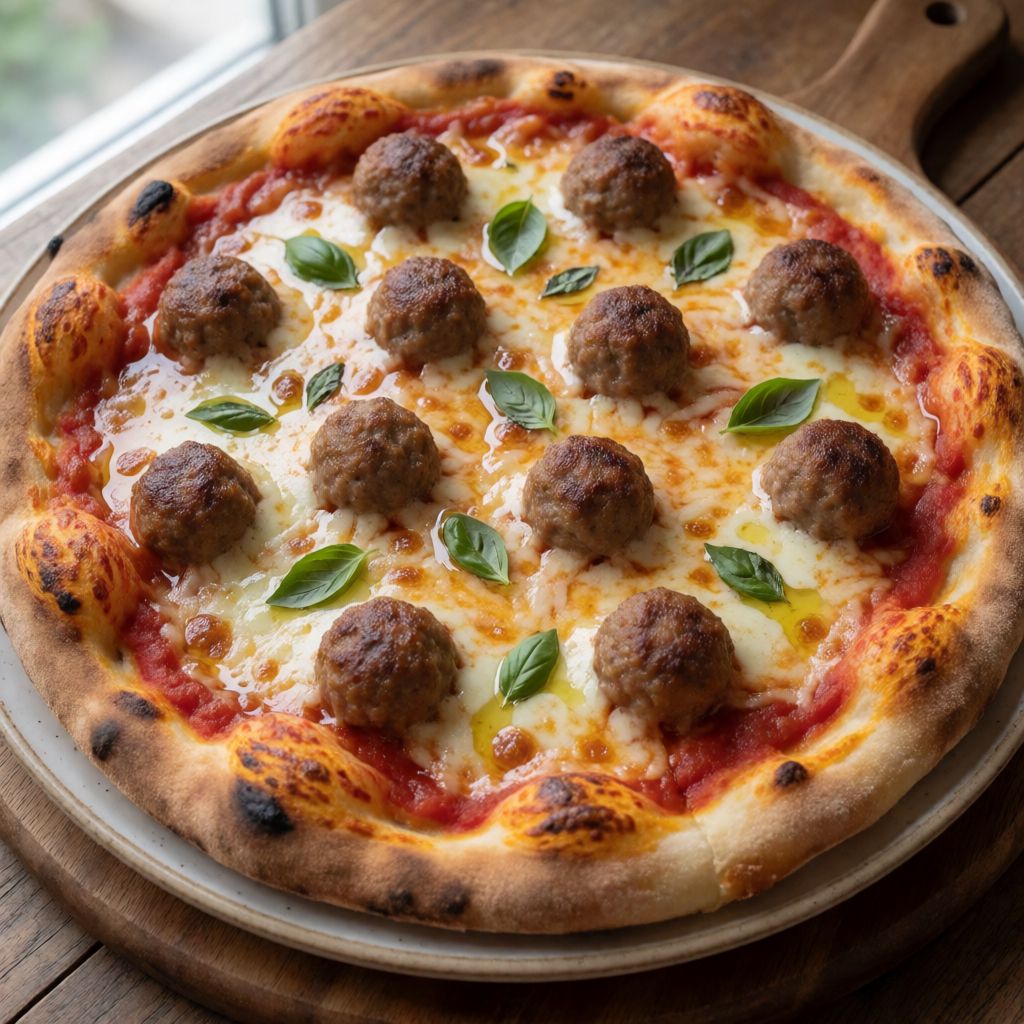
Pizza with Meatballs
A homemade pizza topped with tomato sauce, mozzarella, beef meatballs and rings of red onion.
Labels are worked out automatically from the ingredients and can be wrong. Check the packaging if it matters to you.
Ingredients
- 5 g Yeast
- 300 ml Water
- 45 ml Olive oil
- 1 tsp Salt
- 400 g Plain flour
- 100 g Durum flour
- 100 g Beef mince
- 1 pcs Onion finely grated
- 1 clove Garlic finely chopped
- 1 tsp Cumin
- 1 tsp Dried thyme
- 1 pcs Egg
- 40 g Plain flour
- pinch Black pepper freshly ground, to taste
- 4 tbsp Tomato passata or pizza sauce
- 125 g Mozzarella
- 1 pcs Red onion sliced into rings
- 2 tsp Thyme














Steps
Mix the water with the yeast, then add the plain flour, olive oil and salt.
Knead for a few minutes until you have a smooth, soft dough.
Gradually add the durum flour and knead thoroughly, preferably with a mixer, for 10–15 minutes.
Leave the dough to rise in the fridge for up to 18 hours.
Mix all the meatball ingredients and shape the mince into small meatballs.
Quickly fry the meatballs in a hot pan with oil for a few minutes, turning often.
Preheat the oven, ideally with a baking stone, to 250°C.
Shape two round pizza bases.
Spread the tomato sauce over the pizza bases along with the mozzarella, meatballs and onion rings.
Bake for 10–12 minutes or until crisp.
Before serving, sprinkle the pizza with fresh or dried thyme.
This is two things pretending to be one: a proper risen dough, and a meat sauce that's decided to skip the sauce stage and become little balls instead. What decides whether it works isn't the toppings, it's whether you respected the dough's need for time and the oven's need for brutal heat.
The dough is a slow-fermentation dough — a touch of yeast, a long cold rise. Five grams of yeast for 500g of flour is a starvation diet on purpose: not enough yeast to rush, so it has no choice but to ferment slowly in the fridge, over many hours, building flavour instead of just gas. Some say more yeast makes better pizza faster — no, because fast fermentation gives you bread that puffs and tastes of nothing but itself. A slow one gives you a base with actual character, blistered and a bit sour at the crust.
The meatballs are small for a reason: they need to cook through in the time the pizza spends in the oven, which is minutes, not the hour a Sunday joint gets. Fry them hard and fast first — that's not for doneness, it's for colour and a crust that holds its shape so they don't dissolve into the sauce once they hit the heat again.
And the oven is the real boss here. 250°C, as hot as your oven goes, ideally with a stone that's been sitting in there long enough to actually be hot all the way through, not just warm on the surface. A domestic oven at a proper pizzeria's 400°C+ doesn't exist in your kitchen — you're compensating with time and a stone that acts like thermal mass, storing heat and firing it back up through the base the second the dough touches it.
Flour: two kinds, and that's not fussiness. Plain flour gives you extensibility — it stretches without fighting back, which is what lets you shape a base instead of wrestling a toddler's ball of gym equipment. Durum flour is tougher, higher in gluten strength, and it's what gives the crust its chew and that slightly golden, grainy bite. If you've only got plain flour in the cupboard, use it all — you'll lose some chew, but you won't lose the pizza. Strong bread flour is the nearest swap if you want to approximate durum's backbone.
Yeast: fresh or dried, doesn't matter much here, because the dough isn't relying on the yeast to do the heavy lifting of flavour — the fridge is. The long cold rise, up to 18 hours, is doing slow enzymatic work that no amount of extra yeast can fake. Patience is the actual ingredient in this dough. Rush it and you get a base that's merely edible, not one that tastes of anything beyond "bread."
Olive oil: in the dough it's not for flavour so much as tenderness — fat coats some of the gluten strands and stops the crust turning into a cracker. Any neutral or mild oil works if your olive oil has a strong taste you don't want in your bread; save the good peppery stuff for finishing, not kneading.
The mince: beef, finely grated onion, garlic, cumin, thyme, egg and a little flour to bind — this is a meatball built on economy of movement, not a long-cooked ragù. Grating the onion rather than chopping it means it near-dissolves into the meat and releases moisture as it cooks, so the meatballs stay tender in a short fry rather than drying into pebbles. The egg and 40g flour are the binder — skip the flour and the balls can fall apart on you mid-fry; skip the egg and they're crumbly. Cumin in a British kitchen might look like a stray guest at this table, but it's doing what it's always done in minced meat — cutting through the fat, giving it a backbone the beef doesn't have on its own.
Mozzarella: choose the kind that comes in a ball in its own liquid over the pre-shredded bags built for bagged pizza — it melts to a softer, wetter stretch rather than a greasy skin, because it hasn't been dried out and anti-caked for a long shelf life. Drain it well or you'll be fighting a soggy base, which brings us to the real enemy of any home pizza: water. Tomato passata is thinner than a reduced pizza sauce, so go easy with the four tablespoons — too much, and it floods the dough before the oven's heat has a chance to seal it, and you get a base that's cooked on top and gluey underneath. That's not an oven failure, that's a sauce-quantity failure, and it's worth knowing the difference before you blame your equipment.
Red onion rings go on raw, because they're there for bite and a little sting against the richness of meat and cheese — the oven's heat softens them just enough in ten minutes without turning them into the sweet, collapsed thing a slow-roasted onion becomes. Some say red onion must always be pickled or softened first for pizza — no, because the whole point here is textural contrast, and a raw ring holds its own against melted cheese in a way a soft one can't.
Thyme at the end, fresh if you can get it, dried if you can't — this is a finishing herb, not a cooking one. Scatter it after the bake and its oils are still intact; bake it in from the start and most of what makes thyme thyme has already cooked off into the air of your kitchen rather than onto your plate.