
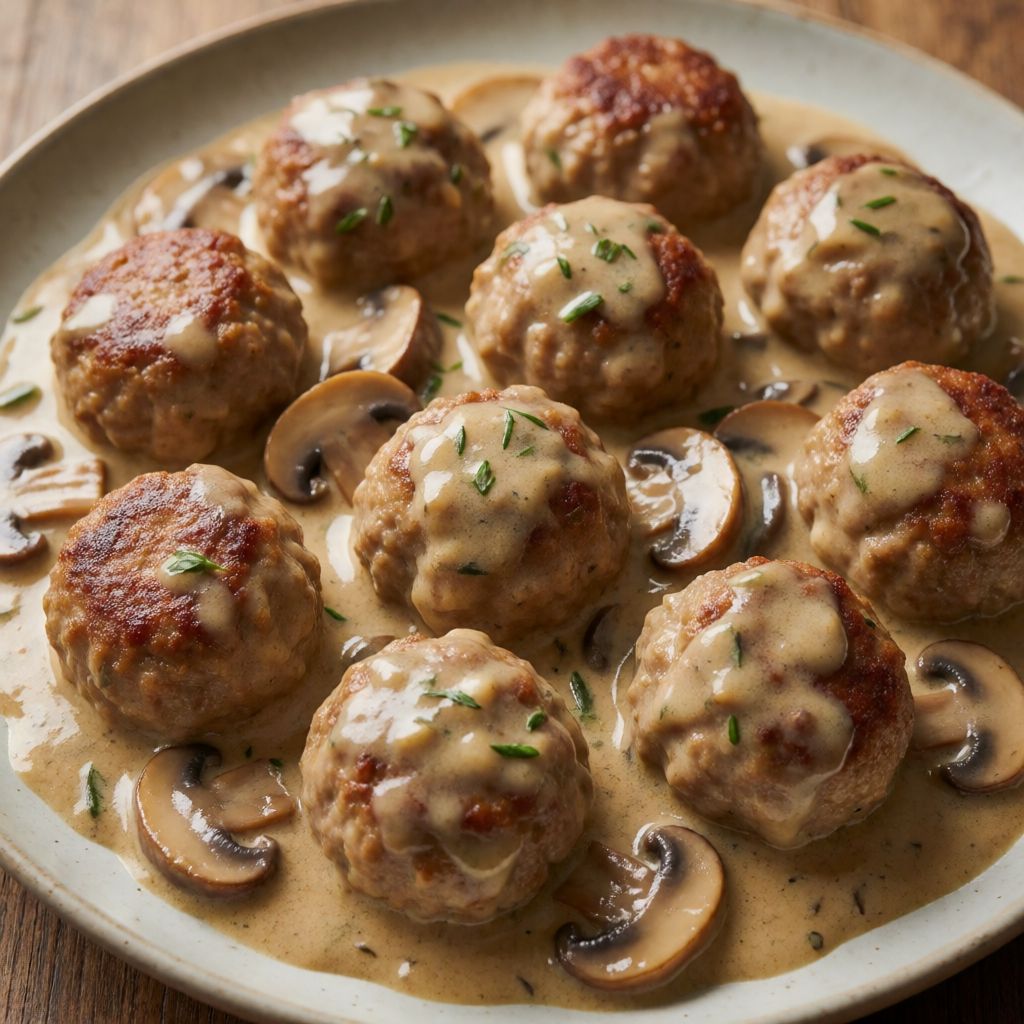
 AI photo
Meatballs in Mushroom Sauce
Pork meatballs simmered in a creamy mushroom and white wine sauce, served with gnocchi.
Labels are worked out automatically from the ingredients and can be wrong. Check the packaging if it matters to you.
Ingredients
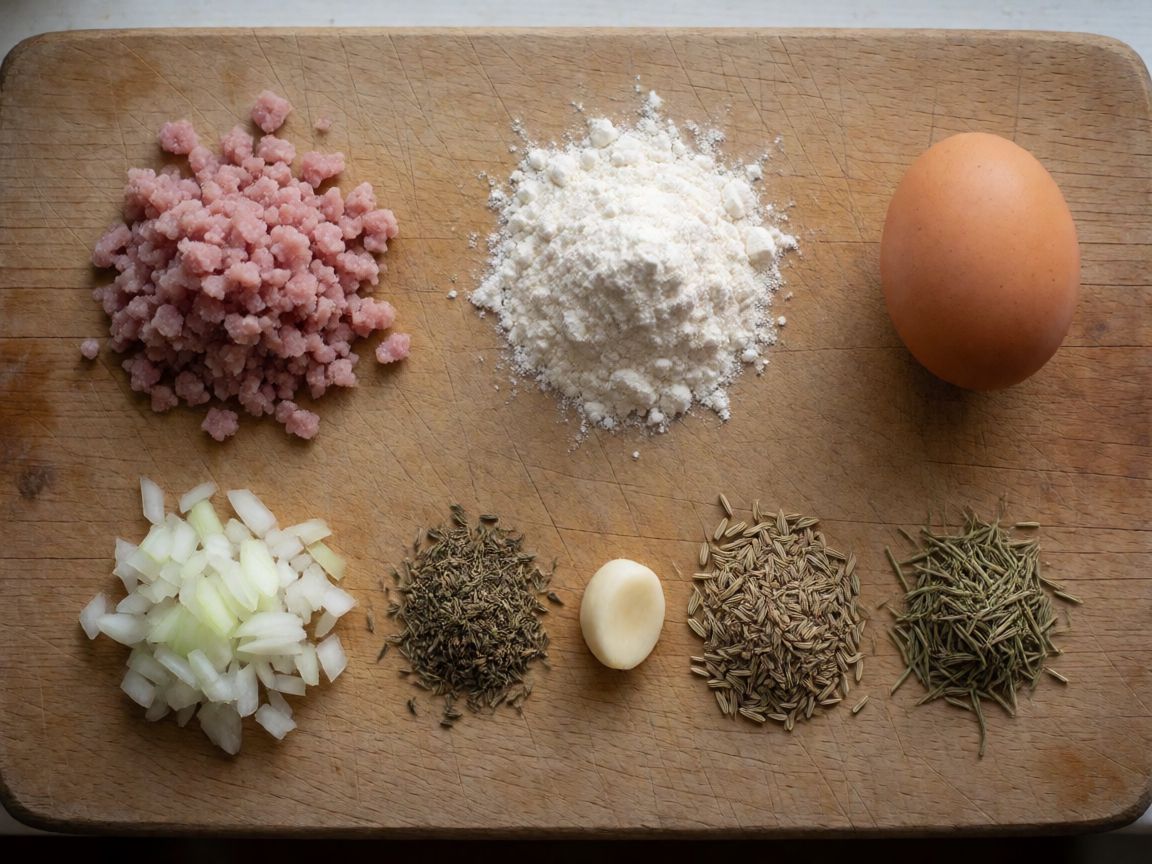
- 400 g Pork mince
- 2 tbsp Plain flour
- 1 pcs Egg
- 1 pcs Onion finely chopped
- 1 clove Garlic finely chopped
- 1 tsp Dried thyme
- 1 tsp Fennel seeds
- 1 tsp Dried rosemary
- Salt
- Black pepper freshly ground
- 300 g Mushrooms cut into quarters
- 1 pcs Onion finely chopped
- 2 clove Garlic finely chopped
- 1 tsp Dried thyme
- ½ tsp Dried rosemary
- 100 ml White wine
- 200 ml Stock
- 200 ml Double cream
- 1 tbsp Cornflour
- 350 g Gnocchi
- ½ pcs Lemon finely grated zest plus a little juice
- 1 bunch Parsley finely chopped
- 1 tbsp Olive oil for frying
- 5 g Butter for frying
- Salt
- Black pepper freshly ground

















Steps
Mix the ingredients for the meatballs and chill in the fridge for at least 30 minutes.
31 minShape the meatballs and fry over medium heat with butter and oil until golden brown.
Fry the mushrooms over high heat until golden, then add the onion, garlic, thyme and rosemary.
Mix the cornflour with the stock, add the cream and wine mixture, bring to the boil and return the meatballs to the pan.
Simmer the dish, add the gnocchi, heat through, then season with lemon zest and juice.
Serve sprinkled with finely chopped parsley.
This is a pork meatball cooked once, in two stages, and never pretending to be a stew. The meatball starts life frying in fat for colour, then finishes life simmering in a mushroom cream sauce — and that order matters more than any ingredient on the list. Colour first, liquid second. Reverse it and you get a grey, boiled meatball sitting in a nice sauce, which is a different and worse dish.
What decides whether this works is restraint in three places: how tight you pack the mince, how hot the pan is when the mushrooms go in, and how long you leave the meatballs alone once they hit the fat. Everything else — the gnocchi, the lemon at the end, the parsley — is dressing on a structure that either holds or falls apart in the first five minutes.
Some say mince for meatballs should be worked hard, kneaded like dough, to make them "hold together better." No — the opposite. Pork mince has fat running through it, and the more you handle it, the more that fat smears and melts under your hands before it ever sees heat. A meatball mixed too long turns dense and a bit rubbery, because you've pushed the fat out of its job, which is to melt slowly in the pan and keep the inside moist. Mix the egg, flour, onion, garlic and herbs in with a light hand, just until it holds — then stop touching it.
Pork mince is the right choice here because it carries enough fat on its own — you want something around 20% fat content if you're buying it loose from a butcher rather than a supermarket tray, because lean mince dries out into something like a dense dumpling once it's been fried then simmered twice through two different liquids. If pork isn't to hand, any mince with similar fat and a mild flavour works — turkey thigh mince, or beef mixed half-and-half with pork — but avoid anything too lean, because fat is what keeps a twice-cooked meatball from turning to cardboard on its second pass through the pan.
The egg and flour aren't there for taste. They're the glue — egg binds the proteins as they set, flour soaks up a little moisture and stops the mixture being too loose to shape. Too much flour and you've made a bread roll with pork in it; too little and the meatball falls apart the moment the sauce starts bubbling around it. Two tablespoons for 400g of mince is a light hand, which is correct — you want the meat holding itself together through its own protein, with the flour just helping at the margins.
Thyme, fennel seed and rosemary together is a pairing that comes from Italian sausage-making more than from any single recipe — fennel seed in particular is the flavour that tells your nose "this is pork," because it's been paired with pork fat in charcuterie for centuries, cutting through the richness instead of adding to it. If you don't have fennel seed, a pinch of ground fennel or even a crushed caraway seed does similar work — something aniseed-adjacent that lifts fat rather than sitting on top of it.
On the mushrooms: frying them over high, dry heat before anything else touches the pan is not optional theatre. Mushrooms are mostly water, and if you crowd them into a pan with onion and garlic from the start, they release that water immediately and you steam them instead of browning them — you get grey, slippery mushrooms instead of ones with a dark, savoury edge. High heat first, enough space in the pan to let steam escape rather than pool, and you wait for them to turn from pale and squeaky to deeply golden and slightly shrunk before the onion goes anywhere near them. Only then do the aromatics go in, because garlic burns in the time it takes mushrooms to properly colour, and burnt garlic is bitter in a way nothing in the sauce will hide.
The cornflour mixed into cold stock before it meets the hot pan is the standard trick against lumps — cornflour dropped straight into hot liquid clumps and cooks unevenly on the outside while staying raw in the middle, because the starch granules on the surface swell and seal before the ones inside get any heat at all. Stir it into cold liquid first and every granule gets wet evenly, so it thickens the sauce cleanly rather than leaving floury knots floating in your cream.
Wine, stock and cream going in together and coming to the boil before the meatballs return is the second cooking of the meat — this is the step people get impatient with, letting it come up to a gentle simmer rather than a hard boil, because a hard boil on a cream sauce can split it, the fat separating out as a greasy sheen rather than staying suspended. You're looking for slow, lazy bubbles at the edge of the pan, not a rolling boil in the centre. The meatballs finish cooking through here, gently, which is also why you don't need them fully cooked in step one — just coloured. Colour is for flavour and structure; the simmer is for doneness.
Gnocchi added near the end rather than boiled separately and added at the table is doing double duty — it cooks in the sauce itself, picking up flavour, and its surface starch thickens the sauce a touch more as it heats through. Watch it rather than time it: gnocchi that's ready floats, swells slightly, and turns from a hard little pillow to something that gives when you press it with a spoon.
The lemon zest and juice at the very end isn't garnish, it's correction — cream and mushroom together are heavy, round flavours with nothing sharp in them, and a squeeze of acid at the finish is what stops the whole dish tasting flat on the tongue by the third mouthful. Add it too early and the heat cooks the brightness out of it; add it at the end, off the heat if you can, and it stays alive.
On your hob, with a wide pan instead of a proper pot with a tight-fitting lid: use a plate to cover the pan loosely when you need to hold heat in during the simmer, and don't expect the same gentle, even heat a cast-iron pot gives you — a domestic ring runs hotter at the centre than the edges, so turn the pan now and then rather than trusting it to cook evenly on its own. This feeds four as a proper main, with nothing more needed alongside it than bread to get at the sauce — the gnocchi's already doing the job rice or potatoes would do in another dish.