
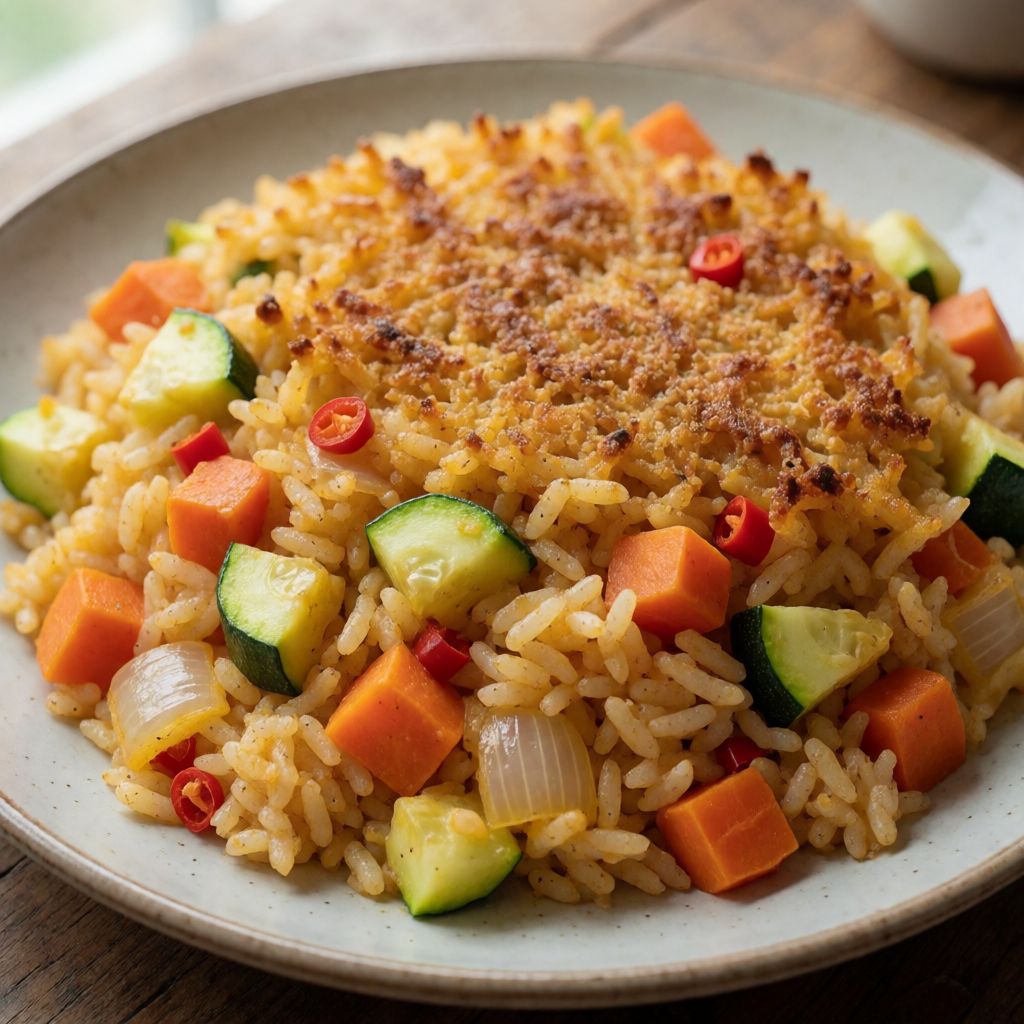
 AI photo
Mexican-Style Rice Bake
A one-pot Mexican-style rice bake with black beans, corn and smoky spices, topped with avocado and lime.
Labels are worked out automatically from the ingredients and can be wrong. Check the packaging if it matters to you.
Ingredients
- 2 pcs Onion finely chopped
- 4 clove Garlic finely chopped
- 2 pcs Carrot diced small
- 1 pcs Courgette coarsely grated
- ½ pcs Red chilli deseeded, finely chopped
- 2 tsp Cumin ground
- 2 tsp Ground coriander
- ½ tsp Cinnamon ground
- 2 tsp Smoked paprika
- 300 g Basmati rice
- 600 ml Stock
- 400 g Chopped tomatoes tinned
- 1 can Black beans
- 140 g Sweetcorn tinned or frozen
- 2 pcs Pepper diced small
- 125 g Tomato cut into thin wedges
- 3 tbsp Olive oil for frying
- Salt
- Black pepper freshly ground
- 1 pcs Avocado diced
- 1 bunch Coriander roughly chopped, fresh
- 125 g Cheddar freshly grated
- 1 tbsp Sriracha to taste
- 1 pcs Lime cut into wedges






















Steps
Put the onion, garlic and carrot into a pan with the oil and fry over medium heat until the onion softens.
Add the courgette, chilli, cumin, coriander, cinnamon and smoked paprika and stir well.
Rinse the basmati rice very thoroughly in a sieve.
Add the rice to the pan along with the stock and chopped tomatoes.
Bring to the boil, stirring, then reduce the heat and simmer with the lid on.
15 minAdd the beans, sweetcorn and pepper and bring back to the boil.
Cover, turn off the heat and leave to stand for 15 minutes.
15 minSeason with salt and pepper. Stir in the tomato wedges.
Serve on a platter with the toppings.
This is a pilaf wearing a sombrero — basmati cooked with vegetables and tomato, then finished with the toppings everyone actually fights over: avocado, cheddar, sriracha, lime. Call it a rice bake if you like the tin-tray image, but nothing goes in the oven. The whole thing happens in one pan on the hob, which is the point: no second pot for the vegetables, no colander of drained rice steaming up your window.
What decides whether it works is the same thing that decides any rice dish: the ratio of liquid to grain, and whether you let the rice finish cooking in its own steam rather than forcing it to drink everything on the boil. 300g rice to 600ml stock plus 400g tinned tomato is more liquid than a simple 2:1 water pilaf, because the tomato is also feeding the rice — some of that liquid is doing double duty as sauce. If your pan is wide and thin-bottomed, as most domestic hobs reward, liquid evaporates faster than in a heavy pot, so watch the rice, not the clock: it should look just below the surface of the sauce, swollen, with small craters where steam is pushing through. Fifteen minutes is where that usually happens, not a deadline.
A proper lid matters more here than people think, and in a flat kitchen you may not have one that fits. A plate pressed over the pan, slightly smaller than the rim, does the job: it traps steam without sealing it bone-dry, which is exactly what you want for the standing time. A tight lid that seals perfectly can actually work against you, trapping too much condensation that drips back and waterlogs the top layer of rice.
The vegetable order in step one and two isn't arbitrary. Onion, garlic and carrot go in first because they need real time over heat to soften — carrot especially; you'll know it's ready when a piece bends rather than snaps between your fingers, not by a stopwatch. Courgette, chilli and the ground spices go in after, because courgette is mostly water and collapses fast, and ground spices burn bitter if they sit in hot oil too long before liquid arrives. Toasting them for thirty seconds blooms their oils; toasting them for three minutes scorches them. Smoked paprika in particular turns acrid past its moment — that's the defect that paprika-heavy dishes most often suffer from, and it's always this, not "bad paprika."
The oil just needs to carry flavour without adding its own — olive oil does that here, but any neutral oil with no smell of its own works: sunflower, groundnut, even a mild rapeseed if that's what's in the cupboard. Save a more expensive, peppery olive oil for drizzling at the table, where you can actually taste it, rather than burning its character off in the pan.
Basmati rice is chosen for its length and its dryness when cooked — it stays separate rather than turning sticky, which matters when the pan is also full of beans, corn and diced pepper competing for texture. Short-grain rice would turn the whole thing into a stew; if basmati isn't available, any long-grain white rice will behave similarly, though basmati's aroma is part of why it's the standard choice here.
Tinned black beans and tinned or frozen sweetcorn exist for the same reason tinned tomatoes do: this is a weekday-pace dish built on things that are already cooked or ready, so nothing holds up the rice. Dried beans would mean soaking overnight and a much longer simmer — fine on a lazy Sunday alongside the roast, wrong for a dish that's meant to be on the table in under an hour.
The toppings are where the dish actually gets its character, and they go on cold or room-temperature on purpose — avocado, fresh coriander, grated cheddar, a squeeze of lime, sriracha for whoever wants heat. Stirring them into the hot rice would wilt the coriander, warm the avocado into something sadder, and melt the cheddar into the sauce rather than letting it sit as itself. Serve the rice hot, let people build their own plate, and the cold-hot contrast is doing as much work as any spice in the pot.