
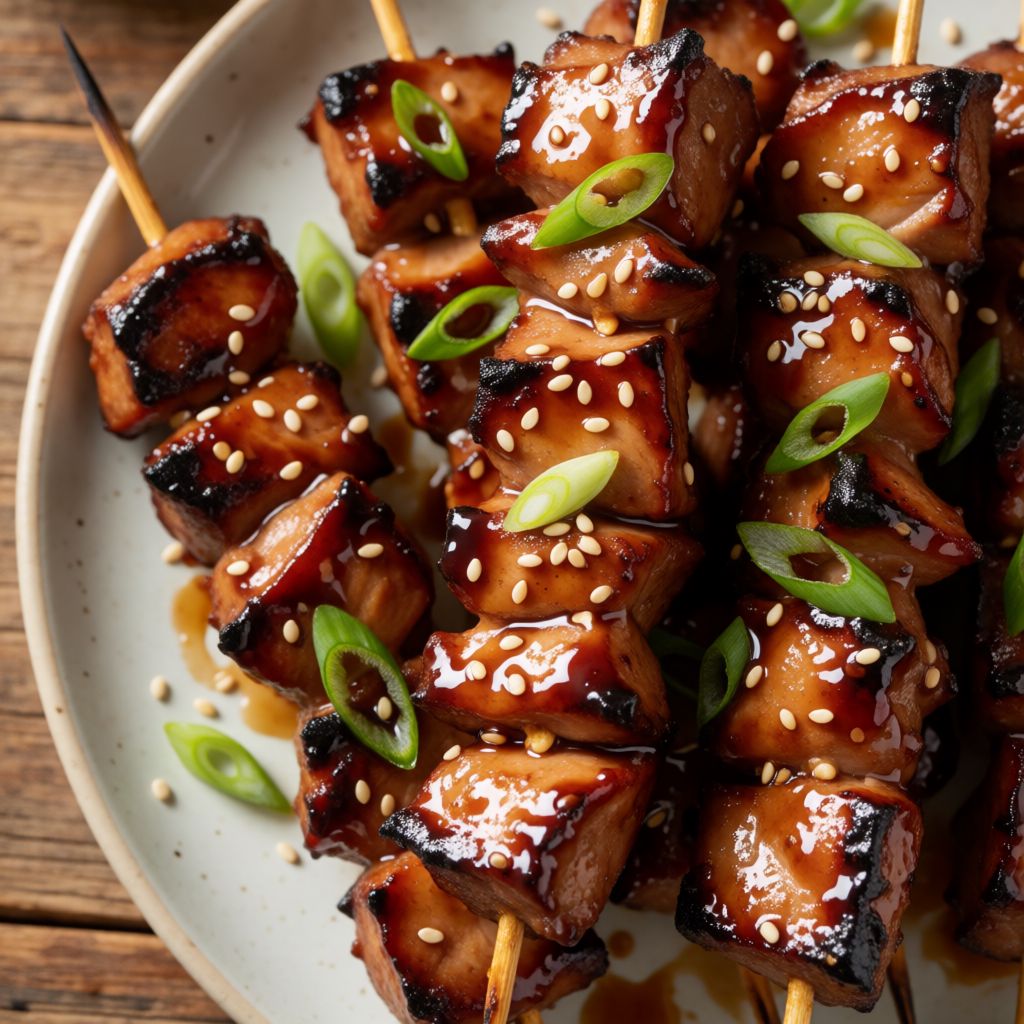
 AI photo
Chicken Teriyaki Skewers
Chicken breast strips marinated in a homemade teriyaki sauce, skewered and grilled until perfectly cooked.
Labels are worked out automatically from the ingredients and can be wrong. Check the packaging if it matters to you.
Ingredients
- 600 g Chicken breast cut into long, thin strips
- 100 ml Teriyaki sauce
- 3 tbsp Soy sauce
- 2 clove Garlic finely grated
- 2 tbsp Brown sugar
- 1 tsp Cornflour
- 2 tsp Ginger finely grated
- 3 tsp Rice vinegar
- 50 ml Water
- 1 tbsp Vegetable oil for frying
- 1 tbsp Coriander fresh, for serving
- 1 tsp Sesame seeds toasted, for serving












Steps
Put the teriyaki sauce, soy sauce, crushed garlic, brown sugar, ginger, rice vinegar and water into a saucepan. Sift in the cornflour and whisk together as the marinade comes to the boil.
5 minTake the pan off the heat and leave the marinade to cool completely in the fridge.
15 minToss the chicken strips with a few spoonfuls of the cooled marinade so the meat is evenly coated, then transfer to an airtight container.
2 minLeave the chicken to marinate in the fridge for at least 30 minutes, or overnight if you have time.
30 minThread the chicken strips onto skewers, folding them concertina-style and pressing the pieces firmly together.
5 minGet a frying pan or grill really hot, then brush it with oil.
2 minCook the skewers on all sides for 3-4 minutes per side, until cooked right through.
7 minBrush the hot skewers with the remaining teriyaki marinade as soon as they come off the heat, then scatter over the toasted sesame seeds and a little chopped coriander before serving.
1 min
This is chicken breast, cut into strips, threaded concertina-fashion onto a skewer and grilled hard, with a soy-ginger-garlic glaze doing two jobs — marinade first, lacquer second. The whole dish stands or falls on that split: you cook the marinade once, use half cold to flavour the raw meat, and keep the other half back, unsoiled by raw chicken juices, to brush on at the end so it turns glossy rather than sticky-raw.
The strip shape is not decoration. Chicken breast is lean and uneven in thickness — the thick end of a whole breast cooks slower than the thin end, so by the time the middle is safe the outside is dry rope. Cut it into long thin strips and you flatten out that gap: every bit of the meat is roughly the same distance from the heat, so it finishes at the same moment. Folding the strip concertina-style onto the skewer, pressing the folds tight, means the skewer grips meat, not air — a loose skewer is how strips spin instead of sear, and you end up steaming them in their own moisture rather than browning them.
The marinade itself is built the way a glaze always is: liquid, sweet, sour, and a thickener. Teriyaki sauce and soy sauce bring the salt and the base savouriness — soy sauce is fermented soybean, so it already carries umami that a plain salt-water marinade never could. Brown sugar is there to caramelise on the grill, not just to sweeten; white sugar would do the same job chemically, brown just adds a faint molasses note, so if you only have white sugar in the cupboard, use it and don't go looking for a special trip to the shop. Rice vinegar cuts the sweetness so the glaze doesn't taste like dessert — any vinegar with a light, not aggressive edge will do if rice vinegar isn't in the house; cider vinegar is the closer substitute, white wine vinegar at a pinch, but skip malt vinegar, its flavour is too loud for this.
Garlic and ginger, finely grated rather than chopped, dissolve into the liquid instead of sitting in lumps that burn on the grill before the meat is done — a burnt garlic fleck tastes bitter, and that bitterness is the real reason chopped garlic in a marinade sometimes ruins the dish, not "too much garlic" as people often blame it.
The cornflour is the one ingredient that looks like an afterthought and isn't. Sifted in and whisked as the sauce comes to the boil, it thickens the marinade just enough that it clings to the meat instead of running off into the pan — without it you'd have a thin soy-water that flavours but never glazes, because a sauce that's too liquid can't hold onto hot metal long enough to caramelise.
The water and the cooling step matter together. Cooling the marinade before it touches raw chicken stops you from essentially poaching the meat in warm liquid, which would start cooking the surface and change the texture before it ever reaches the pan — marinating is about diffusion of flavour, and diffusion needs the meat to stay raw and intact while it happens.
Keep half the marinade back, untouched by raw chicken, specifically so it's safe to brush on cooked meat at the end — this is the one food-safety point worth being strict about, because a sauce that's been sitting with raw poultry juice is not something you want glazing food that's already finished cooking.
Vegetable oil here just needs to have no flavour of its own and a reasonably high smoke point — sunflower or a bland rapeseed oil both work; don't reach for olive oil, its flavour fights the soy and ginger, and at grill heat a good olive oil's point is wasted anyway.
Sesame seeds and coriander at the end are not garnish for show — toasted sesame adds a nutty crunch the dish otherwise lacks entirely, and coriander's sharp greenness cuts the richness of the glaze. If coriander isn't to your taste or your shop's run out, spring onion tops, finely sliced, do a similar job of freshness without copying the flavour.
And patience is doing real work twice here — once while the marinade cools, once while the chicken sits in the fridge. Thirty minutes is the floor; overnight gets you strips where the flavour has actually gone in rather than just sitting on the surface. Skip the wait and you've made chicken brushed with sauce, not chicken teriyaki.