
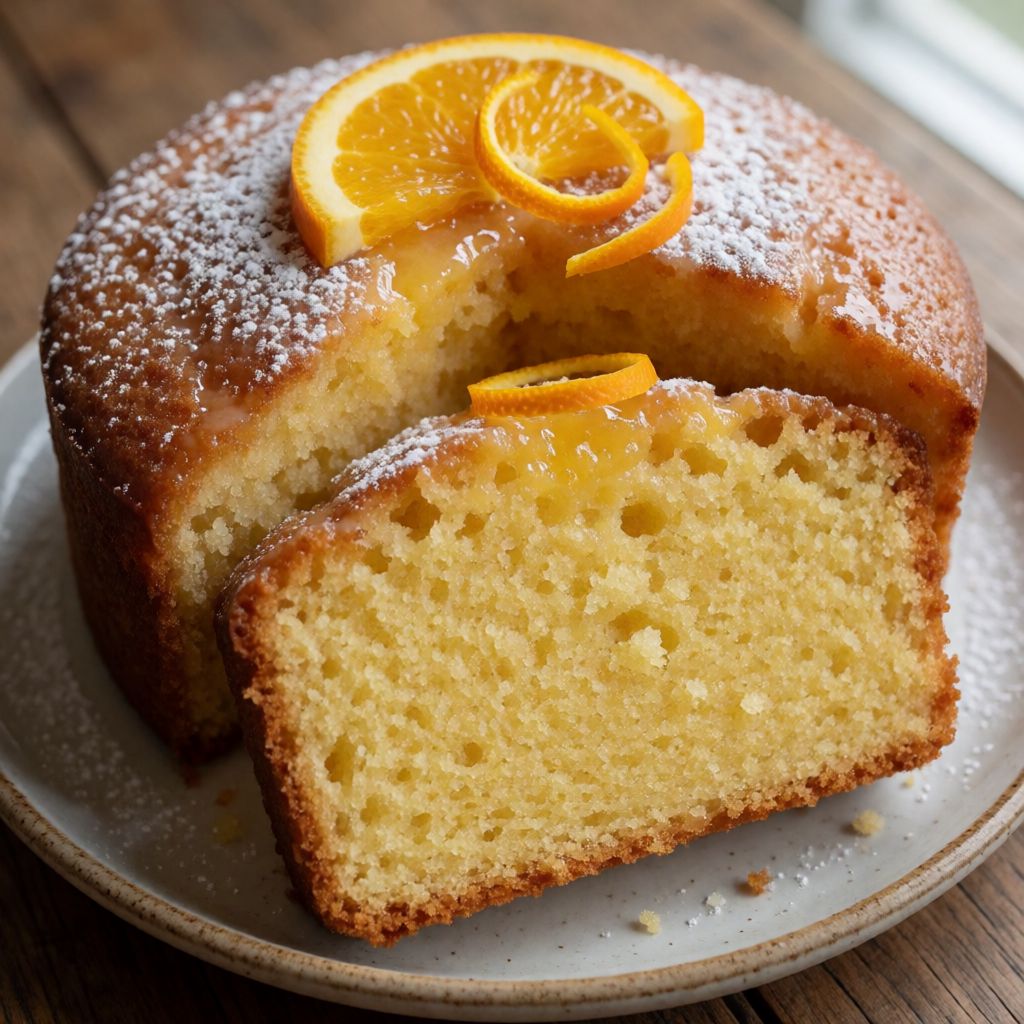
 AI photo
Orange Cake
A fragrant orange cake with white chocolate and almond flour, topped with cream cheese icing, orange segments and nuts.
Labels are worked out automatically from the ingredients and can be wrong. Check the packaging if it matters to you.
Ingredients
- 200 g Butter room temperature
- 170 g Sugar
- 4 pcs Eggs
- 2 pcs Orange finely grated zest, plus a little juice for the cream cheese icing
- 2 tsp Baking powder
- 150 g Plain flour
- 60 g Almond flour
- 75 g White chocolate roughly chopped
- 150 g Cream cheese
- 2 tbsp Maple syrup
- 1 pcs Orange cut into segments
- 30 g Walnuts roughly chopped
- 30 g Hazelnuts roughly chopped
- 30 g Pistachios roughly chopped












Steps
Beat the butter with the sugar until light and fluffy.
Then beat in the eggs one at a time.
Mix the orange zest and baking powder with the plain and almond flours, fold gently into the batter, then add the white chocolate.
Spoon the batter into a greased 24 cm springform tin.
Bake in a fan oven preheated to 175°C for 40–45 minutes, until fully cooked through.
45 minLet the cake cool completely before decorating.
Mix the cream cheese with the maple syrup and adjust the consistency with a little orange juice.
Spread the icing over the cooled cake, decorate with orange segments and sprinkle with the nuts and orange zest.
This is a butter cake wearing citrus and nuts as a Sunday best — the kind of thing that sits well next to tea with milk because it isn't trying to be a French layer cake. It's dense but not heavy, a crumb held together by butter and almond flour, lifted by eggs beaten in properly, and perfumed rather than drenched with orange. What decides whether it works is entirely in two places: how you beat the butter and sugar at the start, and how honestly you judge "cooked through" at the end, because a springform tin and a domestic fan oven will lie to you if you let them.
Creaming butter and sugar isn't decoration — it's where your rise lives. You're not dissolving sugar, you're cutting air into fat, thousands of tiny pockets that the sugar crystals' sharp edges help carve. That's why the butter has to be at room temperature: cold butter won't hold air, it just resists the beater and stays dense; melted butter has already lost the structure that trapped air needs to sit in. Some say you can skip this and let the baking powder do all the lifting — no, because baking powder only expands gas that's already there in small bubbles. Ask it to create lift from nothing in a stiff, unaerated batter and you get a cake that rises in the middle and sinks at the edges, dense and a bit sad.
On doneness: 40–45 minutes at 175°C fan is your lower bound, not your answer. Ovens vary, especially domestic ones where the thermostat cycles a good 10–15°C either side of what the dial says, and a dark metal tin bakes faster at the edges than a pale one. The real test is a skewer or thin knife in the centre coming out clean, or the top springing back when you press it lightly rather than leaving a dent. Some say a cracked top means it's overbaked and ruined — no, a little cracking on a dense butter cake like this is just the crust setting before the centre finishes expanding; it's not a verdict on taste, just on looks, and the icing covers most sins anyway.
Letting it cool completely before icing isn't fussiness, it's physics. Cream cheese icing is partly held together by fat that's solid at room temperature; put it on a warm cake and that fat starts to melt, the icing slides instead of sitting, and you get a greasy puddle instead of a spread. Patience here is the actual ingredient — rushing this step doesn't save you time, it just moves the mess from the oven to the plate.
On the butter: room temperature means you can press a dent into it with your finger without it collapsing or feeling greasy — not fridge-cold, not sat-by-a-radiator soft. If you've forgotten to take it out, do not microwave it to speed things along; you'll melt the edges before the centre softens, and melted butter won't cream. Cut it into smaller pieces and give it twenty minutes instead.
On the flours: plain flour here is just flour with moderate gluten — nothing exotic, any UK plain flour does the job. Almond flour is ground almonds, skin-on or blanched; if you haven't got any, you can replace it with more plain flour, but expect a slightly tougher, less moist crumb, because you've lost the fat and lack of gluten that almond flour brought. Don't substitute almond flour with ground almonds from the baking aisle that are coarse — it changes the texture more than people expect.
On the orange: you want the zest, which is where the oil and the actual citrus perfume live, not the juice, which is mostly water and acid with little scent of its own. Grate finely so you get the coloured oil-bearing skin and none of the bitter white pith underneath — that's the whole difference between a cake that tastes of orange and one that tastes of nothing with a faint sourness. The second orange, in segments on top, is there for looks and a fresh bite against the sweet icing; any firm citrus you can segment cleanly works, though orange suits a nut-and-chocolate cake better than something sharper like grapefruit would.
On the nuts: walnuts, hazelnuts, pistachios chopped roughly and scattered on top are about contrast — crunch against the soft icing, bitterness against the sweetness, colour against the orange. Use whatever mix of these three, or any unsalted nut you have that toasts well, you're not bound to exactly these three; what matters is roughly chopped, not ground, so they stay as texture rather than disappearing into the icing.
On the cream cheese icing: maple syrup sweetens it without the grainy sweetness plain icing sugar brings, and the orange juice is there purely to loosen the consistency to spreadable — add it a teaspoon at a time, because cream cheese goes from stiff to runny faster than you'd think, and there's no good way back once it's too thin.