
 AI photo
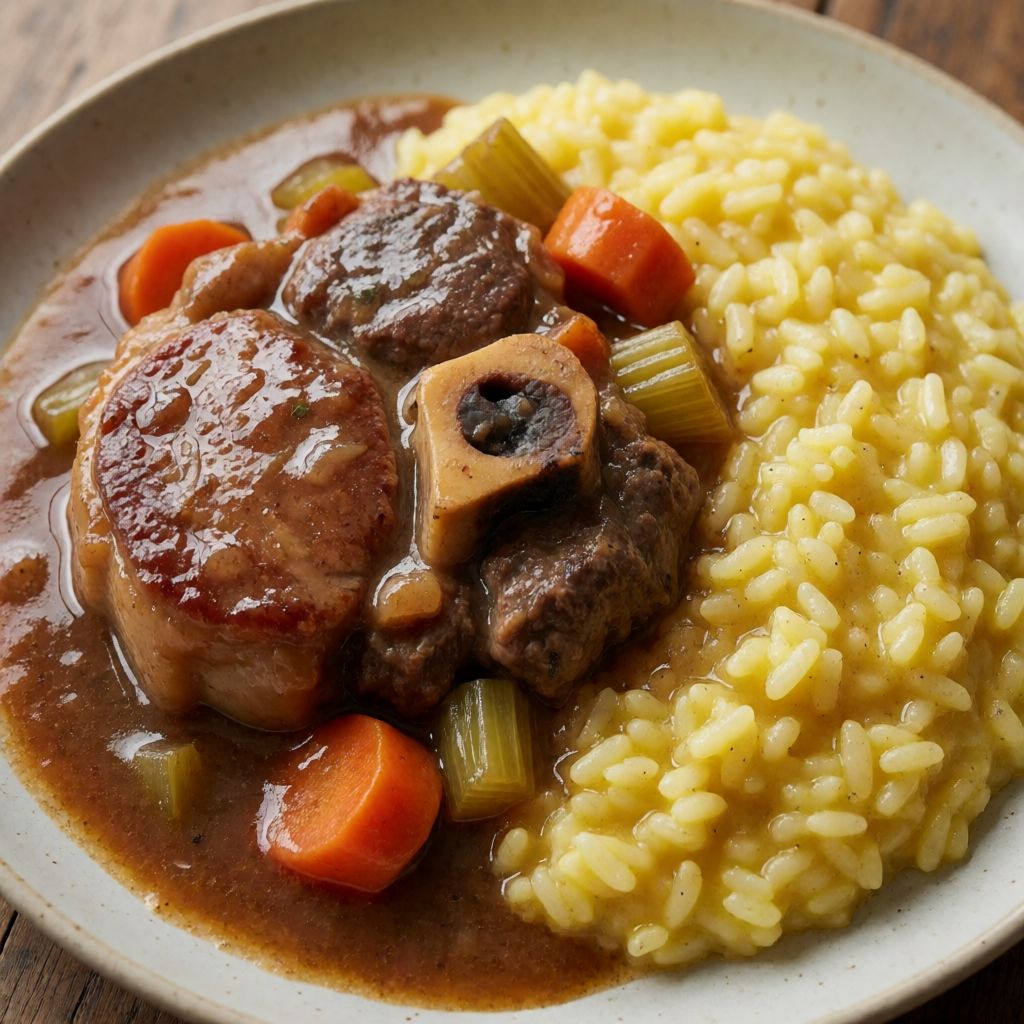
Osso Buco with Saffron Risotto
Slow-braised veal shanks in a rich tomato sauce, served with creamy saffron risotto and a zesty gremolata.
Labels are worked out automatically from the ingredients and can be wrong. Check the packaging if it matters to you.
Ingredients
- 8 pcs veal shanks
- 60 g plain flour
- 2 pcs onion finely chopped
- 3 clove garlic finely chopped
- 4 pcs carrot finely chopped
- 4 pcs celery finely chopped
- 800 g canned chopped tomatoes
- 45 ml tomato paste
- 300 ml wine
- 3 pcs bay leaves
- 700 ml stock
- 30 ml olive oil for frying
- salt
- black pepper freshly ground
- 1 pcs onion finely chopped
- 2 clove garlic finely chopped
- 300 ml risotto rice
- 1 pinch saffron
- 200 ml white wine
- 500 ml stock
- 50 g Parmesan freshly grated
- ½ pcs lemon finely grated zest
- 1 tbsp butter
- 300 ml parsley finely chopped
- 2 clove garlic
- 1 pcs lemon finely grated zest





















Steps
Pat the meat dry with paper towel and dust it in plain flour mixed with salt and pepper.
Heat the oil in a pot, brown the veal shanks on both sides, a few pieces at a time, and set them aside.
Add a little more oil to the pot and fry the onion and garlic until soft.
Add the carrot and celery and cook for a few more minutes.
Add the chopped tomatoes, tomato paste, wine and bay leaves.
Place the meat pieces in the pot, pour in the stock and cover with a lid.
Simmer for 3 hours – after about 2 1/2 hours it's time to prepare the risotto and the gremolata.
Saffron risotto: melt the butter in a pan and fry the onion and garlic until soft.
Stir in the rice and the saffron mixture, then pour in the white wine.
Stir until the rice has absorbed all the liquid, then add 100 ml of vegetable stock at a time until the rice is tender.
At the end, stir in the freshly grated Parmesan and season with the grated lemon zest, salt and pepper.
Gremolata: mix the parsley and garlic in a bowl and combine with the grated lemon zest.
Serve the osso buco with the risotto, sprinkled with gremolata.
What was changed
The meat was changed to veal shanks.
Osso buco is a dish built on a bone, not a cut. "Osso buco" literally means "bone with a hole" — that hole is the point. The veal shank has marrow running through it, and three hours of low, lazy simmering lets that marrow soften, melt a little into the sauce, and turn what would otherwise be a tough working muscle into something that gives way under a spoon, not a knife. What decides whether this works isn't the tomato, the wine, or even the saffron rice sitting next to it — it's whether you respected the shank's own timetable. Rush it and you get stringy meat sitting in a nice sauce, which is not the same dish.
The flouring before browning isn't decoration. It does two jobs: it gives you a crust that holds its shape instead of turning grey and boiled, and it quietly thickens the braise later as the flour's starch cooks out into the liquid. Brown in batches, not all eight shanks at once — crowd the pot and the meat steams in its own moisture instead of catching colour, and you lose the fond (that browned residue) the whole sauce depends on for depth.
The second half of the plate, the saffron risotto, runs on a completely different clock and a completely different logic: not long slow breakdown, but constant small additions of hot liquid so the rice releases starch gradually and ends up creamy without being stirred into glue. Some say risotto needs a kazan-like heavy pot and a lot of fuss — no, it needs attention, which is cheaper than equipment. A wide pan on a normal UK hob does the job; what it won't forgive is you wandering off to put the kettle on tea while it cooks.
Veal shank is the whole engine here, and you choose it by the bone and the collar of meat around it, not by weight alone — you want a good ring of meat with marrow visibly filling the centre, not a thin bone with scraps. If veal shank isn't to hand or the price makes you wince, beef shin on the bone will braise the same way, just expect a slightly deeper, beefier result and possibly a longer stretch under the lid, since beef muscle is tougher than veal.
The vegetable base — onion, garlic, carrot, celery — isn't there for bulk. It's the classic soffritto-style foundation: cooked gently until soft (not coloured hard), it sweetens as it breaks down and disappears into the sauce, giving body without you needing to add cream or extra fat. Chop it finely and evenly, because unevenly cut vegetable throws unevenly cooked vegetable into the braise, and you'll find hard flecks of carrot three hours later when everything else has surrendered.
Tomatoes — canned, chopped, plus paste — do the acid and sweetness work and, with the wine, start building the sauce that will coat the meat. Wine here isn't about getting drunk on flavour; the alcohol cooks off over the long simmer and what's left is the acidity and fruit that balance the richness of the marrow. Any dry wine you'd actually drink is fine — don't buy a "cooking wine," which is usually just a wine someone decided not to drink, badly.
The stock carries the simmer. Use a stock with actual body — a proper beef or veal stock if you can get it, vegetable stock if that's what's open — because this liquid isn't a background note, it's most of what the meat sits in for hours. A thin, salty stock cube dissolved in water will leave the whole pot tasting thin too.
For the risotto: the rice has to be a short-to-medium grain type bred to release starch — arborio, carnaroli, that family — because ordinary long-grain rice (the kind you'd put under a Sunday roast's gravy) won't break down the same way and you'll get separate grains in liquid, not creaminess. Saffron is there for colour and a faint, specific bitterness-edged aroma; a pinch goes a long way, and there's no real substitute — turmeric will give you yellow and nothing else, so don't bother pretending. Parmesan and butter stirred in at the end, off the heat, bind the starch and fat into that glossy finish; add them too early over high heat and they can split or turn grainy instead of silky.
Lemon zest, in both the risotto and the gremolata, is doing acid work without adding liquid — zest the lemon with a fine grater or zester, avoiding the white pith underneath, which is bitter and will undo the point of adding it at all.
On time: the recipe says three hours for the osso buco and that's a floor, not a target to beat. A domestic hob runs hotter and less evenly than professional equipment, so check the pot isn't boiling hard — you want a bare simmer, the surface barely moving, lid mostly on. If it's rattling and spitting, the outside of the meat will cook long before the marrow and connective tissue have had time to soften, and you'll end up with dry shreds in a good sauce, which is the opposite of what three hours is meant to buy you. The tell for doneness isn't the clock: it's the meat starting to loosen from the bone and the marrow turning soft enough to scoop with the small spoon that traditionally comes with this dish — that's patience being spent correctly, not time being watched nervously.