
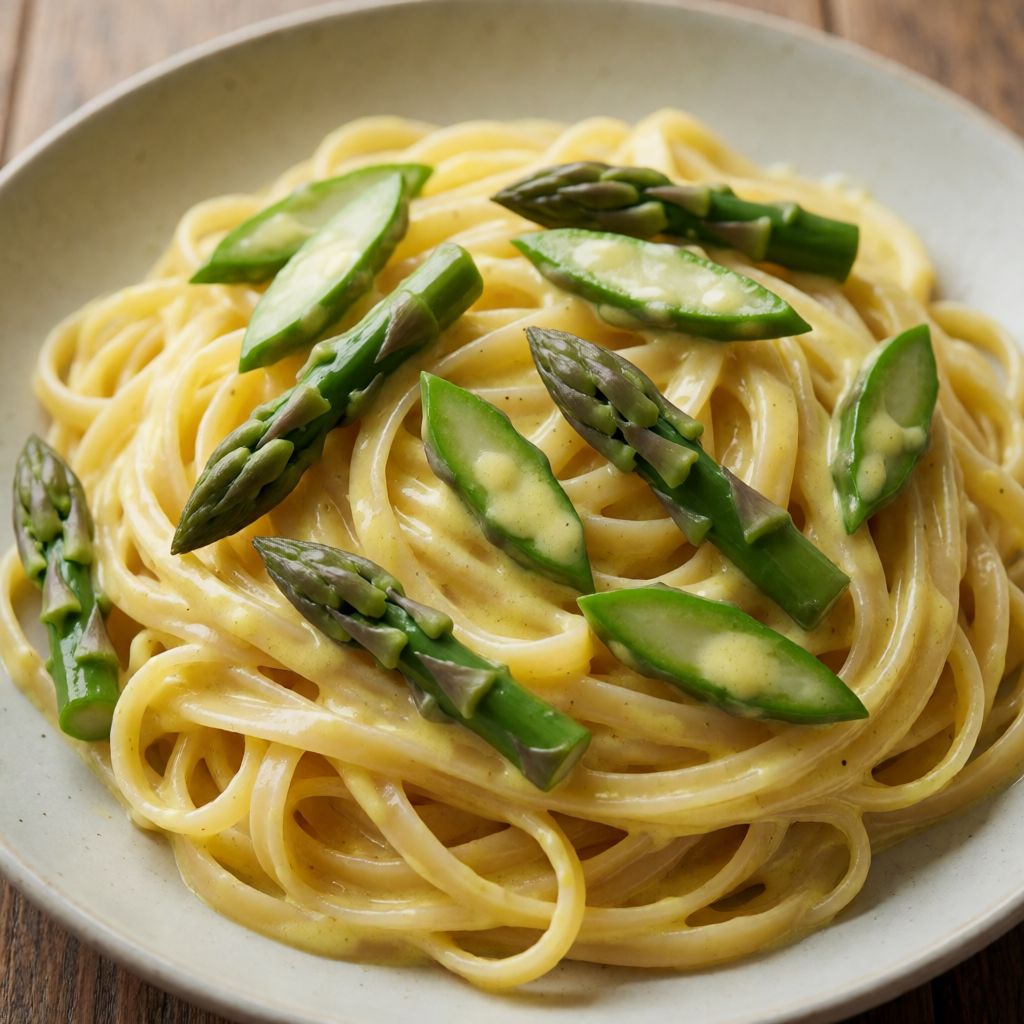
 AI photo
Pasta with Asparagus
A creamy saffron pasta tossed with tender asparagus and finished with Parmesan.
Labels are worked out automatically from the ingredients and can be wrong. Check the packaging if it matters to you.
Ingredients
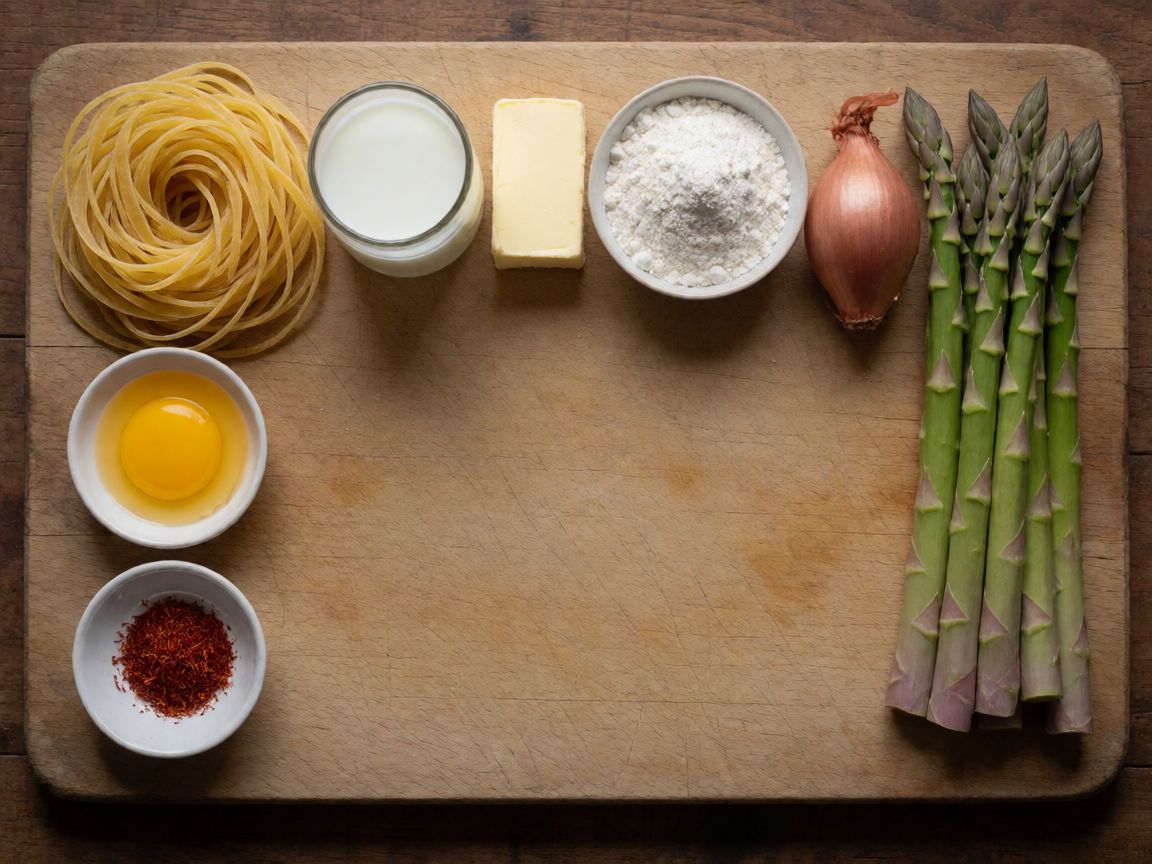












Steps
Wash and trim the asparagus.
In a saucepan, melt the butter and add the sifted flour, whisking well.
Gradually pour in the milk, add salt and black pepper, and bring to a boil.
2 minAdd the Parmesan, egg yolk and saffron, cook for 2 minutes, stirring.
2 minSauté the shallot in olive oil for a few seconds, add the chopped asparagus and water, cook for 4-5 minutes.
5 minAdd a little more water and cook for another 4-5 minutes, until the water has evaporated.
5 minAdd salt and black pepper to taste.
Meanwhile, cook the pasta.
Pour the saffron sauce over the asparagus and mix.
Toss so the sauce coats the pasta evenly, plate up and serve with Parmesan.
This is a béchamel built up into something closer to a velouté, coloured with saffron, poured over asparagus, and married to pasta. Three separate things happen in three separate pans — sauce, vegetable, pasta — and the whole dish stands or falls on whether you bring them together at the right moment, not on any single ingredient being exotic.
What decides it is the sauce. A flour-and-butter roux cooked too far goes brown and tastes of biscuit, not of milk — you want it pale, just enough to lose the raw-flour smell, maybe 1-2 minutes over a heat where the butter bubbles gently but doesn't spit and brown at the edges. Pour the milk in gradually, not because tradition says so but because a cold liquid hitting a hot thickened paste all at once seizes into lumps — a little at a time, whisked in, keeps it smooth.
Some say saffron needs soaking in warm water first to "release" its colour — no, because a pinch stirred straight into a hot milk sauce has plenty of time and fat-and-liquid contact to bloom in the two minutes it simmers; soaking is a habit from dishes where saffron meets dry rice or cold liquid briefly, not a universal law.
The asparagus is cooked almost like a risotto component — a splash of water, simmer it off, another splash, simmer that off too — which braises it gently rather than boiling it in a flood, so it keeps shape and a little bite instead of turning to grey threads. The stalk should bend slightly before it gives, not snap clean — that's your cue, not a clock.
Pasta: 360 g for four people is a normal UK packet-and-a-bit; any shape that catches a loose, creamy sauce works — a short twist or a tube holds it better than a thin strand, which the sauce will just slide off. Cook it in well-salted water, not because salt is tradition but because pasta cooked in unsalted water tastes of nothing no matter what you pour on top later.
Milk and butter and flour are the body of the sauce — a classic béchamel ratio, roughly 30 g fat to 30 g flour to 500 ml milk, which is the standard proportion that gives a sauce thick enough to cling to pasta without turning to wallpaper paste. Use whole milk if you can; the fat carries flavour, and skimmed milk here just makes a thinner, blander result. Butter has no real substitute in a roux except another solid fat — but any oil "with no smell of its own" (a neutral vegetable oil, not something assertive) will make a roux too, it just loses the faint dairy taste that's half the point of a béchamel.
Egg yolk is optional precisely because its job is richness and a slightly deeper colour, not structure — the flour has already thickened the sauce, so the yolk is a finishing touch, not a safety net. If you add it, do so off the boil or at a gentle simmer; a yolk dropped straight into a vigorously boiling sauce can scramble into tiny flecks, which is the real reason recipes tell you to stir it in and only cook briefly after.
Shallot stands in for onion's milder, sweeter cousin — if you haven't got one, a small onion works, just expect a slightly sharper background note. Sauté it only "a few seconds" in olive oil, which here isn't a dramatic cooking stage, just enough to soften the raw bite before the asparagus and water go in; let it sit too long and you lose the clean vegetable flavour the asparagus needs to carry.
Asparagus itself: trim the woody base — snap it rather than cut and it will naturally break where it stops being tough, that's the plant telling you where fibre ends. Chopping it before the braise-in-water step means pieces cook evenly and pick up the shallot's flavour, rather than one thick stalk staying raw while thin ones turn to mush.
Parmesan ties the sauce back to the pasta at the end — any hard, well-aged grating cheese with a strong savoury edge will do if Parmesan isn't to hand (a mature Cheddar won't give the same salt-savoury depth, but a Grana Padano or a mature pecorino will). Add it to the sauce and again at the table, because cheese stirred into a hot sauce melts into the body of it, while cheese scattered on top stays as texture and a last hit of salt.
On patience: this isn't a fast dish despite the short ingredient list — the sauce wants a steady low simmer, not a rush to boiling, and the asparagus wants its two rounds of water to actually evaporate, not be poured off. Rushing either step is how you end up with a lumpy sauce or crunchy asparagus sitting in a separately-cooked bowl of pasta, two good things that never actually became one dish.