
 AI photo
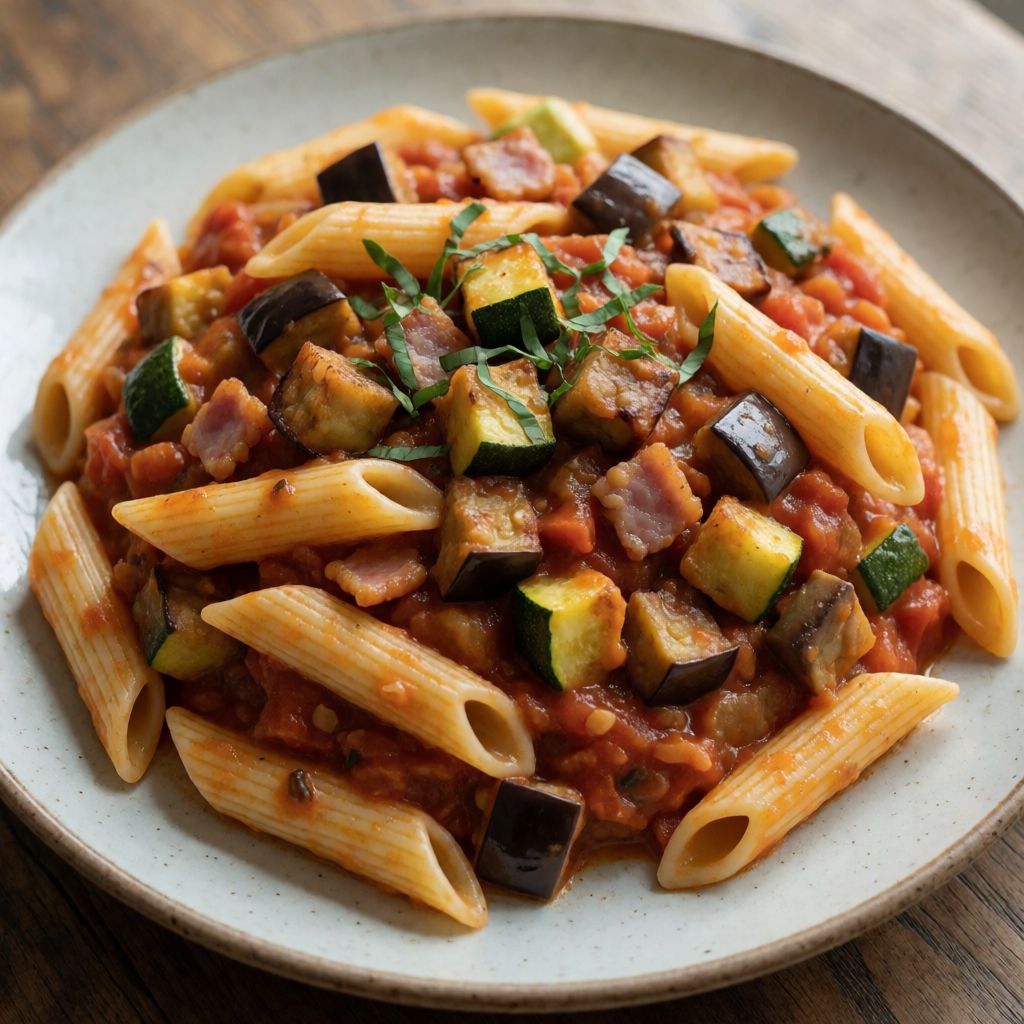
Penne alla Contadina
A comforting pasta dish with aubergine, courgette and pancetta in a milky tomato sauce, finished with parmesan.
Labels are worked out automatically from the ingredients and can be wrong. Check the packaging if it matters to you.
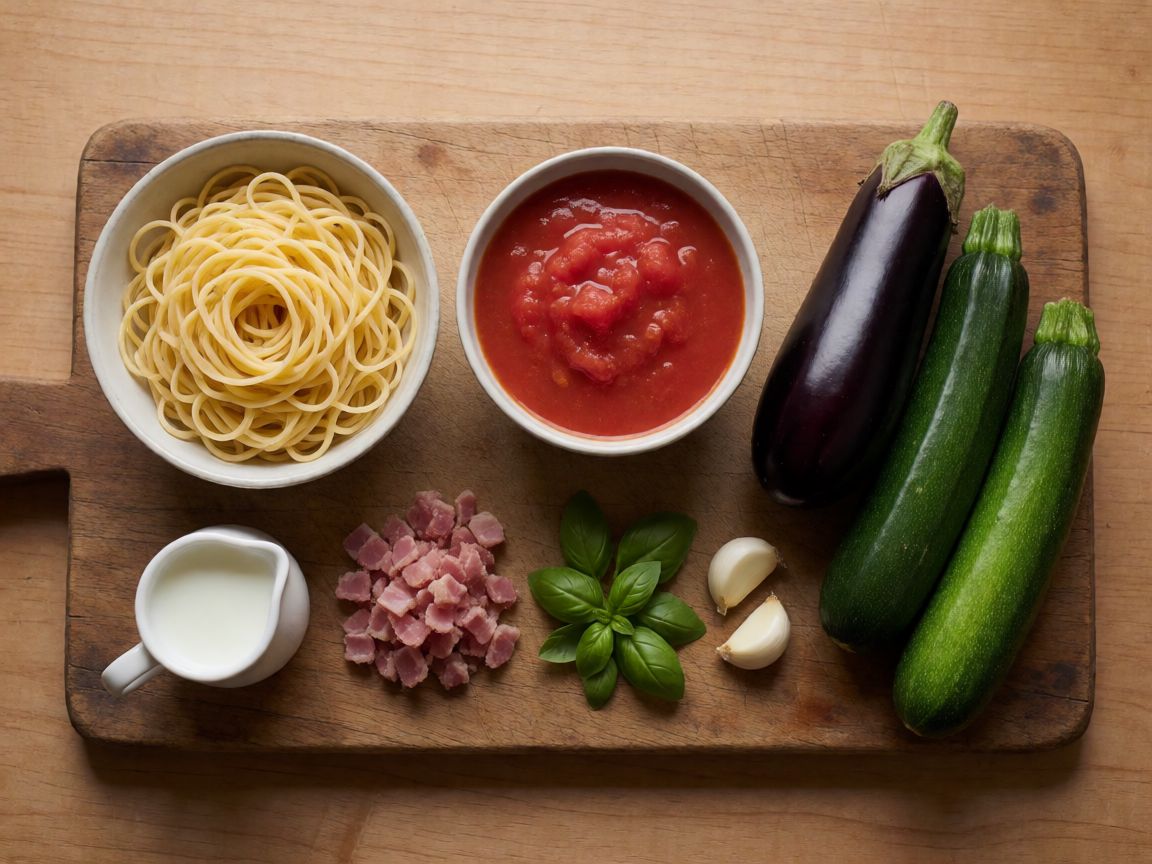
Ingredients










Steps
Dice the aubergine and courgette into small cubes and fry in olive oil until soft. Set aside.
In a pan, heat the olive oil, add the garlic and fry briefly, then remove the garlic.
Add the pancetta, cut into strips, and fry for a few minutes.
Pour in the tomatoes, add the basil and simmer over medium heat, gradually adding the milk.
10 minAdd the previously fried vegetables and continue cooking until the pancetta reaches an internal temperature of 70°C.
Meanwhile, cook the penne until al dente, drain and transfer to the pan with the sauce.
Toss with plenty of pecorino.
This is country cooking dressed up with a fancy menu name — "alla contadina" just means "the way a farmer's wife makes it": whatever grew in the garden that week, a scrap of cured pork for savour, a tin of tomatoes because fresh ones in winter are watery disappointments, and pasta to stretch it all into dinner for the family. There is no secret ingredient here. There is only the order you do things in.
What decides whether this works is simple: the vegetables must be fried, not boiled in the sauce. Aubergine and courgette are mostly water held together by habit. Thrown straight into simmering tomato, they leak that water out and go grey and soft before they've had a chance to taste of anything. Fried first in their own pan, with room to breathe, the water goes off as steam and what's left on the surface is sugar turning brown — that's the flavour you're chasing. They go into the sauce afterwards as passengers, not as the thing being cooked.
The second thing that decides it is the fat from the pancetta. That's your actual sauce base, more than the tomato. Render it properly — let the strips go from pink and stiff to glossy and starting to curl — and that fat carries flavour through the whole pan. Skip that render and the pancetta just sits there chewy and the sauce tastes thin no matter how long you simmer it.
On the tomatoes: tinned peeled is not a shortcut here, it's the actual tradition — a contadina wasn't buying tomatoes in January, she was putting up the summer glut in jars and tins so there was something red to cook with all year. Pick ones sitting in their own juice rather than thick puree; you want a base you can thin with milk, not one that's already stiff.
Fresh penne is the odd choice in this dish — most versions of a rustic vegetable sauce like this lean on dried pasta because it holds its shape against a chunky sauce. Fresh is fine, it just cooks faster and softer, so pull it a touch earlier than you'd think and let the last minute finish in the pan with the sauce. If dried is what's in your cupboard, use it — cook to the same bite, no apology needed.
On the garlic: two cloves, fried briefly then thrown out. That's not stinginess, that's technique — garlic's job here is to perfume the oil, and garlic left in the pan too long burns and turns bitter long before it looks burnt. Some cooks add more cloves thinking more garlic means more flavour. No — more garlic in a hot pan just means more bitterness once it tips over. Pull it the second it smells sweet, not brown.
On the basil: it goes in early, simmered into the sauce, not scattered on top at the end as a garnish. That's deliberate — here it's meant to perfume the whole pot over the ten minutes of simmering, which means you lose the fresh snap but gain depth. If you've no basil, parsley will give you green freshness without basil's aniseed note — not the same dish, but not a disaster either.
On the milk: any whole milk works, nothing special required. If you take milk in your tea, you already understand the mechanism — the fat and protein in milk soften something sharp (tannin in tea, acid in tomato) without you tasting the milk itself afterwards. Pour it in while the sauce is lazily bubbling, not roaring, and it won't split.
On the cheese: the ingredient list says parmesan, the method says pecorino — in a kitchen like this, nobody's checking your fridge. The criterion is a hard, aged cheese that grates fine and melts into the sauce rather than sitting on top in clumps. Parmesan is milder and nuttier; pecorino, being sheep's milk, is saltier and sharper. Either does the job — use what's actually in the fridge, which in most British kitchens is parmesan, and that's no loss.
On the aubergine and courgette together: in a wide domestic frying pan rather than a kazan, don't crowd them both in at once — that just steams them, which is the exact failure you're trying to avoid by frying in the first place. Two batches, a bit of patience between them, and nobody needs a lid or a thermometer to know when they're ready — the colour tells you. As for that internal temperature on the pancetta: a probe in a bubbling pan of tomato is a bit of theatre, not a real kitchen habit. Trust your eyes instead — fat gone glossy, edges curling, sauce thick enough to sit on the back of a spoon. That's done. Four hundred grams of pasta with this much sauce makes four generous plates, or a lighter five if the week's already had its Sunday roast.